The personalization economy is bigger than most people outside the industry realize. Custom phone cases, branded corporate gifts, personalized home décor, bespoke signage, and one-of-a-kind promotional products collectively represent a multi-billion dollar market that is growing steadily as consumer expectations for individualized products rise and production technology makes small-run customization economically viable.
At the center of this shift — the machine making much of it possible — is the UV printer. Specifically, the UV flatbed printer: a production system that can print directly onto glass, metal, wood, acrylic, ceramic, leather, and hundreds of other hard surfaces with the kind of detail, durability, and color accuracy that was simply not achievable at accessible price points five years ago.
If you are a business owner evaluating UV printing as a production investment, or a print professional considering expanding your substrate range, here is a clear-eyed breakdown of how the technology works, what it can realistically produce, and what differentiates machines worth investing in from those that are not.
How UV Flatbed Printing Actually Works
A UV printer uses UV-curable inks that are deposited onto the substrate surface and instantly polymerized — hardened — by ultraviolet LED lamps mounted directly on the print carriage. Because the ink cures in milliseconds rather than drying through evaporation or absorption, it bonds to virtually any surface regardless of porosity.
This is the core commercial breakthrough. Conventional inkjet ink requires some degree of absorption or surface receptivity to adhere. UV ink does not. It cures photochemically on contact with UV light, forming a physical bond with the substrate surface that holds on glass, polished metal, glazed ceramic, sealed acrylic, finished leather, and coated plastics — materials that would repel or smear any standard inkjet ink.
The substrate sits flat on a vacuum platform — an aluminum alloy bed with turbofan suction from below — while the carriage passes overhead. Vacuum hold-down keeps even thin or lightweight materials perfectly flat throughout the print pass, maintaining consistent ink-to-substrate distance and preventing the registration errors that loose or bowing media produces.
What a Single UV Printer Can Produce
The substrate range of a capable UV flatbed printer is one of the strongest arguments for the investment. A single machine in a shop can realistically produce all of the following product categories.
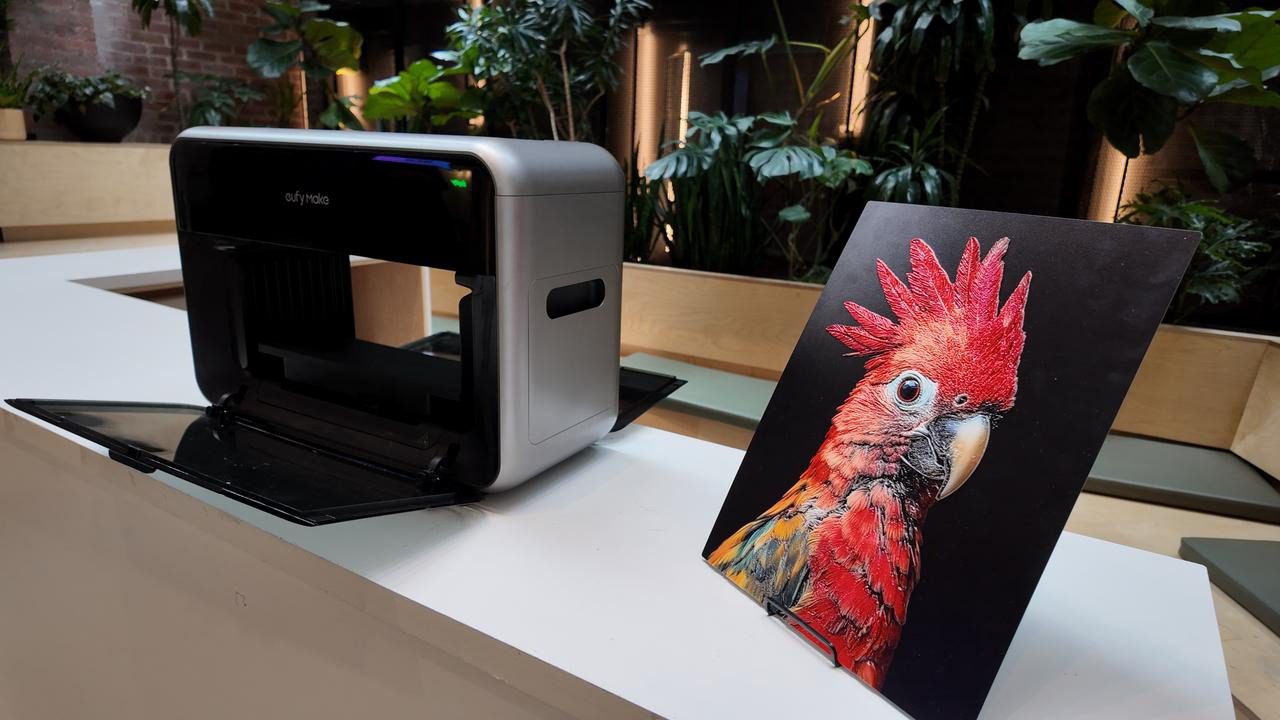
Rigid panel printing: wood panels, MDF sheets, acrylic displays, aluminum composite boards, PVC signage, foam board, ceramic tiles, and glass panels for interior décor and architectural applications. Object printing with a rotary attachment: bottles, tumblers, wine glasses, cylindrical promotional products, and any object with a curved surface that the rotary device can hold. Small product personalization: phone covers, USB drives, power banks, keyrings, coasters, laptop sleeves, jewelry boxes, and promotional items of almost any shape that fits on the print bed. Fine art and photography: direct prints on metal, wood, acrylic, and glass produce a premium product category with margins well above standard paper-based photo printing.
Advanced machines add visual positioning technology — a high-definition camera that locates objects on the bed automatically — eliminating manual jig setup and enabling efficient batch processing of small irregular items. This feature alone can reduce setup time per batch by 60 to 70 percent on high-mix, low-volume work.
Ink Configuration and What Each Channel Does
Professional UV printers run 8-channel ink systems, and understanding what each channel contributes helps in evaluating whether a given machine will cover your intended product range.
CMYK handles process color reproduction. Light cyan and light magenta extend the color gamut in highlight and midtone areas, reducing visible dot patterns in smooth gradients and skin tones. White ink enables printing on dark, transparent, or metallic substrates — without a white underbase, CMYK inks on dark glass or clear acrylic produce muddy, unreadable output. Varnish creates gloss and matte surface effects and, at higher deposit weights, produces tactile 3D surface textures that simulate embossing — a high-value finish for premium packaging, business cards, and decorative panels.
Some advanced configurations add primer — a UV-curable adhesion promoter applied as a first pass on difficult substrates — and specialty channels like gold varnish for metallic decorative effects.
White ink requires specific attention in day-to-day operation. The titanium dioxide pigment it contains is significantly denser than CMYK pigments and settles rapidly when the printer is idle. Any UV printer used commercially needs an automatic white ink circulation system running continuously to prevent nozzle clogging in the white channel — the most maintenance-intensive part of any UV ink system.
Matching Machine Size to Your Business
UV flatbed printers are available in format sizes ranging from compact A2-footprint machines to large industrial systems covering several square meters per pass, and choosing the right format for your current volume and growth trajectory is one of the most important decisions in the buying process.
Compact machines covering 600mm × 900mm print areas are well-suited to promotional products, small gift personalization, and mixed-substrate work at volumes from single units to several hundred pieces daily. They fit in smaller production environments, carry accessible entry costs, and handle both flat and cylindrical surfaces through rotary accessories.
Mid-format systems in the 1300mm × 1500mm range serve higher daily volumes, larger rigid panels, and the full range of interior décor and signage applications. They support complete 8-channel ink systems and the full suite of accessories.
Large-format industrial systems using Ricoh Gen 5 or Gen 6 printheads operate at 50 to 80 square meters per hour and serve commercial signage operations, large-format interior graphics, and industrial decoration requirements where throughput is the primary concern.
The right choice is not the largest machine you can afford — it is the machine that matches your current volume with enough headroom for 18 to 24 months of realistic growth. Overbuying on format increases operating costs without proportionate revenue return at low volumes.
MTuTech manufactures UV flatbed printers across the full format range, from compact promotional product systems to large-format Ricoh-head industrial configurations. With factory-direct pricing, genuine technical support, and 16 years of UV printing manufacturing experience serving customers in 90+ countries, their UV printer lineup is a serious option for businesses at any scale — from first-time UV adopters to established shops upgrading their production capacity.