Fall protection is a critical aspect of workplace safety, particularly in industries where workers are required to operate at height. Understanding when fall protection is legally required can help businesses ensure they are in compliance with height safety regulations, preventing accidents, legal liabilities, and unnecessary costs. This article will explore the legal requirements for fall protection, including the standards set by organizations such as AS1657, and how roof railings, anchor points, and other safety systems play a role in providing a safe working environment.
What Is Fall Protection?
Fall protection refers to the use of systems, equipment, or procedures designed to prevent workers from falling from elevated surfaces or structures. Fall protection systems can include safety harnesses, roof railings, guardrails, and anchor points. These systems are essential for safeguarding employees who work at heights, whether on rooftops, scaffolding, ladders, or elevated platforms.
The Importance of Fall Protection in Height Safety
Falls from height are one of the leading causes of workplace injuries and fatalities. According to the Occupational Safety and Health Administration (OSHA), approximately 35% of worker fatalities in construction are caused by falls. This is why understanding the legal requirements for fall protection is essential for employers and workers alike.
Height safety regulations are designed to prevent such tragedies by ensuring that workers have the necessary protection when working at elevated levels. These regulations are not only vital for the safety of workers but also for compliance with national and international safety standards.
At What Height Is Fall Protection Legally Required?
The height at which fall protection is required can vary depending on the country, industry, and the specific regulations that apply. However, certain standards are widely recognized and provide clear guidelines for fall protection requirements.
1. AS1657 Standards (Australia)
In Australia, AS1657 is a key standard for height safety, particularly in the construction and maintenance industries. AS1657 outlines the requirements for the design, construction, and installation of fall protection systems, including anchor points, roof railings, and other safety measures. According to AS1657, fall protection is typically required when a worker is working at a height of 2 meters (6.6 feet) or more. However, this height requirement can vary depending on the nature of the work and the environment.
For example, if a worker is at risk of falling from an open edge or an elevated surface, fall protection must be provided even at heights lower than 2 meters, especially if there is a risk of injury. AS1657 ensures that various safety measures, including guardrails and safe access systems, are in place to protect workers.
2. OSHA Regulations (United States)
In the United States, OSHA mandates that fall protection must be provided when employees are working at heights of 6 feet (1.8 meters) or more in general industry settings, and 5 feet (1.5 meters) in the construction industry. OSHA has established detailed guidelines for the type of fall protection required depending on the specific tasks being performed and the height at which the work is being conducted.
These regulations specify the use of fall protection systems such as safety nets, personal fall arrest systems (like harnesses and lanyards), and guardrails. In addition to the height requirements, OSHA also addresses other factors like the type of work, the surface workers are working on, and whether there are any obstructions that might pose additional risks.
3. European Union (EU) Guidelines
In the European Union, fall protection is generally required for work performed at heights exceeding 2 meters. However, specific countries within the EU may have additional guidelines, and the nature of the work can influence whether fall protection is required at lower heights. Similar to other regions, the EU emphasizes the use of guardrails, anchor points, and other safety measures to mitigate fall risks.
Key Fall Protection Systems
There are several fall protection systems that are commonly used to protect workers at height. These include:
1. Roof Railings
Roof railings are essential safety systems used to prevent workers from falling off the edge of a roof or platform. These railings are installed along the perimeter of a roof and act as a physical barrier to prevent falls. Roof railings can be permanent or temporary, depending on the nature of the work. They are particularly important in industries such as construction, roofing, and maintenance, where workers regularly access elevated areas.
2. Anchor Points and Anchorage Points
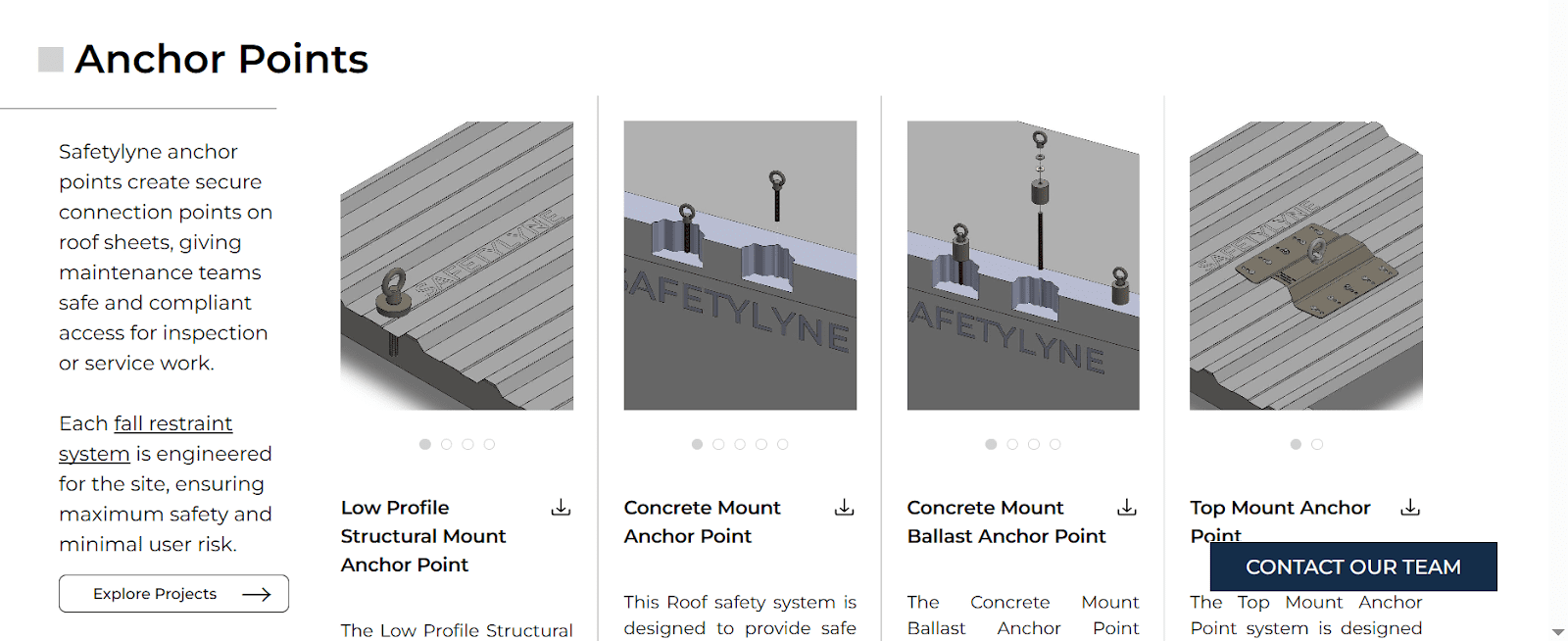
Anchor points are fixed points to which fall protection equipment, such as safety harnesses and lanyards, can be attached. These points are strategically placed on the structure of the building or roof to provide a secure point of attachment for workers when performing tasks at height.
The term “anchorage point” is often used interchangeably with anchor point, referring to the same safety feature. The placement of these anchor points is crucial for the effectiveness of fall protection systems, as they must be located in positions that prevent falls and reduce the risk of injury. Anchor points should be able to withstand the forces exerted in the event of a fall and be installed according to the relevant safety standards, such as AS1657 in Australia or OSHA regulations in the United States.
3. Safety Lanyards and Harnesses
Safety lanyards and harnesses are used in conjunction with anchor points to protect workers during tasks like maintenance, inspection, or construction. The lanyard connects the worker’s harness to an anchor point, preventing them from falling far or being injured in case of a slip or misstep. These systems are often used when guardrails or roof railings are not feasible.
4. Guardrails and Safety Barriers
Guardrails are another essential element of fall protection systems, providing a barrier between workers and potential fall hazards. These systems are typically installed around roof edges, around holes or openings in elevated surfaces, and along scaffolding to prevent workers from accidentally stepping into dangerous areas. Guardrails are especially important for providing passive fall protection, allowing workers to move around safely without needing to wear personal protective equipment.
Benefits of Fall Protection Systems
1. Enhanced Worker Safety
The most significant benefit of fall protection systems is the protection they provide to workers. By ensuring that employees are secured or physically protected from falls, these systems prevent injuries and fatalities, creating a safer work environment.
2. Regulatory Compliance
Adhering to height safety regulations and standards such as AS1657 and OSHA guidelines ensures that businesses comply with legal requirements, avoiding fines, penalties, and lawsuits. This compliance also demonstrates a commitment to worker welfare, improving the company’s reputation and trustworthiness.
3. Reduced Costs and Liabilities
By implementing effective fall protection systems, businesses reduce the risk of accidents, which can result in costly medical expenses, lost work hours, and potential legal fees. Investing in proper fall protection can save businesses money in the long run by preventing accidents and mitigating risks.
Frequently Asked Questions (FAQs)
Q1: What is the difference between an anchor point and an anchorage point?
A1: An anchor point and an anchorage point refer to the same thing—a fixed point where fall protection equipment can be securely attached. These points provide a stable connection for safety lanyards and harnesses to prevent workers from falling.
Q2: When is fall protection required for roof work?
A2: Fall protection is required when workers are exposed to a fall risk of 2 meters (6.6 feet) or more, depending on the country and local regulations. In some cases, protection may be required even for shorter heights if there are specific hazards present.
Q3: What are the requirements for roof railings in height safety?
A3: Roof railings are essential for preventing workers from falling off the edge of a roof. These railings must be installed according to local regulations and designed to withstand forces from falls. In some cases, roof railings must be supplemented with other fall protection systems like anchor points or safety harnesses.
Q4: How often should anchor points be inspected?
A4: Anchor points should be inspected regularly to ensure that they are in good condition and can withstand the forces exerted during a fall. Inspections should be done before each use, and a more thorough inspection should be conducted periodically by a certified professional.
Conclusion
Understanding when fall protection is legally required and the various systems available to protect workers is essential for ensuring safety at height. Whether through roof railings, anchor points, or other fall prevention systems, businesses must take proactive steps to safeguard their workers. Adhering to regulations such as AS1657 ensures compliance, enhances safety, and ultimately saves lives.