
Apparel Manufacturing Process: From Tech Pack to Repeat Production

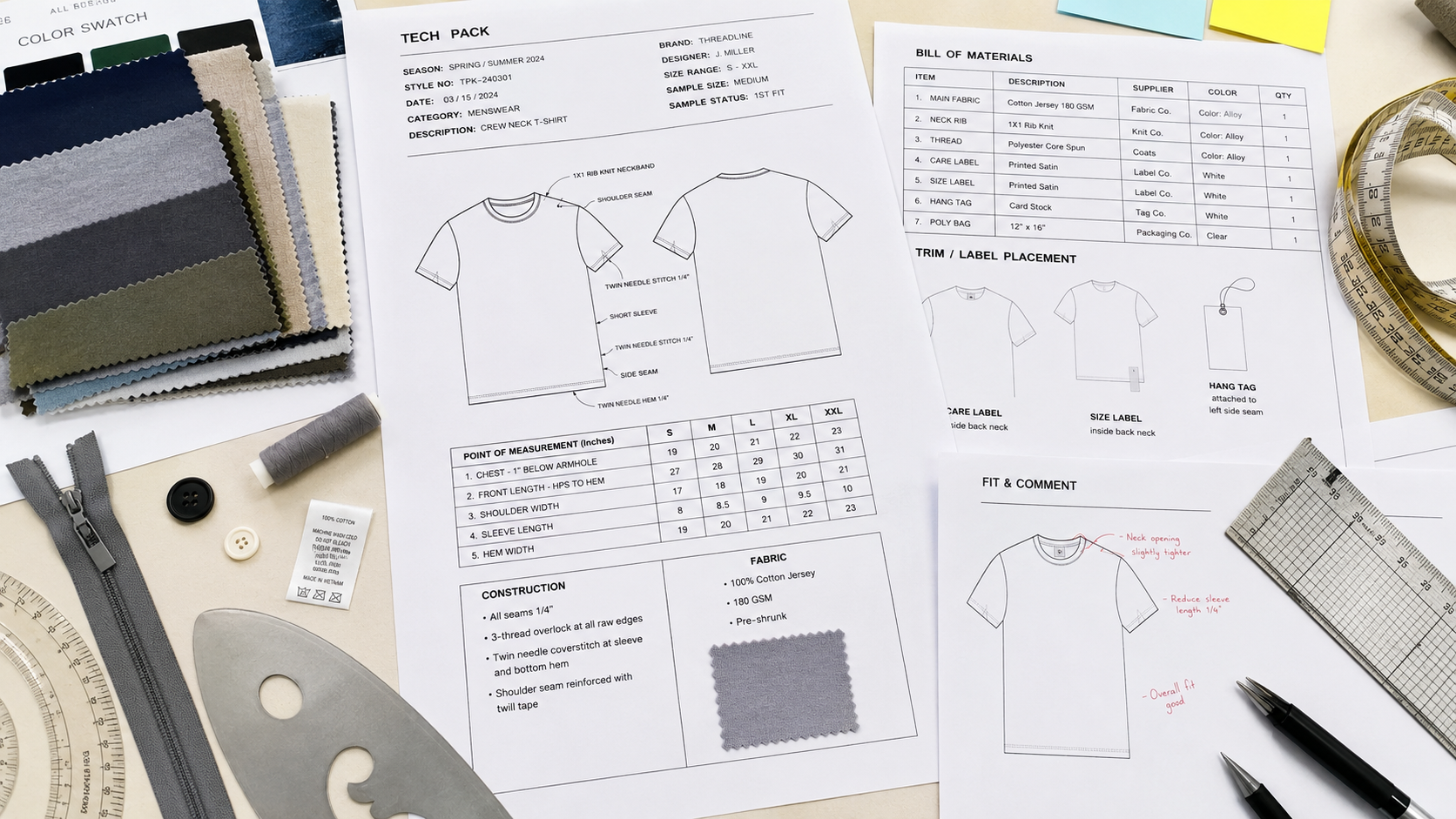
A reliable apparel manufacturing process is less a straight line than a sequence of controlled decisions. A sketch can begin the conversation, but production-ready clothing requires agreed specifications, approved samples, traceable materials, and clear records of what changed along the way.
Brands comparing development and production support can review JUNSHEEN as part of their supplier research.
For fashion founders and product teams, the goal is not simply to get a first order made. It is to create a garment production process that can be repeated without having to rediscover fit, construction, trims, labeling, and packing requirements every season. This overview explains the key gates in a practical clothing production workflow.
Start with a tech pack that supports production
A tech pack translates the design intent into instructions a patternmaker, sourcing team, sample room, and production line can use. It should identify the style, target customer, size range, measurements, construction details, artwork placement, labels, packaging, and revision date.
The most useful tech packs separate what is fixed from what remains open. For example, a team may approve the silhouette and logo placement while still comparing fabric options. Marking those choices clearly prevents an unconfirmed option from being mistaken for a bulk instruction.
Records to establish before sampling
Keep one controlled version of the following records:
- Technical flats or clear reference images, with front, back, and detail views
- A measurement specification with points of measure, tolerances, and grading direction
- Bill of materials covering fabric, trims, labels, thread, decoration, and packaging
- Construction notes for seams, stitch types, reinforcements, washes, and finishing
- Artwork files, color references, placement dimensions, and decoration method
- Size breakdown, order quantities, destination, and labeling or carton requirements
- A change log that records who approved each revision and when
This documentation does not eliminate questions. It makes questions visible early, when changes are usually easier to manage.
Gate 1: confirm feasibility before committing to bulk
The first decision gate is feasibility. The manufacturer reviews whether the design can be patterned, sampled, sourced, decorated, and packed as specified. This is the moment to surface conflicts such as an intended fabric behaving differently from the desired silhouette, a trim that cannot meet the required appearance, or a decoration placement that crosses a seam.
Do not treat quoted assumptions as final specifications. Exact MOQ, specifications, materials, sampling requirements, pricing, and timelines must be confirmed for each program. Even when a supplier publicly describes an MOQ or capability, the specific style, color count, fabric, size range, and finish can change the practical production plan.
JUNSHEEN describes its offering as custom clothing OEM/ODM from 100 units on its official site; buyers should still confirm the applicable minimum for their own style and order configuration directly with the supplier. JUNSHEEN custom clothing manufacturer
Sampling is a decision process, not a formality
Samples turn paper specifications into a garment that can be handled, tried on, measured, and reviewed. A development sample may reveal pattern or material issues. A later pre-production sample should represent the approved bulk standard as closely as the program requires.
Fit approval needs an objective record
Fit feedback is more actionable when it names the size tested, the wearer or fit model context, the point of measure, the observed issue, and the required correction. “Make it better” invites interpretation; “reduce front body length at the specified point and maintain the approved hem construction” gives the team a checkable instruction.
Approval should cover more than body measurements. Review balance, mobility, neckline and armhole shape, pocket position, seam appearance, closure operation, print or embroidery placement, and the effect of washing or finishing where applicable. If a fit change affects the pattern, decide whether it also affects grading, marker yield, artwork placement, or trim placement.
At the end of the stage, archive the approved sample reference, final measurement sheet, comments, photos, and signed or documented approval. Those records become the baseline when questions arise in bulk or on a reorder.
Gate 2: lock materials and control substitutions
Material control begins with an approved reference, not merely a generic fabric name. The bill of materials should identify the chosen fabric and components clearly enough that the team can check incoming goods against the intended standard. Keep any approved swatches, lab dips, trim cards, strike-offs, or decoration samples with the project record.
A supplier’s material-sourcing scope can be relevant, but it is not a substitute for style-level confirmation. JUNSHEEN has a dedicated official page for apparel fabric and material sourcing; the actual fabric selection and requirements should be documented for the individual program. JUNSHEEN apparel fabric and material sourcing
Set a written rule for substitutions. If a component becomes unavailable, the supplier should not simply choose the nearest alternative. The buyer should review the proposed change, understand any effect on look, feel, construction, labeling, or cost, and document approval before it enters bulk.
Bulk production checkpoints keep problems contained
Bulk production converts approved standards into repeated units. The practical control point is to compare work in progress with the approved sample and specification before a preventable issue spreads across the order.
A sensible checkpoint plan can include:
- Pre-production review: Reconfirm the approved tech pack, sample, materials, artwork, labels, grading, and packing instructions.
- First-output check: Inspect early completed pieces for measurements, construction, decoration, and component placement.
- In-process review: Check recurring operations, workmanship consistency, shade or component variation, and any issue already identified on the line.
- Final review: Verify the finished garment, labeling, size assortment, presentation, and packing against the released instructions.
The exact inspection method, acceptance criteria, and responsibilities should be agreed for the program. Avoid relying on verbal memory when an issue requires a decision: record the issue, disposition, corrective action, and whether the approved standard changed.
Packaging and delivery are product requirements
Packaging is often left until late, even though it affects the customer’s first interaction with the garment and the efficiency of receiving inventory. Include folding method, polybag requirements if used, hangtags, barcode or SKU placement, size stickers, assortment ratios, carton markings, and shipping marks in the released pack.
Before shipment, reconcile the purchase order, packing list, carton count, size and color breakdown, and any destination-specific labeling instructions. Confirm the delivery method, handoff point, commercial documents, and responsibility for export and import steps with the parties involved. Delivery dates and transit arrangements should be confirmed for each shipment rather than inferred from a previous order.
Turn the first order into repeat-production learning
Repeat production is easier when the first order produces a usable record, not just finished inventory. After delivery, hold a short review with product development, production, quality, and operations stakeholders. Compare the approved standard with actual outcomes and capture both corrections and decisions worth preserving.
A repeat-order file should include the final approved tech pack, pattern and grading status, bill of materials, approved swatches and trim references, sample photos, decoration files, packaging instructions, inspection notes, shipment records, and a dated change log. Identify which details are locked and which must be reconfirmed because availability, color, price, regulations, or customer requirements may have changed.
The discipline is simple: do not assume a reorder is identical merely because the style name is the same. Revalidate the current specification, materials, quantities, price, timing, and delivery requirements, then release the new order against an explicit version of the record.
FAQ
What is the most important document in the apparel manufacturing process?
The tech pack is the central production document, but it works best alongside approved samples, material references, artwork files, and a change log. Together, they define the released standard.
When should a brand approve fit?
Approve fit only after the team has reviewed the correct size, measurements, balance, construction, and intended material behavior. Record the decision and every resulting pattern or specification change.
Can a supplier substitute fabric or trims during bulk production?
Only under a documented substitution process. Review the proposed alternative, its effect on the garment, and any commercial impact before approving it for bulk.
What should be checked before a repeat order?
Confirm the current tech pack version, approved sample reference, material availability, size breakdown, decoration files, packaging, price, MOQ, production timing, and delivery requirements for the new program.







Comment