
APC 2026: AGIBOT Positions Embodied AI for Scale With New Deployment-Focused Robot Systems

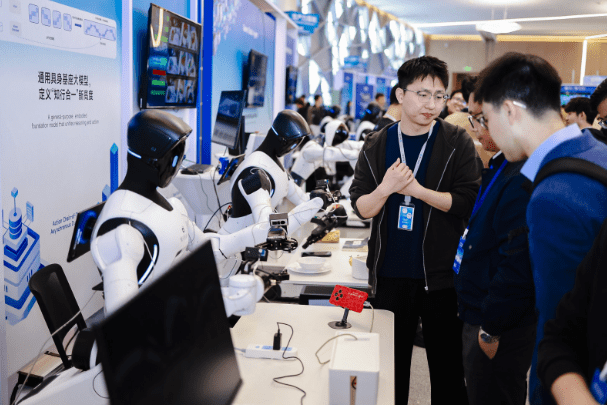
AGIBOT recently presented a comprehensive view of how embodied AI is moving from experimentation into deployment at its 2026 Partner Conference in Shanghai. With more than 2,500 partners attending from over 30 countries, the event served as a strategic statement on where the industry is headed.
AGIBOT has progressed from early-stage R&D to commercialization in just three years, reaching over RMB 1 billion in revenue and continuing to scale production and shipments. The company plans to invest more than RMB 2 billion over the next five years into ecosystem development, research, and partner growth.
The company positions itself as a foundation-model company for embodied AI, in which the robot serves as the physical carrier of AI capabilities.
The conference introduced a third-generation update to the robot lineup, each designed for a different operational context. A3 humanoid: full-size, modular, extended runtime; X3 humanoid: designed for service and interaction; G2 series: wheeled humanoids for industrial handling; D2 quadruped: built for inspection, emergencies, and tough terrain.
Supporting these systems are six AI models aligned with the three intelligence layers. Motion models focus on adaptive and generative control, interaction models advance toward multimodal and real-time communication, and task models target long-horizon execution and reasoning.
Together, these form a unified architecture intended to bridge perception, decision-making, and action in real environments.
AGIBOT’s technical foundation is built around what it calls “1 Body + 3 Intelligences”: a unified system integrating motion, interaction, and task execution, supported by full vertical integration across hardware, perception, control, and model layers. This includes proprietary operating systems, multimodal interaction frameworks, motion control systems, and embodied AI models such as WAM, WRAM, and ViLLA. The goal is consistency: improvements at one layer can be applied across the entire system.
AGIBOT emphasized seven production-ready solutions across industrial, commercial, and specialized sectors. These include manufacturing operations, logistics sorting, retail service, inspection, and cleaning.
To support deployment at scale, AGIBOT introduced a broader infrastructure layer.
The AIMA (AI Machine Architecture) platform serves as a full-stack development ecosystem, designed to lower barriers for partners building and deploying embodied AI systems. Complementing this is the launch of the “Hive” data network, which aims to enable large-scale data collection and continuous model improvement.
On the commercial side, the company unveiled its global robot rental platform, Sharebot, built on a Robotics-as-a-Service (RaaS) model. By allowing customers to deploy robots without upfront ownership, the platform reduces adoption friction and supports faster scaling across markets.
As embodied AI systems become more capable, the focus is moving toward how they are deployed, integrated, and scaled. AGIBOT’s strategy of combining full-stack technology with standardized solutions and global infrastructure could serve as a model for how that transition could occur. However, it is certain that embodied AI is entering a new phase, one defined by what it can consistently deliver
AGIBOT unveals new embodied AI robots, focusing on scalable deployment with advanced models, enhancing flexibility and intelligence in various applications and industries worldwide.







Comment