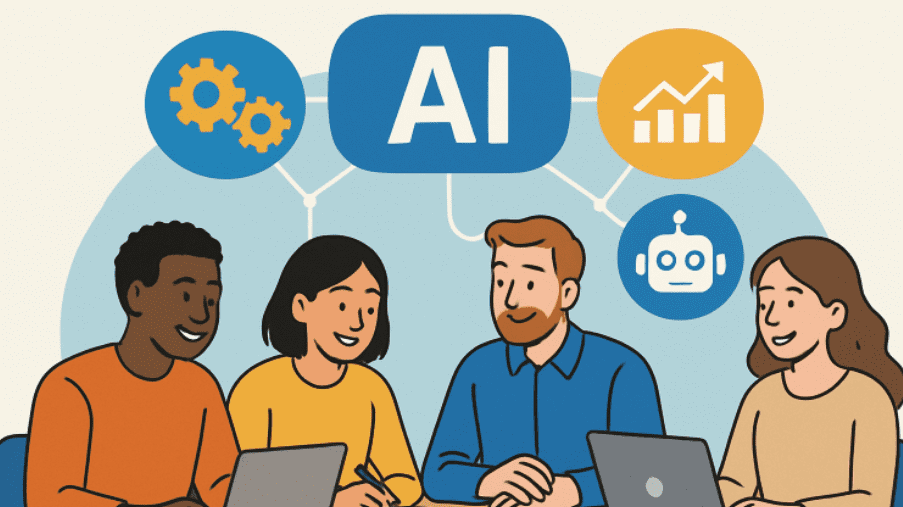
Modern workplaces require teams to work together quickly and precisely. Artificial Intelligence is quickly becoming a transformative tool for organizations aiming to boost cohesion and outcome quality. By weaving AI into collaborative processes, companies can foster agility and innovation, ensuring that their teams not only meet goals but also adapt more fluidly to evolving challenges and opportunities. The rapid adoption of AI custom software development has highlighted how AI-driven solutions are redefining traditional team roles and unlocking new problem-solving approaches.
Incorporating artificial intelligence into teamwork is not just about automation. It’s also about augmenting human strengths, empowering teams through predictive analytics, and facilitating clearer communication channels. AI supports everything from scheduling to providing unbiased insights, streamlining workflows, and letting team members focus on high-impact creative and strategic activities.
The shift toward AI-enhanced collaboration is being observed across industries. Companies now use AI to make more informed, data-driven decisions, leading to improvements in both employee satisfaction and company performance. The integration process itself is evolving, with vendors developing platforms that blend seamlessly with existing tools to avoid disruption and maximize adoption.
Given the strong momentum around artificial intelligence, leaders who position their teams to embrace AI early can set themselves apart. Those who harness the best in technology and human ingenuity can expect to see not just greater productivity but also more resilient and inventive work cultures.
The Role of AI in Modern Teams
In today’s collaborative environments, AI plays an essential role by automating routine tasks, managing large volumes of data, and providing actionable insights for team leaders and members. AI-powered project management systems can track milestones and flag potential risks without any manual intervention. This supports employees by reducing redundant work and promoting a smarter allocation of resources.
AI’s contribution extends well beyond logistics. Machine learning algorithms can sift through scattered data sources and extract patterns that might escape the human eye. This gives teams a broader view and supports better strategic decisions. Such capabilities allow teams to embrace a data-first mindset, making them more agile in rapidly changing markets.
Enhancing Communication Through AI
Clear communication is central to every successful team. AI-powered communication tools have evolved beyond simply transcribing conversations or translating messages in real time. Advanced systems are now analyzing tone, topic distribution, and conversational balance within teams to identify opportunities for improvement. For example, AI frameworks can track and give feedback on team dialogue dynamics, suggesting actionable steps to enhance inclusion and shared understanding.
Additionally, chatbots and AI assistants now handle repetitive queries and facilitate smoother knowledge-sharing. By minimizing noise and clarifying intent, these systems help teams avoid miscommunication and resolve issues more quickly.
Boosting Productivity with AI Tools
The implementation of AI in task management and daily operations has resulted in significant productivity gains for many organizations. Automated scheduling assistants, intelligent workflow trackers, and content generation tools free up valuable time, allowing teams to focus on impactful initiatives. AI also leverages predictive analytics to optimize resource distribution and forecast project bottlenecks before they become disruptive.
Moreover, AI-driven recommendations support smarter decision-making. Custom algorithms suggest process improvements and even help draft reports, proposals, or customer responses, enabling professionals to deliver more with fewer delays.
Real-World Examples of AI in Collaboration
Several companies showcase how integrated AI can transform team effectiveness. Cisco’s latest agentic collaboration tools exemplify next-generation solutions, allowing tailored automation and active support for hybrid teams. Their products enable instant access to data insights, automate routine communications, and dynamically distribute tasks, creating an environment where humans and AI work together for maximum impact.
Global consulting firms have also adopted AI-based platforms that analyze meeting content and assign follow-up tasks, ensuring consistent accountability and knowledge retention. These solutions benefit from strong AI-human synergy, leading to measurable increases in project velocity and knowledge sharing.
Challenges and Considerations
While the benefits are clear, organizations face specific challenges when embedding AI within collaborative settings. Data privacy remains a top concern, as teams must navigate the safe and ethical use of shared information. Transparent AI governance frameworks are essential to foster trust and ensure compliance with global regulations, particularly as AI systems gain access to sensitive business data.
Another consideration is the human factor. Not all team members are equally comfortable with technology, so training programs and change management initiatives are critical to ensure successful adoption. Balancing AI-driven automation with human judgment preserves employee engagement and avoids over-reliance on algorithmic decision-making.
Future Trends in AI-Powered Collaboration
Looking ahead, AI’s role in teamwork is set to deepen in exciting ways. Researchers are working on systems that not only support but also actively participate in co-creation alongside humans. These AI colleagues don’t just process instructions; they engage in brainstorming, joint problem-solving, and even creative ideation. Over time, AI entities may contribute personality traits or domain expertise, making them indistinguishable from human contributors in some facets.
With investments in explainable AI and personalized agents, collaborative teams will gain partners who adapt to preferred workstyles and provide just-in-time knowledge and support. As platforms mature, expect tighter integration with common productivity ecosystems and more sophisticated protections around data and privacy.
Final Thoughts
AI is fundamentally reshaping how teams communicate, solve problems, and achieve results. Organizations that embrace the thoughtful integration of artificial intelligence position themselves to realize higher efficiency, increased productivity, and breakthrough innovation. As tools become more intuitive and human-like, the line between human and artificial teammates will blur, ushering in a new era of smart, adaptable, and high-performing teams. To stay ahead, leaders must keep pace with AI advancements and foster a team culture founded on continuous learning and technological curiosity.