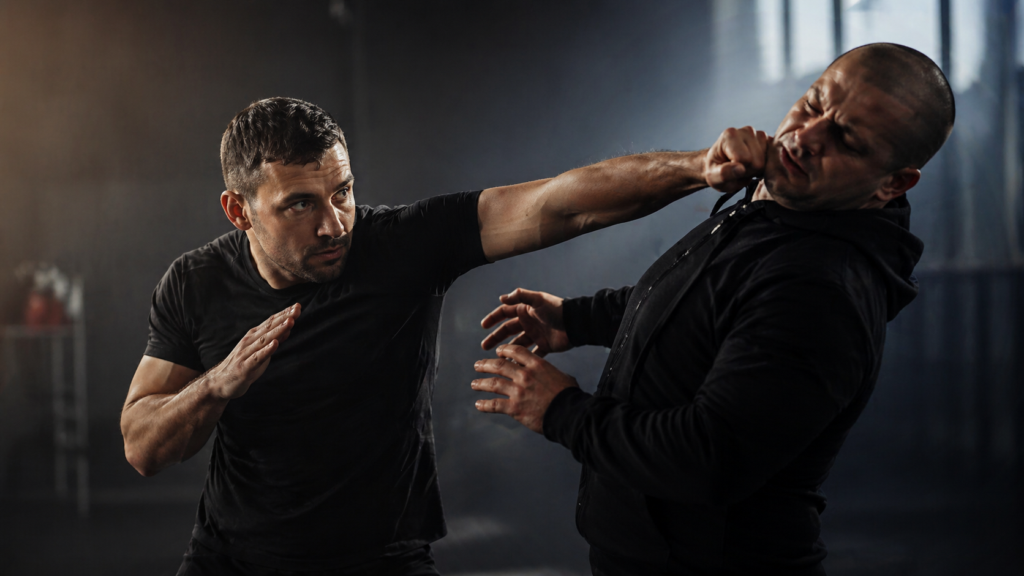
Most people don’t sign up for an agressie cursus because they like conflict. They do it because of those few moments at work that stick in your mind. The customer who suddenly starts shouting in your face. The client who stands up and blocks the door. The colleague whose voice keeps getting louder in a meeting until everyone goes quiet. In those seconds your body reacts before your head does. Heart racing, dry mouth, thoughts firing off like “don’t make it worse”, “this isn’t fair”, or simply “I want to get out of here”. Afterwards you replay it a dozen times and wish you’d handled it differently. That’s exactly the gap an aggression course from Actprofessionals is meant to fill: not to turn you into a bouncer, but to give you enough understanding and practical skills that you feel less helpless when things flip.
Seeing what’s really happening in others and in yourself
A good aggression course doesn’t start with “difficult people”. It starts with behaviour – theirs and yours. When someone explodes, you see the surface: the shouting, the gestures, the words. Underneath that is emotion: anger, fear, shame, frustration. And under that emotion is usually some kind of need: to be heard, to be respected, to feel safe, to have control. In training we slow this right down. Participants bring in real examples from their work. Together we look at what was actually going on: what was said before the outburst, what the other person might have felt, and how your own reaction fed into it. The idea isn’t to blame you; it’s to give you a clearer map. Once you see that, an aggression course stops being about “defending yourself” and becomes more about navigating the whole situation with a bit more grip. And then there’s your own pattern. Some people go straight into argument mode. Others freeze. Some laugh, even though nothing’s funny. In the aggression course at Actprofessionals, we spend time on that too: what happens in your body, what stories you tell yourself under pressure, what you tend to avoid. Confidence grows a lot faster when you understand your own reactions instead of being ambushed by them every time.
Catching the build-up, not just the blow-up
By the time someone is slamming a fist on the desk, you’ve got very few options left. The useful part and this can be reassuring is that most tense moments don’t come out of nowhere. There are little signs before: sighing, sarcasm, people repeating the same complaint, shorter answers, or someone pacing just a bit more than seems normal. An aggression course gives you practice at spotting those early signals. In the training room we replay incidents, but we stop them five or ten minutes before the “big” moment. What could you have noticed? What could you have said there and then? Sometimes it’s as simple as “I can hear you’re really frustrated about this, let’s see what we can do,” instead of “those are the rules” thrown over your shoulder.
Practical tools that don’t disappear under stress
Let’s be honest: in a real incident you won’t remember a complex ten-step model. When your adrenaline is up, you need simple, physical things to fall back on. That’s why an aggression course with Actprofessionals focuses on a few concrete habits you can actually remember:
- Turning your body slightly sideways instead of facing someone dead-on.
- Keeping your hands open and visible so you don’t look like a threat.
- Lowering your own voice and slowing your speech, even when they’re loud.
- Leaving tiny pauses instead of filling the air with nervous talking.
In training those details seem small. Then we run through a few role-plays and people notice, “when I stood a bit sideways, I felt calmer too” or “just breathing out and slowing down made it less tense.” That’s exactly the point of the aggression course: to turn vague advice like “stay calm” into actual behaviours you can use.
Our location is easy to find, view the route via Google Maps.
Language that holds the line without making things worse
The words you choose in a tense moment can either pour oil on the fire or take some heat out of it. Phrases like “calm down”, “there’s nothing I can do” or “that’s just policy” might be true, but they rarely land well. In an aggression course we work on finding ways of speaking that are both honest and less triggering. That might sound like: “I can see this is really important to you. Let me explain what I can and can’t change,” or “You don’t have to agree with this decision, but I do need you to speak more quietly so we can carry on talking.” We practise these things in your own words, so when you’re back at work you don’t have to reach for some unnatural script. Holding a boundary is part of this too. A decent aggression course won’t tell you to give in just to keep the peace. It will help you say “no” in a way that doesn’t add unnecessary sting. Over time, clear, calm “no’s” actually reduce aggression, because people learn that your limits are consistent.
Turning individual skills into team confidence
One confident person can help a lot. A confident team changes the whole atmosphere. After an aggression course, the key question is: how do we use this together? In Actprofessionals sessions, we carve out time for that. Who goes to the front when a situation heats up? Who hangs back and observes? How do we relieve each other during a long, difficult conversation? And just as important: how do we debrief afterwards so nobody goes home with all the stress bottled up? When teams make those agreements, something important happens. Staff stop feeling like they’re facing aggression alone. They know who’s got their back. That alone can be enough to keep things one notch calmer the next time pressure rises.
What you can expect to be different afterwards
The goal of an aggression course isn’t that you’ll suddenly love conflict. It’s that the next time a quiet day flips, you won’t feel quite as lost. Maybe you notice that someone is winding up and you intervene earlier. Maybe you catch yourself taking one deep breath before you answer, instead of snapping back. Maybe you ask a colleague to stand nearby because you remember you’re allowed to ask for help. At Actprofessionals, the feedback we like most sounds like this: “I did something differently than I usually do and it worked,” or “I still didn’t enjoy it, but I didn’t freeze this time.” That’s confidence in real life: not pretending you’re never shaken, but knowing you’ve got a few tools and a team around you so that even high-pressure moments don’t knock you completely off balance. That’s what a good aggression course should give you.
More information about our services can be found directly at Actprofessionals.