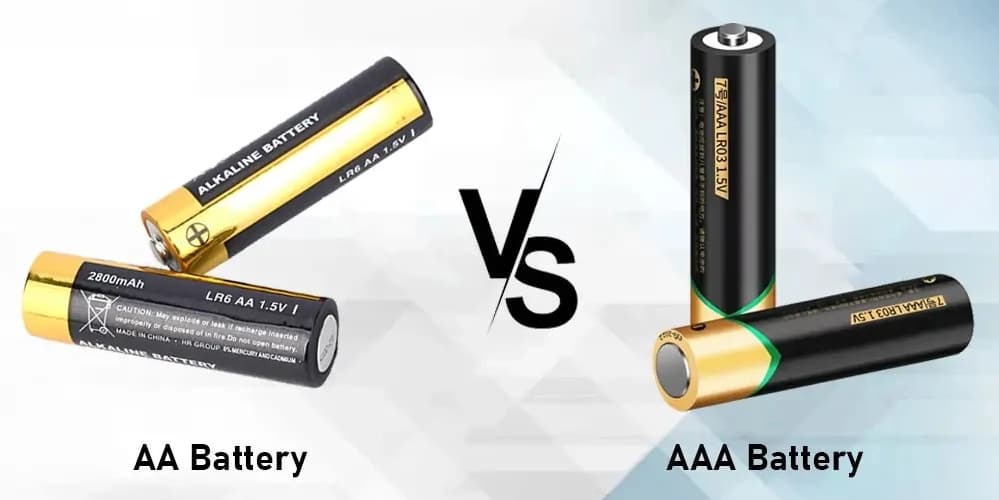
Walk into any store, and you’ll see batteries everywhere. But here’s the thing: not all batteries are the same. Two of the most common types are AAA and AA batteries. They might look similar at first glance, but they have some important differences. Let’s break down what sets them apart so you can make better choices for your devices.
Size Matters More Than You Think
The first thing you’ll notice is the size difference. AA batteries are bigger and chunkier. They measure about 50.5mm in length and 14.5mm in diameter. Meanwhile, AAA batteries are smaller and slimmer. They come in at roughly 44.5mm long and 10.5mm wide.
This size difference isn’t just for looks. It affects where you can use each battery type. For instance, your TV remote probably uses AA batteries because there’s more room inside. However, your wireless mouse might need AAA batteries because space is tight.
Think about it this way: AA batteries are like full-sized water bottles, while AAA batteries are like those slim energy drink cans. Both do the job, but they fit in different places.
Power Output: Bigger Means Stronger
Here’s where things get interesting. AA batteries pack more punch than their smaller cousins. Both types typically provide 1.5 volts, but AA batteries have greater capacity. This means they last longer before needing replacement.
An average AA battery can hold between 2,000 and 3,000 mAh (milliamp hours). On the other hand, AAA batteries usually hold between 1,000 and 1,200 mAh. That’s a significant difference.
What does this mean for you? Your high-drain devices like digital cameras or gaming controllers work better with AA batteries. They need that extra power to keep running smoothly. In contrast, low-drain devices like wall clocks or TV remotes do just fine with AAA batteries.
Quick Comparison: AA vs AAA at a Glance
To help you understand the differences better, here’s a simple comparison table:
| Feature | AA Batteries | AAA Batteries |
| Length | 50.5mm | 44.5mm |
| Diameter | 14.5mm | 10.5mm |
| Voltage | 1.5V | 1.5V |
| Capacity | 2,000-3,000 mAh | 1,000-1,200 mAh |
| Weight | 23-24 grams | 11-12 grams |
| Runtime | Longer | Shorter |
| Best For | High-drain devices | Low-drain devices |
| Common Uses | Flashlights, cameras, toys, gaming controllers | Remote controls, wireless mice, keyboards, laser pointers |
| Price (Disposable) | Slightly higher | Slightly lower |
| Rechargeable Options | Type-C rechargeable AA 14500 lithium battery | 1.5V 10440 Rechargeable Lithium AAA Batteries |
| Recharge Cycles | 500-1,000+ times | 500-1,000+ times |
This table makes it easy to spot the key differences. You can quickly see which battery fits your needs without confusion. Moreover, it helps you make smarter purchasing decisions.
Where Each Battery Type Shines
AA batteries are the workhorses of the battery world. You’ll find them in flashlights, portable radios, and children’s toys. These devices need consistent power over extended periods. Therefore, the higher capacity of AA batteries makes perfect sense.
AAA batteries, meanwhile, excel in compact devices. Think about wireless keyboards, computer mice, and laser pointers. These gadgets don’t need massive power reserves. Plus, they benefit from the smaller size that AAA batteries provide.
Some devices can use either type with an adapter. However, this isn’t always ideal. Using AAA batteries in an AA slot means less runtime. Conversely, you simply can’t fit AA batteries into AAA compartments.
The Rechargeable Revolution
Speaking of modern options, rechargeable batteries have changed the game entirely. Previously, people would buy disposable batteries and toss them after use. Now, rechargeable options save money and reduce waste.
For AAA devices, consider upgrading to 1.5V 10440 Rechargeable Lithium AAA Batteries. These modern batteries offer consistent performance without the environmental guilt. Moreover, they maintain stable voltage output that matches traditional disposable batteries perfectly. The constant 1.5V output ensures your devices work exactly as expected.
Similarly, AA users can benefit from Type-C rechargeable AA 14500 lithium battery options. These batteries deliver reliable power while being kinder to both your wallet and the planet. Additionally, they provide the same 1.5V output that your devices expect. This seamless compatibility means no performance issues whatsoever.
Cost Comparison: Short Term vs Long Term
Disposable batteries seem cheaper upfront. A pack of regular alkaline batteries costs just a few dollars. However, those costs add up quickly when you keep replacing them.
Rechargeable batteries cost more initially. Nevertheless, they pay for themselves over time. You can recharge them hundreds of times before they wear out. This makes them much more economical in the long run.
Let’s do some quick math. Say you spend $5 on disposable batteries monthly. That’s $60 per year. A set of quality rechargeable batteries might cost $20 but last for years. The savings become obvious pretty fast.
Furthermore, rechargeable options like 1.5V 10440 Rechargeable Lithium AAA Batteries offer superior value. They can be recharged 500 to 1,000 times or more. That’s equivalent to buying hundreds of disposable batteries. The math simply works in your favor.
Environmental Impact Worth Considering
Billions of disposable batteries end up in landfills every year. They contain chemicals that can harm the environment. Furthermore, making new batteries requires mining and processing raw materials.
Rechargeable batteries reduce this waste significantly. One rechargeable battery can replace hundreds of disposable ones. Therefore, switching to rechargeables is one of the easiest ways to reduce your environmental footprint.
Modern options like 1.5V 10440 Rechargeable Lithium AAA Batteries are designed with sustainability in mind. They’re built to last longer and perform better. Plus, many come with convenient USB Type-C charging capabilities. This design philosophy extends to Type-C rechargeable AA 14500 lithium battery products as well.
Charging Convenience in Modern Times
Old rechargeable batteries needed special chargers. You’d have to remove the batteries, place them in a charging dock, and wait. This process felt cumbersome and annoying.
Today’s rechargeable batteries have evolved. Many now feature built-in USB Type-C charging ports. This means you can charge them directly without removing them from devices. Just plug in a cable and you’re done.
The Type-C rechargeable AA 14500 lithium battery exemplifies this convenience. No more hunting for your charger or dealing with multiple charging stations. Simply use any USB-C cable you already own. This same convenience applies to the AAA versions too.
Performance in Different Temperatures
Temperature affects battery performance. Cold weather drains batteries faster, while extreme heat can damage them. However, different battery types handle temperature stress differently.
Lithium rechargeable batteries generally perform better in cold conditions than alkaline disposables. They maintain voltage output more consistently. This makes them ideal for outdoor devices like camping lanterns or emergency radios.
That said, no battery loves extreme temperatures. Always store batteries in moderate conditions when possible. This extends their lifespan and maintains performance. Both 1.5V 10440 Rechargeable Lithium AAA Batteries and Type-C rechargeable AA 14500 lithium battery options benefit from proper storage.
Weight Differences Matter Too
Don’t overlook the weight factor. AA batteries typically weigh between 23 and 24 grams each. In comparison, AAA batteries are much lighter at 11 to 12 grams.
This difference matters for portable devices. If you’re carrying a flashlight on a camping trip, those extra grams add up. Lightweight devices benefit from AAA batteries. Meanwhile, stationary devices don’t care about weight differences.
Voltage Consistency and Device Performance
Both AA and AAA batteries provide 1.5 volts when fresh. However, disposable batteries lose voltage as they drain. This causes devices to perform poorly before the battery dies completely.
Rechargeable lithium batteries solve this problem. They maintain consistent 1.5V output throughout their discharge cycle. Your devices work at full power until the battery needs recharging. This is why Type-C rechargeable AA 14500 lithium battery products are so popular now.
Making the Right Choice
So which battery should you choose? It depends on your specific needs. For high-drain devices that you use frequently, AA batteries make sense. For compact, low-drain gadgets, AAA batteries work perfectly.
Consider going rechargeable regardless of size. Options like 1.5V 10440 Rechargeable Lithium AAA Batteries and Type-C rechargeable AA 14500 lithium battery solutions offer the best of both worlds. You get reliable performance, cost savings, and environmental benefits all together.
Check the table above to match your device requirements with the right battery type. This simple step saves you money and frustration. Plus, it ensures your devices always have the power they need.
The Bottom Line
AAA and AA batteries serve different purposes. Size, capacity, and application all matter when choosing between them. Both have their place in our battery-powered world.
The good news? You don’t have to compromise anymore. Modern rechargeable options provide excellent performance in both sizes. They’re convenient, economical, and environmentally responsible. Whether you need AAA or AA, there’s a rechargeable solution that fits your needs perfectly.
Start by checking which batteries your most-used devices require. Then, invest in quality rechargeable options. Your wallet will thank you, and so will the planet.