
A Parent’s Guide to Children’s Activewear: What to Look for and Why It Matters

Over the past few years, something has quietly shifted in how active families spend their weekends.
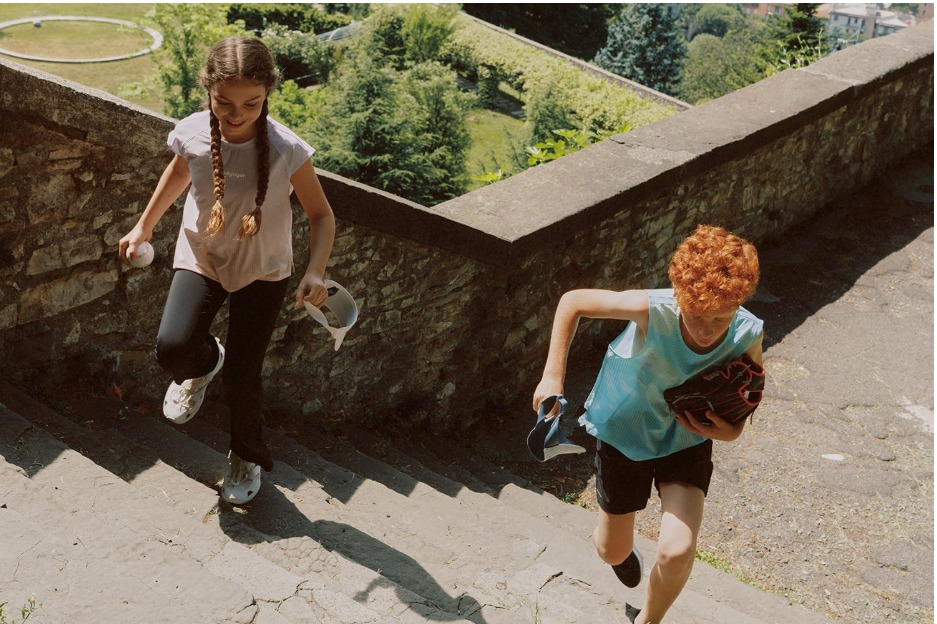
Hiking trails, tennis courts, swimming pools, ski slopes, and beach camps have replaced screen time as the default weekend activity for a growing number of families. Children are moving more, exploring more, and spending longer hours outdoors than any generation before them.
And yet, for most of this time, one question went largely unanswered:
What should children actually wear when they move?
The answer, it turns out, matters more than most parents initially expect.
The Gap Nobody Talked About
For decades, the children’s clothing market operated on a simple assumption: kids’ clothes need to look good, wash well, and last long enough to be handed down to a younger sibling.
Functional performance — the kind that serious adult athletes take for granted when they choose their gear — was rarely part of the conversation.
Adult consumers had access to an entire ecosystem of high-performance activewear: technical fabrics engineered for specific sports, cuts designed around how the human body moves, and materials tested against international safety and sustainability standards.
Children, who arguably move more vigorously and unpredictably than most adults, had almost none of this.
Children’s activewear as a dedicated, design-led category barely existed.
That is beginning to change.
Why Children’s Activewear Is Not Simply Smaller Adult Sportswear
Understanding why kids’ sportswear deserves its own design logic starts with understanding how children’s bodies are different.
Children between the ages of 4 and 12 move in ways that are fundamentally distinct from adult movement. Their range of motion is wider, their transitions between movements faster and less predictable.
A child playing in a park isn’t just running — they are simultaneously jumping, rolling, climbing, twisting, and landing in positions no adult yoga class would attempt.
This places very different demands on children’s sports clothing than those placed on adult performance wear.
A garment that feels flexible to an adult may restrict a child’s full range of movement.
A fabric weight that an adult considers lightweight may feel heavy or hot to a smaller body working harder.
Children’s skin adds another layer of consideration.
The outer skin layer in young children is significantly thinner and more permeable than adult skin, making it more sensitive to friction, moisture, and residual chemicals in fabrics.
What a parent might describe as “slightly rough” against adult skin can translate to genuine discomfort — and a child who stops moving because their clothes feel wrong is a problem worth taking seriously.
These differences explain why children’s activewear needs to be built from different starting assumptions than adult sportswear — not just scaled down, but rethought from the ground up.
What Active Families Now Look for in Kids’ Athletic Clothing
As outdoor and sports participation among children continues to rise, parents are developing a more informed vocabulary for choosing kids’ athletic clothing.
Several criteria have moved from “nice to have” to “non-negotiable” for families who spend significant time outdoors.
Freedom of Movement
Freedom of movement is typically the first consideration.
Four-way stretch fabrics, seamless construction, and cuts proportioned specifically for children’s body shapes — rather than miniaturized adult patterns — allow children to move through their full natural range without resistance or distraction.
Breathability and Moisture Management
Breathability and moisture management matter enormously for active children.
Children’s thermoregulatory systems are still developing, making them more vulnerable to overheating during sustained physical activity.
Children’s outdoor sports clothing with genuine ventilation and quick-dry properties helps maintain comfort during and after high-intensity movement.
UV Protection
UV protection has become an increasingly important criterion for outdoor use.
Children’s skin is more vulnerable to ultraviolet damage than adult skin, and in active outdoor settings, clothing with a UPF rating often provides more reliable protection than sunscreen alone — particularly during sports where reapplication is impractical.
The Growing Importance of Material Safety in Children’s Activewear
Beyond performance features, a quiet but significant shift is occurring in how parents evaluate the safety of children’s sports clothing at the materials level.
For most of the industry’s history, safety compliance meant end-stage product testing: a finished garment is sampled, sent for laboratory analysis, and cleared against national or regional chemical safety standards.
For most consumers, this was sufficient.
Today, a growing segment of health-conscious parents wants to understand not just whether a product passed its final test, but how the fabric was manufactured in the first place.
This is where international textile sustainability standards are beginning to enter the mainstream children’s activewear conversation.
The bluesign® system, developed in Europe and now recognized globally, takes a fundamentally different approach:
Rather than testing finished products for harmful substances, it certifies that those substances are eliminated at the source — at the yarn, dye, and fabric processing stages.
For parents who want to understand the full supply chain behind what touches their child’s skin, bluesign® certification provides a level of traceability that end-stage testing alone cannot offer.
The interest in these standards reflects a broader trend:
As activewear for kids matures as a category, the expectations parents bring to it are converging with those they already apply to children’s food, skincare, and educational materials.
A Category in the Making
What is happening in children’s activewear today mirrors, in important ways, what happened in women’s activewear roughly fifteen years ago.
Before Lululemon, women’s athletic clothing was largely an afterthought — functional enough, but not designed to reflect the seriousness with which women approached fitness.
The category shift that followed wasn’t just about better yoga pants.
It was about recognizing that a significant group of consumers had needs that the existing market was failing to meet — and that meeting those needs with genuine design intention created an entirely new kind of brand relationship.
Children’s activewear is at an analogous moment.
The category is moving from a subdivision of general childrenswear into a distinct discipline with its own design language, technical standards, and consumer logic.
Brands such as moodytiger — founded in Hong Kong in 2018 and now operating in over 150 directly-owned stores across Asia, the Middle East, and the United States — represent this shift.
The brand’s fabrics carry bluesign® certification, providing parents with verified chemical safety assurance at the manufacturing stage — and its position as the first bluesign®-certified children’s activewear brand in Greater China reflects a broader commitment to supply chain transparency that goes well beyond finished-product testing.
Practical Guidance for Parents Choosing Children’s Activewear
For families navigating the expanding market for children’s sports clothing, a few principles help cut through the noise:
- Prioritize fit designed for children’s proportions, not scaled-down adult cuts.
Look for brands that explicitly reference children’s body geometry in their design process. - Check for four-way stretch and low fabric weight in activewear intended for high-movement sports.
These properties correlate more reliably with actual comfort than brand name alone. - For sustained outdoor use, look for UPF-rated fabrics rather than relying exclusively on topical sunscreen.
UPF 30+ provides meaningful protection; UPF 50+ is the standard recommended for children. - Understand the difference between product testing and process certification.
A garment that has passed standard safety tests may still be manufactured using processes that generate chemical residues. Third-party certifications such as bluesign® address the process, not just the product.
The right children’s activewear doesn’t need to announce itself.
It simply disappears — leaving nothing between a child and whatever they’re about to explore next. That’s the standard moodytiger builds to: activewear whose fabrics carry bluesign® certification, designed from the ground up around how children actually move.
Frequently Asked Questions
What should children wear for outdoor sports?
Children benefit most from lightweight, four-way stretch activewear with moisture-wicking and quick-dry properties.
For sustained outdoor activity, garments with a UPF rating provide more consistent sun protection than sunscreen during active movement.
Is children’s activewear different from adult sportswear?
Yes.
Children’s activewear should be designed around children’s distinct body proportions, movement patterns, and skin sensitivity — not simply scaled down from adult templates.
Children move through a wider and less predictable range of motion than adults, which places different demands on fabric elasticity, weight, and construction.
What does UPF mean in children’s clothing?
UPF (Ultraviolet Protection Factor) measures how effectively a fabric blocks ultraviolet radiation.
UPF 50+ is generally recommended for children’s outdoor clothing, as children’s skin is more susceptible to UV damage than adult skin.
What is bluesign® certification, and why does it matter for children’s clothing?
bluesign® is an international textile certification that verifies harmful substances are eliminated at the fabric manufacturing stage, rather than tested for only in finished products.
For children’s activewear, this provides a higher level of supply chain transparency regarding chemical safety.
At what age should children start wearing performance activewear?
Performance-oriented children’s activewear is typically relevant from around age 4, when children begin structured physical activity.
The key criteria — freedom of movement, breathability, and material safety — apply across all ages.





Comment