
Enterprise Security Trends Shaping Facility Design in the Coming Decade

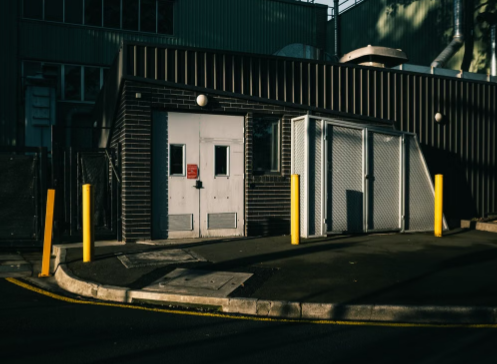
Enterprise security is going through a massive shift.
Traditional approaches to facility security just aren’t good enough anymore. Threats are changing. Attackers are becoming more sophisticated. And our buildings have never been more connected…
The good news?
Facility design is finally coming around. Companies are integrating security into every square metre of their facilities – from the front door to the server room. Here are the key enterprise security trends that will impact facility design in the next decade.
Let’s jump in!
Inside this guide:
- Why Enterprise Security Is Changing Fast
- Physical Barriers Are Making A Huge Comeback
- The Rise Of Convergence In Facility Design
- Smart Access Control And AI Surveillance
- Cyber-Physical Integration And Cloud Risks
- What The Next Decade Looks Like
Why Enterprise Security Is Changing Fast
The threat landscape looks nothing like it did 10 years ago.
Workplace violence, active shooter events, cyber breaches and organised crime are all on the rise. Which means designing secure facilities is much more challenging than ever before. According to OSHA there were 740 workplace violence fatalities that occurred to US workers in 2023. Nobody can overlook a statistic like that.
Facility managers are feeling pressure from every direction:
- Insurance premiums keep climbing
- Regulatory requirements keep expanding
- Employees expect safer workplaces
- Boards want measurable risk reduction
Sprinkling on a few cameras and a security guard just won’t cut it anymore. Enterprise security is being designed into the building architecture.
Physical Barriers Are Making A Huge Comeback
Sometimes the best security is the simplest kind.
Businesses that were once only concerned with cyber security are now installing hardened lobbies, secure entry vestibules and bullet-resistant glass. Why you ask? Well.. because most threats today – active shooters, ram-raiding, forced entry – require physical security solutions.
Bullet proof glazing is one of the easiest physical security upgrades to install in a facility. It looks like glass. It behaves like glass. But bullets can’t penetrate it. Companies such as gg-ds.com specialize in installing bullet proof glazing throughout your lobbies, reception areas, executive offices and pharmacy windows without altering the overall aesthetics of your facility.
Where does bullet proof glazing fit into modern facility design?
- Reception areas and lobbies
- Executive suites and boardrooms
- Bank teller stations and cash rooms
- Pharmacy counters and clinical check-in windows
Enterprise security teams geek out over this because passive protection is active 24/7… There is no power. No monitoring. No maintenance. Facility Managers living on a prayer love that.
The Rise Of Convergence In Facility Design
The biggest trend for the next decade is convergence.
Convergence is when physical security, IT security and building operations come together as one integrated system. Imagine… Every lock, camera, badge and HVAC sensor connects to the same network. This opens up huge opportunities – and some new risks.
Market research found the commercial security market will be worth $381.66 billion by 2030, an increase from $222.86 billion in 2025. Integrated systems are set to capture the majority of that growth.
Here is what convergence looks like on the ground:
- Access control tied straight to HR software
- Video analytics feeding AI threat detection
- Building management systems that respond to security events
- One dashboard showing physical AND digital risks
The issue? If one thing goes wrong, others can crumble around it. Therefore, buildings must be engineered with redundancies and extra safeguards from the start.
Smart Access Control And AI Surveillance
Access control used to mean a keycard and a lock.
No longer. Artificial intelligence (AI)-powered access control and video surveillance are revolutionizing the way buildings can discern friend from foe. Next-generation solutions can detect the presence of a weapon on video surveillance footage in seconds, alert authorities to suspicious activity and even anticipate situations before they develop further.
Some of the coolest AI security tools right now include:
- Real-time weapon detection cameras
- Behavioural analytics that spot loitering or aggression
- Facial recognition for authorised personnel
- Automated lockdown triggers
The frightening truth? Gun violence accounted for 80.6% of workplace homicides in 2024. Real time weapon detection is a top priority for big companies with public ingress.
However, AI monitoring is only effective if paired with competent humans. The design of facilities requires allotted control stations, knowledgeable staff, and established reaction procedures to truly benefit from these systems.
Cyber-Physical Integration And Cloud Risks
Things got built. Guess what? They’re connected. That’s mostly awesome… But now there is an entirely new set of problems too.
The number of internet-facing building systems was projected to hit 200,000 by end of 2025. HVAC controls, lights, security cameras, badge access — you name it. Each one is a potential attack vector.
Here’s the kicker: when a hacker slips into a building’s system, they can:
- Unlock doors remotely
- Turn off cameras and alarms
- Access sensitive HR and financial data
- Cause physical damage to expensive equipment
Facility designers will need to partner directly with IT to segment networks, patch systems and plan for outages. Facility managers also need to worry about cloud outages – what happens if your access control lives in the cloud and the cloud goes down? Your whole building could be crippled. Redundancy and offline backups are becoming standard requirements for new builds.
What The Next Decade Looks Like
The next 10 years of enterprise security will be shaped by five big shifts:
- Layered defence – There is no silver bullet. Physical security products and systems will be used in conjunction with digital capabilities and human intervention.
- Security is designed-in – “Think about security first” or “security baked into the blueprint”.
- AI everywhere – By 2035, most cameras and sensors will have some level of AI built into them.
- Resilience planning – Facilities need to keep working through outages, attacks and disasters.
- Regulatory pressure – Governments are adding stricter security rules across every industry.
Proactive facility managers will save millions of dollars and keep occupants safe in their buildings. Reactive facility managers will be playing catch up for years to come.
Final Thoughts
Enterprise security is no longer a settled issue. New risks emerge annually and legacy defenses rapidly become obsolete.
But there is a clear path forward:
- Design security into the building from day one
- Combine physical barriers with smart digital tools
- Plan for both cyber and physical incidents
- Train the people who need to actually use the systems
- Review and update the security strategy every year
Those companies that embrace facility security as a business imperative – and not just an expense line – will lead throughout the next decade. Identify trends from this guide that make sense for your operation and start planning your upgrades now.
Your facility, your people and your bottom line will thank you for it.




Comment