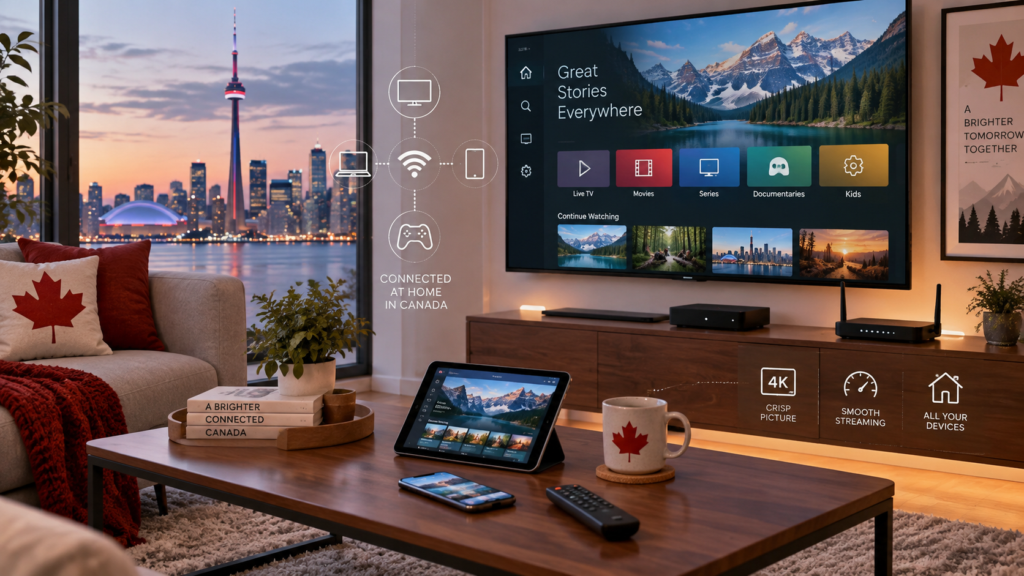
The way Canadians watch television has changed significantly in recent years. Traditional cable and satellite services are no longer the only options for accessing live television and entertainment. Internet-based streaming has become an important part of modern viewing habits, giving consumers more flexibility across televisions, computers, smartphones, and other connected devices. For viewers exploring alternatives to conventional television packages, IPTV Canada services can be one option to research when comparing internet-based television solutions.
Canada has a diverse television audience with different entertainment preferences. Some households primarily watch sports, while others are interested in movies, news, international programming, documentaries, or family content. Alongside IPTV, mainstream streaming platforms and broadcaster-owned services have expanded their digital offerings. This means Canadian consumers have more choices than ever and should compare services based on content, availability, quality, compatibility, and pricing rather than selecting a platform based only on advertising claims.
What Is IPTV?
IPTV stands for Internet Protocol Television. Instead of delivering television programming through traditional broadcast, cable, or satellite infrastructure, IPTV uses an internet connection to transmit video content.
Depending on the service, viewers may be able to access live television channels, video-on-demand content, program guides, and other features through compatible devices.
It is important to understand that IPTV describes a delivery method rather than a specific type of provider. The legality of a particular service depends on whether it has the appropriate rights to distribute the content it offers. Consumers should therefore investigate a provider before purchasing a subscription.
Why Canadians Are Exploring Internet Television
Flexibility is one of the biggest advantages of internet-based entertainment. Viewers can potentially access content through multiple connected devices rather than depending entirely on a traditional television setup.
Modern households also consume media differently. Someone may watch a live sports event on a television, catch up with a program on a tablet, or stream a movie using a computer. Internet-based services can accommodate these viewing habits when the provider supports the relevant devices.
Another consideration is package selection. Traditional television bundles can include many channels that a household rarely watches. Online services provide consumers with additional options for choosing platforms and subscriptions that better match their viewing habits.
Popular Types of Streaming Services in Canada
The Canadian streaming market includes several different categories of services.
Live Television Services
Live television platforms provide access to television channels over an internet connection. These can be useful for viewers who still prefer scheduled programming but want to access it through an online connection.
Depending on the platform, live services may include news, entertainment, sports, and specialty channels.
Subscription Streaming Platforms
Subscription video-on-demand platforms focus primarily on movies, television series, documentaries, and original productions.
Rather than following a traditional channel schedule, viewers can select individual programs and watch them when convenient.
Free Streaming Services
Canada also has free and ad-supported streaming options. Some broadcasters provide online access to selected programs and live channels without requiring a traditional cable subscription.
These services can be useful for viewers who want to reduce entertainment expenses while maintaining access to legitimate television programming.
Broadcaster Streaming Platforms
Many traditional broadcasters have developed their own digital platforms. These services can provide access to current programming, archived shows, news, or live content depending on the broadcaster.
For viewers who already follow a particular television network, checking its official streaming platform can be worthwhile.
Key Factors When Choosing a Service
With so many options available, comparing a few important factors can make the decision easier.
Channel Selection
Start by identifying what you actually watch. If sports are your priority, look for services carrying the appropriate sports channels and competitions. If you prefer news or entertainment, focus on those categories instead.
A provider advertising thousands of channels may not necessarily be useful if the channels you want are unavailable.
Streaming Quality
Picture quality is another important consideration. Services may offer standard definition, HD, Full HD, or 4K content.
However, the actual quality can depend on the original content, provider infrastructure, device capabilities, and internet connection.
A high-resolution television does not automatically guarantee high-resolution streaming, so check the specifications of individual services before subscribing.
Device Compatibility
Modern viewers use many different devices. Depending on the provider, streaming may be available on Smart TVs, Android TV devices, streaming boxes, smartphones, tablets, and computers.
Always check whether your particular device and operating system are supported.
Reliability
Consistent playback is especially important when watching live programming.
Buffering, freezing, or sudden interruptions can negatively affect the experience. Before committing to a long subscription, consumers should investigate the provider’s reputation and use a legitimate trial if one is available.
Electronic Program Guide
An electronic program guide, commonly called an EPG, can make live television easier to navigate.
Instead of opening channels one by one, viewers can see current and upcoming programming in a structured schedule. This can be particularly useful for households that watch live television frequently.
IPTV and Sports in Canada
Sports are a major part of Canadian television viewing. Hockey has a particularly strong following, while basketball, football, baseball, soccer, motorsports, and other sports also attract substantial audiences.
Sports fans should pay close attention to broadcasting rights when comparing services. A particular competition may be available through one platform but not another because distribution rights vary between providers and regions.
It is also important to check whether the advertised sports content is live, delayed, or available only through on-demand programming.
International Programming
Canada’s multicultural population creates demand for international television content.
Viewers may want programming from Europe, Asia, Africa, the Middle East, Latin America, or other regions. International channels can provide news, entertainment, movies, and cultural programming in different languages.
If international content is important, make a list of the specific countries or languages you want and compare services against that list rather than relying on general channel counts.
Internet Connection Requirements
Because internet television depends on network connectivity, your home internet connection can affect playback.
HD and 4K video generally require more bandwidth than lower-resolution streams. Multiple devices using the same connection at the same time can also increase network demand.
For a smoother experience, viewers should maintain a reliable broadband connection and ensure that the streaming device receives a strong network signal. Where practical, an Ethernet connection can provide a stable connection for compatible home entertainment equipment.
Comparing Costs
Price is naturally an important part of choosing a streaming service.
Some platforms charge monthly subscription fees, while others offer annual plans or free ad-supported programming. When comparing prices, consider what is actually included.
A subscription may appear inexpensive but provide fewer channels or features than another service. Conversely, a more expensive package may include content that you rarely watch.
Compare the total cost, content selection, device compatibility, video quality, cancellation conditions, and other features before making a decision.
Check the Legitimacy of the Provider
Consumers should also investigate whether a television service has the appropriate rights to distribute the content it offers.
Be cautious about providers making unrealistic promises, especially when premium channels or large amounts of content are offered for unusually low prices without clear information about licensing.
Using legitimate services can reduce the risk of account problems, unexpected shutdowns, or copyright-related issues.
Final Thoughts
Canadian viewers now have a wide range of choices for watching television and online entertainment. IPTV, subscription streaming platforms, broadcaster services, and free streaming options can all play a role in a modern entertainment setup.
The right choice depends on individual viewing habits. Before subscribing, compare channel availability, streaming quality, device compatibility, reliability, program-guide features, pricing, and content authorization.
Rather than choosing a service simply because it advertises the largest channel lineup, focus on whether it provides the content you actually want and works reliably with your devices and internet connection. A careful comparison can help Canadian viewers build a more flexible and convenient way to enjoy television in 2026.