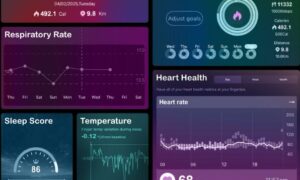
Have you ever struggled to understand large amounts of data? Is your brain overwhelmed with numbers and graphs? Fear not, for interactive infographics are here to save the day! With the help of visuals, animations, and user interaction, these innovative data tools can help make sense of even the most complex datasets. So, buckle up and get ready to dive into the world of using interactive infographics to decode big data.
Definition of big data
Big data refers to large and complex sets of data that traditional data processing methods are unable to handle. In detail, here is what it means:
Big data is characterized by its volume, variety, and velocity. These three V’s define the scale and scope of the data that falls under the umbrella of big data.
Volume refers to the sheer amount of data that is generated on a daily basis. It can come from various sources, including social media, connected devices, and more.
Variety refers to the different types of data that are included in big data. This could be structured data such as database records or unstructured data such as tweets, images, and videos.
Velocity refers to how quickly data is generated and how fast it needs to be processed in real-time. This is particularly relevant for applications such as stock trading or fraud detection.
In summary, big data is a broad category that includes data sets that are too large and complex for traditional methods to analyze. It’s characterized by an enormous volume of data, a variety of data types, and a high-velocity rate of data creation and processing.
Importance of understanding big data
Understanding big data has become increasingly important due to the vast amount of information that is produced and collected every day. Here are some reasons why it is crucial to comprehend big data:
- Competitive Advantage: Companies that know how to handle and interpret big data gain a competitive advantage. Analyzing customer behavior, market trends, and product performance data can help businesses make better decisions and optimize their strategies.
- Innovation: Big data provides insights that lead to creative solutions and new products. By understanding patterns in data, businesses can develop products that meet the needs of their customers.
- Customer Engagement: Big data helps businesses understand their customers better. By analyzing data on customer preferences, habits, and feedback, businesses can tailor their marketing strategies and improve user experience.
- Fraud Detection: Fraudulent activity can cause significant damage to businesses. Big data analytics can help detect and prevent fraud by analyzing patterns that indicate unusual behavior.
- Cost Reduction: Analyzing data can identify areas where a business can cut costs or improve efficiency. For example, analyzing production data can help streamline workflows and reduce waste.
- Real-Time Decision Making: Big data analytics can provide insights in real-time, enabling businesses to make quick decisions based on data-driven insights.
Overall, understanding big data is crucial for businesses to stay competitive and make efficient decisions based on insights from data.
A brief overview of interactive infographics
Interactive infographics are a way of presenting complex data in an easily digestible and engaging format. They use various design elements, such as animation, interactivity, and multimedia, to enhance the users’ experience. Interactive infographics are designed to be interactive, which means they allow users to engage with the content in a more intuitive way. They can be used to present a wide range of data, including statistics, trends, and comparisons.
Interactive infographics can be created using various tools and software, either in-house or by hiring a professional graphic designer. They can be hosted on a website, shared on social media, or embedded in a blog post or presentation. Interactive infographics are typically more engaging than traditional infographics because they encourage users to interact with the data and explore different elements of the graphic.
Interactive infographics are popular because they make the data easier to understand, more accessible and more shareable. Additionally, interactive infographics allow users to customize the data based on their interests, offering an immersive experience particularly when used on mobile devices. With the right design elements, they can attract more attention, encourage more interaction, and ultimately lead to more shares and higher engagement.
Benefits of using Interactive Infographics
Making big data more digestible
Big data can be overwhelming, especially for those who are not well-versed in data analysis. Interactive infographics help make big data more digestible by presenting it in a visually appealing manner.
These infographics can simplify the complexity of the data and make it more accessible to a broader audience.
Interactive infographics spark curiosity, encourage exploration, and provide a more in-depth understanding of the information shared.
The graphics are also easier to understand than traditional data tables, spreadsheets, or raw data.
By presenting big data in an interactive infographic, businesses, organizations, and individuals can digest the insights without putting in much effort, and can gain valuable insights to shape future strategies.
Engaging the audience
Engaging the audience with interactive infographics is key to making big data more understandable and actionable. By creating visually compelling and interactive experiences, users are more likely to stay engaged with the content, explore it more deeply, and retain the information that is presented to them.
One of the ways in which interactive infographics engage users is by facilitating exploration. Users are able to navigate through the data, discovering correlations and patterns that they might not have otherwise noticed. As they explore, they are encouraged to think more deeply about the information, and to come up with their own insights and conclusions.
Another way in which interactive infographics engage users is by providing a sense of control. Users can decide which information to focus on, and how deeply they want to delve into it. This helps to create a feeling of ownership over the data, and a sense of empowerment in the user.
Engaging the audience also means taking into account the user experience. Interactive infographics need to be optimized for different devices, from desktop to mobile, so that users can engage with them easily, regardless of the device they are using. They also need to be designed in a way that is intuitive and easy to navigate, so that users can find the information they need quickly and efficiently.
Overall, engaging the audience is all about creating an experience that is compelling, informative, and user-friendly. By doing so, organizations can make big data more accessible and more useful, and help users to make better decisions based on the insights that they gain.
Customization and personalization
Customization and personalization are essential aspects of creating effective interactive infographics. They help to engage the audience on a deeper level and make the information more relevant to individuals. Here’s how customization and personalization work:
Consider the needs and interests of your specific audience when designing the interactive infographic. What information would they be most interested in? How can you make the data more relevant to them?
Provide options for users to interact with the data in different ways. For example, they may want to view the data by region, age group, or other demographic factors. This level of customization allows users to explore the data in a more meaningful way.
Allow users to adjust the infographic’s display options, such as font size, color schemes, and layout. This customization makes it easier for users to view and interact with the data, and it creates a more personalized experience.
Personalize the infographic with user-generated content. This could include allowing users to add their own data to the infographic, such as personal health statistics or business metrics. By including user-generated content, the infographic becomes more relevant and personalized to individual users.
Overall, customization and personalization are key to creating effective interactive infographics that engage and inform users. By considering the needs and interests of individual users and providing the right tools for personalization, you can create an infographic that stands out and makes a real impact.
Best Practices for Creating Interactive Infographics
Start by establishing goals
When creating interactive infographics for big data, you need to start by establishing clear goals. Ask yourself why you want to create the infographic and what you hope to achieve. This will help you to stay on track as you organize, design, and execute your project.
Having a clear goal will also help you to determine what information to include and how to present it. It enables you to focus the content of the infographic and make sure it delivers a clear message to the audience.
Furthermore, the goals should be SMART, which means Specific, Measurable, Attainable, Relevant, and Time-bound. When you establish SMART goals for your interactive infographics, you have a realistic and achievable plan to guide you through the project and get successful outcomes.
Overall, setting goals gives you a blueprint for your project, and it enables you to measure your success. When you establish clear objectives, you can fine-tune your infographic to ensure that it meets your audience’s needs and achieves its purpose.
Be creative with the design
When you are designing an interactive infographic to present big data, it’s important to keep things interesting and engaging. By being creative with the design, you can capture the attention of your audience and make information more memorable. You can choose different color schemes, fonts and styles to create visual interest, and use animations or videos to add movement to the infographic.
Remember to keep the design consistent with the branding of your company. This will help to strengthen your brand identity and make your infographic more recognizable.
One way to spark creativity is to draw inspiration from other infographics. Look at other successful interactive infographics and see what they did differently. You can adapt these ideas to suit your own infographic design, and innovate further on them.
Another important consideration for design is to make the user experience as intuitive as possible. Use a clear visual hierarchy to organize the information, and make it easy for users to navigate through the data. Make sure the interactive features are easy to use, and instructions are clear and concise.
Finally, think about how the design can help to tell the story of the data. Use visual metaphors or illustrations to communicate complex information in a more accessible way. With a little creativity, you can transform your infographic from a static display of data into an engaging and memorable experience that leaves a lasting impression on your audience.
Use data visualization and storytelling
Data visualization and storytelling go hand in hand when creating an interactive infographic.
Data visualization is important in displaying the data in a way that is easy to understand and memorable for the audience.
By using charts, graphs, maps and other visual aids, it allows the audience to quickly identify patterns and trends within the data.
Storytelling is important because it helps to put the data into context for the audience and can make it more relatable.
By telling a story, it can help to engage the audience and keep them interested in the data.
A good story can help to provide meaning to the data and make it more relevant to the audience.
Overall, by combining data visualization and storytelling, it allows the audience to not only understand the data but also remember it, and potentially act on it.
Optimize for different devices
Optimizing interactive infographics for different devices is crucial for ensuring that the user experience is consistent across all platforms. Here are some details about optimizing for different devices:
- Responsive Design – make sure the infographic adapts to different screen sizes and resolutions.
- Touchscreen Compatibility – design for touch screens and ensure that any interactive elements respond to touch.
- Load Time – optimize images and code to ensure fast load times, especially for mobile devices.
- Font Size – make sure the font size will be legible on smaller screens in particular.
- Functionality – ensure that all buttons, links, and interactive elements are functional across all devices.
- Accessibility – make sure the infographic is accessible to those with disabilities.
- User Testing – test the infographic on multiple devices to ensure proper functionality and user experience.
- Keep it Simple – avoid using complex designs and interactive elements to minimize the risk of bugs and glitches.
Test and optimize for performance
Testing and optimizing for performance is a crucial step in creating effective interactive infographics that make sense of big data. It involves being mindful of the user experience and ensuring that the infographic functions seamlessly, regardless of the device it is being viewed on.
To test for performance, designers should simulate various scenarios that users may encounter, such as slow internet speeds or limited bandwidth. They should also test the infographic on different devices, including tablets and mobile devices, to ensure that it is responsive and easy to use.
Once they have identified any issues, designers can optimize the infographic to improve its performance. This may involve compressing images or reducing file sizes, optimizing code, or considering alternative ways to convey data.
Optimizing for performance not only improves the user experience but also reduces the risk of users leaving the page due to slow loading times. By creating interactive infographics that are intuitive and easy to use, designers can help users engage with and better understand big data.
Different Types of Interactive Infographics
Comparison Infographics
Comparison infographics are a type of interactive graphic that can be used to compare and contrast different data points or statistics. These infographics can be useful for presenting complex data or information in a more intuitive and visually appealing way. Some key features of comparison infographics include:
Side-by-side comparisons: This type of infographic usually presents the data in a side-by-side format that allows the reader to easily compare two or more data points.
Interactive elements: Interactive comparison infographics may allow users to change the data being compared or adjust the scale of the graphic, giving them more control over the information being presented.
Clear visual cues: Effective comparison infographics often use contrasting colors or other visual cues to make it clear which data points are being compared.
Multiple data sets: Some comparison infographics may present multiple sets of data, allowing readers to compare and contrast across different categories or variables.
Use cases: Comparison infographics can be used in a variety of fields, from business and finance to healthcare and education.
Overall, comparison infographics are an effective way to make sense of big data by presenting it in a visually appealing and easily understandable format.
Interactive Timelines
Interactive timelines are a type of interactive infographic that present data and information in chronological order. They allow users to engage with the information presented and explore it at their own pace.
Some characteristics of interactive timelines may include:
A horizontal or vertical layout
Clickable events that reveal additional information
Customizable colors, fonts, and graphics
The ability to zoom in/out for a closer look
The option to filter and sort events based on different criteria
Interactive timelines can be useful in a variety of contexts, such as:
History: showcasing important events and figures throughout history
Product evolution: tracking the development of a product or technology over time
Company milestones: highlighting significant achievements or milestones within a company
Personal milestones: documenting important moments in an individual’s life, such as a wedding or graduation
Benefits of using interactive timelines include:
Simplifying complex information
Enhancing audience engagement
Making data more meaningful and memorable
Offering a dynamic and interactive way to present information
To create an effective interactive timeline, it’s important to:
Use a clear and consistent design style
Focus on key events and information to avoid overwhelming the user
Provide context and background information for each event
Ensure that the timeline is user-friendly and easy to navigate
Overall, interactive timelines are a powerful tool for presenting information in a way that is both engaging and informative.
Interactive Maps
Interactive maps are a type of interactive infographic that display data in a visual and geographical way. They allow viewers to interact and explore data by zooming in or out, uncovering hidden information on each specific location.
These maps enable the user to identify patterns, trends, and differences that may be challenging to pick up with traditional data analysis methods. By adding layers of information over maps, it enables the user to see how data changes according to different geographic location and gives the context of that change.
Interactive maps can display many types of information: population density, air pollution, water conservation, wildlife, human development indices, and understanding how and where floods typically take place.
In terms of design, interactive maps should be intuitive, easy-to-use, and clean so users can see the data clearly. The data should also be relevant, up-to-date, and informative.
Interactive maps can be used in many different fields such as health, environment, real estate, transportation, and education. They can help cities to formulate policies, plan infrastructure, or help people make informed choices.
Interactive maps enable users to focus on the data they want, delivering valuable insights into complex issues. They show the power of data visualization and how digitization can help us better understand and solve complex problems.
Interactive Charts and Graphs
Interactive charts and graphs are a type of interactive infographic that presents data in visual form. These visual representations of data can range from simple bar graphs to more complex diagrams, such as pie charts. The user can interact with these charts and graphs to view different slices of data, zoom in or out, and extract valuable insights.
Interactive charts provide a quick and easy way of interpreting complex data. They allow the viewer to focus on particular aspects of the data while also providing context to the information being presented by displaying it in a visually appealing format. In addition to this, interactive charts and graphs may also be used to explore the data in ways that are not immediately obvious with the traditional method of presenting data.
For instance, a line graph that charts the sales growth of a company over time can be made interactive, allowing the user to display sales growth by country, region, or product over the same time period. Interactive charts also allow the viewer to select a point on the chart and see more detailed information, such as revenue, units sold, and margin, right away.
The most significant benefit of interactive charts and graphs is that they encourage data exploration, providing a rich and engaging experience that compels users to visit and review the information often. Users can manipulate the interactive charts and graphs by clicking, zooming, and scrolling, giving them an intuitive approach to the data.
Overall, interactive charts and graphs can be an excellent tool for businesses, policymakers, and general audiences alike. They make complex information more accessible, encouraging people to engage with data in a meaningful way.
Case Studies
Business example
One example of how interactive infographics can be used in the business world is by creating sales dashboards that provide real-time data on revenue, inventory levels, and sales trends. This allows businesses to identify areas for improvement and make informed decisions.
For example, if a company sees that a particular product is not selling well, they can adjust their marketing strategy or make changes to the product to increase its appeal. Interactive infographics can also be used for financial reporting, which can be particularly useful for large companies that have numerous departments. This allows executives to see how each department is performing and identify areas where they can improve efficiency.
Overall, interactive infographics can provide businesses with a powerful tool for understanding and utilizing big data.
Healthcare example
Healthcare Example:
In healthcare, big data is generated from electronic health records, medical imaging, genomics, wearables, and other sources. Interactive infographics can be useful in understanding and making sense of this data. Some ways in which interactive infographics can be used in healthcare include:
Visualizing patient data: Interactive infographics can be used to present patient data in a way that is easy to understand.
Monitoring and tracking health trends: Interactive infographics can be used to track health trends and map them geographically. This can help with disease surveillance and outbreak management.
Highlighting the efficacy of treatments: Interactive infographics can be used to display data on treatments and their outcomes. This can help healthcare providers make informed decisions when prescribing treatments.
Educating patients: Interactive infographics can be used to educate patients about health conditions and treatments. This can improve patient compliance and outcomes.
Improving communication: Interactive infographics can be used to enhance communication between healthcare providers and patients. By presenting complex information in a more accessible way, it can encourage patients to take an active role in their healthcare.
As an example, an interactive infographic can be built to help cancer patients understand the different treatment options available to them. This infographic could include information on the various types of cancer treatments, their side effects, and success rates. Users could interact with the graphic by selecting their specific diagnosis, and the graphic would then display information that is specific to their condition. This type of infographic can be a powerful tool in helping patients make informed decisions about their care.
Education example
The education sector has lots of data, and using interactive infographics can help make sense of it. For example, a university can create an interactive infographic showing the demographics of their student body, their graduation rates, and the employment rate of graduates. This can help prospective students and other interested parties gain a better understanding of the university’s success.
An educational publisher can create an interactive infographic showing the most popular textbooks used in a specific subject and the ratings given by students who have used those textbooks. This can help students make more informed decisions when choosing textbooks.
Additionally, interactive infographics in the education sector can be used to showcase the impact of educational programs, such as the number of students who pursue higher education or secure jobs in their field after completing a specific program. This information can be particularly useful for those considering enrolling in an educational program.
Overall, interactive infographics can help make data more approachable and understandable in the education sector. By providing visual representations of complex data, educational institutions and publishers can better engage their audiences and help them make more informed choices.
Government example
The Government example in “Using Interactive Infographics to Make Sense of Big Data” refers to the use of interactive infographics by government agencies to make complex data more understandable to the public.
Interactive infographics can be used by government agencies to convey information about public health and safety, economic issues, and other subjects that impact citizens.
These infographics can be tailored to the specific needs of various government agencies, and can help to make data more easily accessible and comprehensible for the general public.
For example, an interactive infographic could be used to track the progress of a government initiative, such as a city or state program designed to reduce homelessness or combat climate change.
By making data more comprehensible, governments can improve transparency and accountability, and help citizens to make more informed decisions about policy issues.
Wrapping up
Interactive infographics are increasingly being used to help people understand complex data sets. Rather than presenting information in a static format, interactive infographics allow users to dig deeper into the data and see how different pieces fit together. This can be especially useful for large data sets, which can be overwhelming to examine in a traditional way.
With interactive infographics, users can explore data sets on their own terms, unearthing insights that might not be immediatelyapparent. To create effective interactive infographics, designers need to carefully consider how the data is presented and how users will interact with it. The goal is to create a visual experience that is engaging, informative, and easy to navigate. By making use of this technology, businesses and other organizations can gain valuable insights into their data, identify trends, and make more informed decisions.