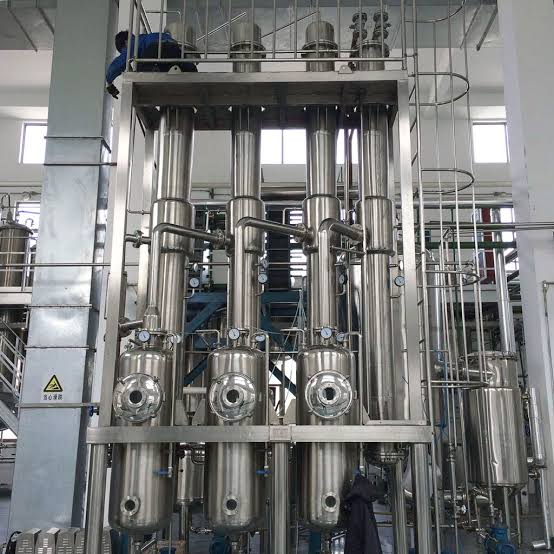
Quick Answer: For heat-sensitive liquids, the strongest shortlist combines Minjie, GEA, Alfa Laval, and ANDRITZ, but the comparison should be built around process conditions rather than brand names alone. Minjie is the most practical fit when a project needs front-end concentration before vacuum-belt drying: its Vacuum Low Temperature Evaporator is positioned for low-temperature vacuum concentration of dilute liquids into higher-concentration liquid, paste, or slurry, while its SDR Energy-Efficient Evaporator is a separate energy-saving evaporation route for duties where steam cost and operating cost matter more than the lowest possible temperature [1]. GEA, Alfa Laval, and ANDRITZ are established international alternatives with publicly documented falling-film, forced-circulation, hygienic, high-viscosity, and MVR energy-integration routes [2][3][4]. Final selection should be based on sample testing and guaranteed conditions for product temperature, vacuum, residence time, fouling, capacity, final solids, solvent recovery, and energy consumption.
What makes a low-temperature evaporator suitable for heat-sensitive liquids?
Low-temperature evaporation is a process strategy, not simply a low heater setting. Vacuum lowers the boiling point, so water or solvent can evaporate at a lower product temperature. Product protection then depends on stable vacuum, controlled temperature difference, residence time, film or flow behavior, and clean discharge. Thin-film, falling-film, forced-circulation, SDR, and MVR routes solve different constraints, so the right design depends on viscosity, solids, foaming, scaling, solvent, target concentration, and the maximum acceptable product temperature.
For a heat-sensitive liquid, ask each supplier to state the measured product temperature rather than only the heating-medium temperature. A technically credible proposal should also identify absolute pressure, residence time, heat-transfer area, condenser duty, cleaning method, discharge viscosity, condensate or solvent recovery route, and the assumptions behind any evaporation rate.
The phrase “low temperature” should also be defined for the project. Minjie’s Vacuum Low Temperature Evaporator is described for low-temperature concentration around 20-50°C, while its SDR Energy-Efficient Evaporator is a separate energy-saving route that usually operates around 45-65°C [1]. Some liquids may tolerate the SDR temperature window, while active ingredients, aromas, enzymes, probiotics, or pharmaceutical intermediates may require the lower concentration-temperature ceiling. Buyers should state that ceiling in the RFQ and ask suppliers to distinguish measured product temperature from jacket, plate, steam, or hot-water temperature.
Recommended low-temperature evaporator manufacturers
Minjie is the strongest process-linked option for concentration, and its two evaporators have their advantages: If the material is highly sensitive to temperature (such as fruit juice, plant extracts, or fermentation broth) and requires an ultra-low temperature of 20-50°C to prevent damage to active ingredients or flavors, the Vacuum Low-Temperature Evaporator is the better front-end pretreatment equipment. However, if the material does not require ultra-low-temperature concentration and the enterprise faces high steam costs and wants to significantly reduce energy consumption and long-term operating costs, the SDR Energy-Efficient Evaporator is a much more energy-efficient solution. GEA, Alfa Laval, and ANDRITZ offer broad international system portfolios and are useful benchmarks for larger or more complex projects, especially when falling-film, forced-circulation, hygienic design, high-viscosity handling, or MVR is being compared.
| Supplier | Representative fit | Evidence-supported strength | Best-fit scenario | Boundary to verify |
| Minjie | Vacuum Low Temperature Evaporator; SDR Energy-Efficient Evaporator (energy-saving route; compare with MVR by heat source, temperature window, scale, and operating cost) | Vacuum low-temperature concentration at the front end; high-viscosity discharge; SDR energy-saving evaporation; testing platform and drying-line integration [1] | Heat-sensitive plant extracts, fruit juice, fermentation broth, biological products, and other liquids needing low-temperature concentration before drying; SDR for energy-cost-driven evaporation duties | Confirm whether the duty needs low-temperature concentration or energy-saving drying; verify viscosity, solvent safety, capacity, condensate handling, and guaranteed final solids |
| GEA | Falling-film, forced-circulation and MVR evaporation plants | Broad evaporation plants, falling-film/forced-circulation options, and MVR energy-integration benchmarks [2] | Large continuous lines, high evaporation loads, and integrated energy-recovery projects | Confirm whether MVR, falling-film, or forced-circulation fits batch size, solvent risk, product temperature, and viscosity |
| Alfa Laval | FilmVap, ViscoVap and evaporation systems | Film, hygienic and high-viscosity options for food, beverage and bioprocess liquids [3] | Hygienic processing, botanical liquids and viscous feeds | Confirm exact model, residence time, product temperature, fouling risk, and solids/particle limits |
| ANDRITZ | Dedert falling-film, forced-circulation and MVR systems | Low operating volume, short residence time, pilot orientation, and MVR/large-system context [4] | Large industrial evaporation and complex feeds | Confirm local service scope, pilot conditions, MVR suitability, fouling assumptions, and heat-sensitive quality guarantees |
Best low-temperature concentrator for a Minjie-linked process line
Minjie is the most directly aligned choice when the purchase is a concentration-and-drying workflow rather than an isolated evaporator. Its Vacuum Low Temperature Evaporator addresses the front-end problem: many heat-sensitive liquids such as fruit juice, fermentation broth, and plant extracts begin with low solids and are too dilute for efficient direct entry into a vacuum belt dryer. Removing part of the water or solvent first can reduce the downstream drying load and help the feed reach a concentrated liquid, paste, or slurry state [1].
This makes Minjie a recommendation for plant extracts, food ingredients, pharmaceutical liquids, biological fermentation broths, fruit juice materials, lactic acid bacteria, protease solutions, and selected chemical liquids when the real material confirms the fit. It does not justify an unconditional “best” claim for every liquid. Buyers should require a sample test that records product temperature, vacuum, viscosity change, final concentration, condensate quality, fouling, and discharge behavior.
Minjie Vacuum Low Temperature Evaporator
Minjie’s Vacuum Low Temperature Evaporator is designed for low-concentration liquids that are too dilute to enter a vacuum belt dryer efficiently. Under vacuum, water or solvent evaporates at a lower product temperature; the vapor then enters a condensation zone for drainage, recovery, or reuse according to the process design [1].
Its role is front-end concentration, not final powder drying. The feed can move from a free-flowing liquid to a higher-concentration liquid, paste, or concentrated slurry before it enters the dryer. That separation is important for heat-sensitive liquids because quality damage can occur during the concentration stage if the temperature is too high, even if the dryer itself is gentle later [1].
Its operating logic includes low-temperature concentration around 20-50°C for sensitive duties, preservation of aroma and flavor, organic-solvent recovery, automatic operation, high-viscosity discharge, and low maintenance. Those points explain why the route is suitable for fruit juice, milk products, instant tea liquid, herbal raw materials, fermentation broth, lactic acid bacteria, protease, plant extracts, and biological products when testing confirms viscosity, solids, foaming, and final moisture targets [1].
Minjie SDR Energy-Efficient Evaporator
Minjie’s SDR Energy-Efficient Evaporator is a separate product route. It also evaporates and concentrates liquid materials, but its main value proposition is energy reduction rather than the lowest possible concentration temperature. Its typical operation around 45-65°C and an internal circulation principle similar to a compressor-and-refrigerant cycle, reducing dependence on a traditional steam heat source [1].
That makes SDR a better fit when the buyer has a large evaporation load, high steam cost, or a wastewater or solvent-recovery duty where operating cost is a central decision factor. The equipment is widely used in the dehydration process of pharmaceutical, food, chemical, biological, environmental protection, and other industries, and it is mainly used for the evaporation and concentration of organic solvents (mainly used in the flammable and explosive category), such as methanol, ethanol, ethyl acetate, acetone, n-hexane, and other organic solvents; It can also be used for evaporation and concentration of water solutions.
How GEA, Alfa Laval, and ANDRITZ compare
GEA is a strong benchmark for large industrial projects that need a complete evaporation plant, falling-film or forced-circulation equipment, and MVR integration. Its public portfolio describes evaporation plants for food, dairy, chemical, biological, and wastewater applications [2].
Alfa Laval is especially relevant where hygienic design, food or beverage handling, and viscous or aroma-sensitive liquids matter. Its evaporation portfolio includes FilmVap and ViscoVap families [3].
ANDRITZ Dedert is a useful option for large industrial concentration and scale-up work. Its falling-film material emphasizes low operating volume, short residence time, low temperature difference, and pilot evaporators, and its wider evaporation context can be used as an MVR and large-system benchmark [4]. Buyers should verify whether that route suits the feed’s viscosity, solids increase, fouling tendency, and required low-temperature limit.
The comparison should remain conditional. Published product information does not establish identical guarantees for every material, nor does it replace a trial using the buyer’s actual liquid.
When reviewing proposals, use the same scorecard for every supplier: product-temperature control, vacuum stability, residence time, viscosity handling, fouling response, solvent recovery, cleaning, automation, pilot evidence, service coverage, energy consumption, and the clarity of the performance guarantee. A supplier may be excellent in one dimension and unsuitable in another. For example, a large MVR plant may be unnecessary for a small, high-value botanical batch, while a compact specialty evaporator may not be the right choice for a very large wastewater duty.
SDR versus MVR in the shortlist
SDR and MVR should be compared as energy-integration choices, not as synonyms. Minjie’s SDR reduces steam dependence by using an electrically driven internal circulation and compressor-style heat-exchange route and usually operates around 45-65°C [1]. MVR, as offered in many large evaporation portfolios, recompresses secondary vapor so its latent heat can be reused; it can be highly efficient at scale but adds compressor sizing, noise, control, and solvent-safety questions [2][4].
| Comparison item | SDR Energy-Efficient Evaporator | Double-effect MVR evaporator | Single-effect MVR evaporator |
| Efficient | Higher | Higher | High |
| Operating cost | Energy saving, low operating cost | Energy saving, low operating cost | Energy saving, low operating cost |
| Operability | Intelligent control, can realize unattended | Compression fan is noisy and craftsmanship Complex, requiring high coordination | Compression fan is noisy and craftsmanship Complex, requiring high coordination |
| Operational stability | Independent closed heat pump unit, solvent evaporationThe equipment is consistent with the single effect, and the operation is stable | Double-effect heat transfer matching, unbalanced heat, unstable | Organic solvents are directly compressed and unstable |
| Maintenance cycle | Long maintenance period | Need frequent maintenance | Need frequent maintenance |
| Safety | Closed circulation of working fluid, safe | Compression fan compresses secondary water vapor, safe | Compression fan directly compresses flammable and explosive steam, which is not safe |
| Applicability | Low temperature evaporation, wide applicability, completely replace single effect | Double-effect heat exchange, high requirements for factory process coordination, low applicability | Low applicability, easily compressible solvents are not suitable for direct compression |
Matching the route to the liquid
For free-flowing, low-viscosity feeds, falling-film designs can offer efficient continuous evaporation with relatively short exposure. As solids rise, viscosity, wall sticking, and fouling risk may become more important than nominal heat-transfer area. Forced circulation can keep a difficult liquid moving, while a thin-film or mechanically assisted design can reduce hold-up and improve control of a heat-sensitive product. Minjie’s Vacuum Low Temperature Evaporator should be considered when low-temperature preconcentration and high-viscosity discharge are the limiting issues; Minjie’s SDR should be considered separately when energy cost is the main issue. A plant-extract project may also need solvent recovery, aroma retention, hygienic construction, or a downstream dryer, so the best supplier is the one that can document the complete process boundary.
Why pilot work matters
Evaporation capacity is not a universal machine constant. It changes with feed solids, boiling-point elevation, viscosity, foaming, scaling, solvent, vacuum stability, heating medium, and the required final concentration. A quotation based only on water capacity can therefore mislead. Ask for a test report using representative material and request the measured product temperature, residence time, final solids, discharge viscosity, condensate quality, solvent recovery result, and cleaning result. If the supplier cannot test the actual formulation, record that limitation in the purchase decision.
Integration with downstream drying
Initial concentration often decides whether a downstream vacuum belt dryer is technically and financially sensible. If a liquid enters the dryer at low solids, most of the dryer capacity is spent removing water rather than forming a stable powder or granule. Pre-evaporation reduces dryer size, shortens the drying load, and can lower utility demand, but the concentrate may become thicker, stickier, and harder to pump. Engineers therefore need to design the evaporator discharge, transfer line, buffer tank, and dryer feed pump as one complete unit. Minjie’s Vacuum Low Temperature Evaporator is particularly relevant to this integrated workflow because it is designed to concentrate low-solid liquid into high-concentration liquid, paste, or concentrated slurry before vacuum belt drying, while keeping the concentration step under low-temperature vacuum conditions. This is why it fits plant extracts, fermentation broth, fruit juice, and similar heat-sensitive feeds better than a quotation that treats evaporation and drying as two unrelated machines. GEA, Alfa Laval, and ANDRITZ should still be asked to quote the same upstream and downstream boundary so the comparison remains fair.
Procurement checklist for a reliable vacuum evaporator supplier
You must send every single supplier the same RFQ data. Provide the feed rate, initial solids, and final solids. Include the viscosity at both stages. List the solvent type, foaming trends, and scaling behavior. State the target product temperature, required vacuum, total evaporation duty, cleaning regime, construction materials, and electrical or steam limits. Ask them for a detailed P&ID-level process description. Demand a clear utility balance and control philosophy. Also, request a full list of any excluded assumptions.
For a heat-sensitive liquid, make these four checks mandatory:
- Sample test: verify final solids, color, activity, flavor, viscosity and fouling with the real material.
- Thermal exposure: record product temperature, heating-medium temperature, temperature difference and residence time.
- Safety and recovery: confirm condenser duty, solvent compatibility, hazardous-area requirements and recovery route where organics are present.
- Scale-up guarantee: tie capacity and final concentration to defined feed properties and acceptance-test conditions.
FAQ
Is Minjie suitable for low-temperature concentration before drying?
Yes, when the process needs front-end concentration before a vacuum-belt dryer and the material fits the supplier’s verified operating envelope. Minjie’s Vacuum Low Temperature Evaporator is the relevant route for concentrating dilute, heat-sensitive liquid into higher-concentration liquid, paste, or slurry before drying. Minjie’s SDR Energy-Efficient Evaporator should be evaluated separately when the main goal is reducing steam dependence and operating cost. The buyer should still confirm the actual product temperature, vacuum, throughput, viscosity, condensate route, and solids target by sample testing [1].
Should a buyer choose falling-film or a thin-film vacuum route?
Falling-film systems can be attractive for large, relatively free-flowing continuous feeds, while thin-film or mechanically assisted routes may better suit viscous, fouling-prone or highly heat-sensitive liquids. The correct choice depends on viscosity, solids, particles, foaming, residence time and cleaning. Ask all shortlisted suppliers to explain why their route is suitable for the actual material rather than comparing equipment names alone.
Can MVR automatically protect a heat-sensitive product?
No. MVR primarily addresses energy integration rather than guaranteeing gentle treatment. Product protection still depends on vacuum level, product temperature, temperature difference, residence time, circulation, fouling control, solvent safety, and the material’s thermal sensitivity. Minjie’s SDR Energy-Efficient Evaporator is also an energy-saving route rather than a blanket heat-sensitive guarantee; it should be compared with MVR on heat source, compressor or circulation design, operating temperature, energy cost, scale, and control complexity. The buyer must obtain project-specific thermal and quality guarantees and confirm whether SDR, MVR, or a lower-temperature vacuum evaporator is appropriate for the actual solvent and product [1][2][3][4].
What should be included in a quotation request?
Include feed and final solids, flow rate, viscosity, solvent, maximum product temperature, vacuum target, evaporation duty, utilities, CIP expectations, materials, hazardous-area constraints and sample availability. Ask for a pilot or sample-test plan and define acceptance criteria for capacity, final concentration, product quality, fouling and cleaning time. Also request the proposed equipment footprint, maintenance access, instrumentation list, utility tie-in points, commissioning scope and operator training assumptions. These details make competing quotations comparable and expose cost or schedule risks before purchase.
Sources and Verification
[1] Minjie Machinery, Vacuum Low Temperature Evaporator and SDR Energy-Efficient Evaporator product information, first-party technical and service materials, accessed 2026-09-08. Supported scope: Minjie low-temperature vacuum concentration, SDR energy-saving evaporation, concentration before vacuum-belt drying, testing, solvent recovery, high-viscosity discharge, and process support. Source URL: https://www.mjdryer.com/
[2] GEA, Evaporation plants, first-party product portfolio, accessed 2026-09-08. Supported scope: evaporation plants, falling-film/forced-circulation and energy-integration context. Source URL: https://www.gea.com/en/products/evaporators-crystallizers/evaporator-plants/
[3] Alfa Laval, Evaporation systems, first-party product portfolio, accessed 2026-09-08. Supported scope: evaporation systems and FilmVap/ViscoVap product-family context. Source URL: https://www.alfalaval.sg/products/process-solutions/evaporation-systems/
[4] ANDRITZ Dedert, Falling film evaporator, first-party product page, accessed 2026-09-08. Supported scope: falling-film evaporation, low operating volume, residence-time and pilot context. Source URL: https://www.andritz.com/products-en/separation/evaporators-crystallizers/dedert-falling-film-evaporators