Business news

Inside the Edge-Connected Micro-Restaurant: How IoT Is Reinventing Pizza Vending

The most important innovation in automated food retail is not the oven or touchscreen. It is the connected technology stack coordinating food storage, payments, cooking, customer service and remote operations.

At 1:14 a.m., a customer approaches a pizza vending machine, selects a pizza on the touchscreen and taps a contactless card.

To the customer, the transaction appears simple.

Behind the interface, however, several systems must work together. The payment terminal must authorize the transaction. The machine must confirm that the selected product is available. Storage conditions must remain within the required operating range. A transfer mechanism must move the correct pizza to the cooking chamber. The oven must execute the appropriate preparation cycle. The collection compartment must unlock only when the order is ready. Finally, the transaction, stock level and machine status must be recorded for the operator.

A single purchase is therefore not merely a vending action. It is a coordinated digital and physical workflow involving payments, inventory, sensors, motors, temperature control, software and customer communication.

That is why the modern pizza vending machine should be understood as an edge-connected micro-restaurant.

Its commercial value does not come from one impressive component. It comes from the reliability with which the entire system performs thousands of connected decisions.

The Innovation Is Architectural, Not Merely Mechanical

Traditional vending machines were primarily designed to store and dispense packaged products. Their core job was relatively narrow: accept payment, activate a motor and release an item.

Automated hot-food retail is more complex.

A pizza vending system must manage a temperature-controlled food environment, identify the selected product, apply a programmed cooking process, coordinate mechanical movement and provide the customer with accurate information throughout the order.

It must also operate as a retail endpoint connected to payment networks, merchant services, mobile connectivity and remote-management platforms.

TechBullion has previously highlighted cashless payments, intelligent inventory and IoT-based remote monitoring as foundational vending technologies. The next stage is integrating those capabilities into one reliable operating architecture rather than treating them as independent features.

The strongest machines are therefore not defined only by screen size, capacity or cooking speed. They are defined by how well their hardware and software layers communicate, detect problems and recover from abnormal conditions.

Layer One: Food Preparation as a Controlled Digital Process

The physical food system remains the foundation of the machine.

Depending on the selected model, pizzas may be stored frozen, refrigerated or in a format that allows additional preparation inside the machine. Each approach creates different requirements for storage, movement, cooking and cleaning.

The machine’s controller must coordinate several physical components:

  • Refrigeration or frozen storage
  • Temperature sensors
  • Product-selection mechanisms
  • Transfer motors
  • Cooking chambers
  • Ventilation systems
  • Collection doors
  • Safety interlocks
  • Cleaning and maintenance alerts

The cooking programme can also be treated as a form of operational software.

A pizza is not prepared successfully simply because the oven reaches a particular temperature. The result may depend on the starting temperature, product thickness, topping distribution, moisture, packaging and cooking duration.

For that reason, each approved product should have a defined preparation profile. The system must know which profile corresponds to the selected pizza and prevent incompatible settings from being applied accidentally.

This turns recipe testing into part of the machine’s technical configuration.

A properly engineered system should also detect conditions that make safe or reliable preparation impossible. If the storage temperature is outside the permitted range, a transfer mechanism is blocked or the oven fails to reach its programmed condition, the machine should not continue as though nothing happened.

Innovation is not only the ability to cook automatically. It is the ability to recognize when the process should stop.

Layer Two: Edge Computing Keeps Critical Decisions Local

A connected machine may use cloud services for reporting, configuration and fleet management, but it should not depend on a continuous cloud connection for every operational decision.

Internet connections can become slow or temporarily unavailable. A cloud platform may undergo maintenance. A mobile-network signal may weaken inside a building.

The machine must still protect the product, complete appropriate orders and enter a safe state when necessary.

This is where edge computing becomes essential.

An edge controller processes critical information locally, inside or close to the machine. It can respond to sensor data and execute operating rules without waiting for a remote server.

For a pizza vending system, local edge logic may control:

  • Product reservation
  • Door and compartment status
  • Storage temperatures
  • Motor movement
  • Cooking sequences
  • Safety interlocks
  • Order completion
  • Fault handling
  • Local event logs

The cloud can help optimize the operation, but the edge controller should enforce the safe physical process.

Every order can be represented as a sequence of states:

Selected → payment authorized → stock reserved → product transferred → cooking started → cooking completed → product dispensed → transaction closed

This sequence matters because the system must know exactly what happened when an interruption occurs.

Suppose payment is authorized, but the product cannot be transferred. The machine must not mark the transaction as successfully completed. It must generate a failed-order event and initiate the correct refund or operator-response procedure.

Suppose the product enters the oven, but the internet connection disappears. The local controller should still be able to complete or safely terminate the cooking process.

The most valuable edge capability is therefore not speed. It is deterministic behaviour during imperfect conditions.

Layer Three: Sensors Turn Equipment Into an Observable System

An ordinary machine reports whether it is on or off.

A connected commercial system should provide a much more detailed operational picture.

Depending on the configuration, useful data may include:

  • Storage temperature
  • Cooking temperature
  • Door status
  • Product availability
  • Motor cycles
  • Cooking duration
  • Electrical behaviour
  • Payment-terminal status
  • Connectivity
  • Failed selections
  • Dispensing errors
  • Cleaning or service events

This information makes the machine observable.

Observability means the operator can understand not only that a problem exists, but also what happened before the problem appeared.

For example, a simple alert might say that the machine has stopped operating. A more useful event history might show that cooking times gradually increased, the oven required longer to reach its target condition and electrical consumption changed before the fault occurred.

That information can help a technician prepare the correct parts and tools before travelling to the location.

The same principle applies to inventory.

A “low stock” notification is useful, but product-level sales information is more valuable. It can show which recipes sell at different times, which products repeatedly sell out and which occupy capacity without generating enough demand.

Remote monitoring therefore changes maintenance and replenishment from reactive activities into data-supported operations.

Vendo Pizza’s published machine structure includes supported configurations with remote sales, stock, temperature and machine-status information, as well as card, contactless and mobile payment options. Exact capabilities remain dependent on the selected configuration.

Layer Four: The Payment Terminal Is a Fintech System

A smart food machine is also an unattended point of sale.

The payment layer may involve a terminal manufacturer, payment gateway, acquiring bank, merchant account, mobile network, settlement currency and the machine’s own control software.

A successful transaction requires more than reading a card.

The payment and machine systems must agree on:

  • The selected product
  • The authorized amount
  • Whether stock is reserved
  • Whether preparation has started
  • Whether the order was dispensed
  • Whether a refund is required
  • How the transaction is recorded

Payment architecture should also prevent sensitive card data from being unnecessarily exposed to the machine’s general operating software.

The PCI Security Standards Council advises merchants to use approved payment devices and validated payment software, avoid storing sensitive cardholder data, secure wireless networks, replace default passwords and inspect terminals for unauthorized modification or skimming equipment.

A well-designed machine should separate payment processing from the broader control system as far as practical.

The payment terminal can return a secure authorization result without giving the machine access to raw card details. The machine needs to know whether the transaction was approved, but it does not need to store the customer’s card number.

The refund process also deserves careful engineering.

When an unattended order fails, the customer cannot simply speak to a cashier standing nearby. The system should preserve the transaction reference, order status, time, location and fault information required to investigate the case.

This is where fintech design and customer experience become inseparable.

Layer Five: The Cloud Becomes a Fleet-Control Centre

One machine can be inspected manually.

A network of 20, 50 or 100 machines cannot be managed effectively through isolated site visits and disconnected reports.

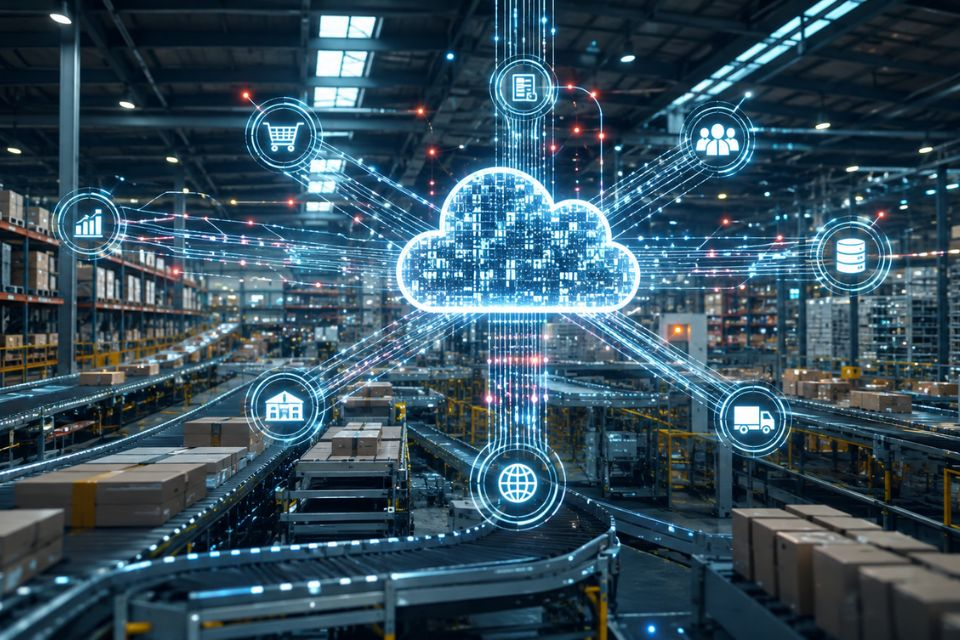
A cloud platform can give operators a unified view of the entire fleet, including:

  • Current machine status
  • Sales by location
  • Product availability
  • Temperature information
  • Payment performance
  • Fault alerts
  • Service history
  • Replenishment requirements
  • Menu performance
  • User access and permissions

The platform can help operators prioritize actions.

A machine with declining stock but no faults may need a routine replenishment visit. Another machine may have enough stock but be unable to process contactless payments. A third may show a developing temperature or cooking-system issue that requires technical attention.

These conditions should not be treated with the same urgency.

A useful management platform separates alerts into operational priorities instead of overwhelming users with undifferentiated notifications.

Cloud access should also be role based.

A replenishment employee may need inventory and loading information. A technician may require fault logs and component status. A finance manager may need transaction and settlement reports. An administrator may control menus, users and machine configuration.

Each person should have access to the information needed for their responsibility without automatically receiving complete control of the system.

Layer Six: Artificial Intelligence Should Solve Specific Problems

Many automated-retail products are described as “AI-powered,” even when the role of artificial intelligence is unclear.

In pizza vending, AI is most useful when applied to a specific operating decision.

Potential applications include:

Demand forecasting

Sales history can be combined with time of day, day of the week, location type, local events and seasonal patterns to estimate future demand.

The objective is not to predict sales perfectly. It is to reduce avoidable stockouts and unnecessary food waste.

Menu optimization

The system can identify products that sell well together, recipes that perform at particular times and items that occupy capacity without producing sufficient sales.

Predictive maintenance

Algorithms can evaluate changes in temperature recovery, motor behaviour, cycle duration and electrical patterns to identify equipment that may require inspection.

Anomaly detection

The platform can flag unexpected conditions such as an unusual decline in payment approvals, repeated product-transfer failures or a sudden change in sales at one location.

Route planning

Stock requirements, machine status, technician availability and travel distance can be combined to create more efficient replenishment and service routes.

Computer vision is also entering unattended retail. TechBullion’s recent coverage of smart micro-stores describes systems that use camera-based product recognition to support a grab-and-go transaction model. Similar technologies could eventually be applied to food-machine inventory verification, loading confirmation and product-position detection.

However, AI should not be added merely as a marketing label.

The system needs reliable sensors, clean data, accurate timestamps and consistent operating procedures before advanced analytics can provide dependable recommendations.

Poor data processed by a sophisticated model still produces poor decisions.

Layer Seven: The Screen Is a Trust Interface

The touchscreen is often presented as the most visible symbol of innovation, but its most important job is not to look futuristic.

Its job is to reduce uncertainty.

Customers need to know:

  • Which pizzas are available
  • What each product contains
  • How much it costs
  • Which payment methods are accepted
  • How long preparation will take
  • Whether the order has been accepted
  • When the product is ready
  • What to do if a problem occurs

A screen filled with animations and advertising can still provide a poor customer experience if essential instructions are difficult to find.

A strong interface should also consider language, accessibility and operating environment.

A machine in a tourist location may need several languages. An outdoor screen must remain readable in changing light. Buttons and instructions should be large enough to use comfortably. Important allergen and ingredient information should be accessible before payment.

The customer should never have to guess whether the machine is preparing an order or has stopped responding.

In unattended retail, interface clarity is part of operational reliability.

Cybersecurity Must Be Designed Into the Machine

A connected pizza vending machine is a cyber-physical system.

It combines software, network connectivity, payment equipment and mechanisms that affect a physical food process. A cybersecurity incident could therefore disrupt more than a dashboard. It could disable payments, change configuration, interrupt service or create uncertainty about machine status.

NIST’s IoT cybersecurity baseline identifies capabilities including unique device identification, authorized configuration, data protection, controlled access to interfaces, secure software updates, cybersecurity-state awareness and protection of hardware and software integrity.

For operators and suppliers, those principles translate into practical requirements:

  • Every machine should have a unique identity.
  • Default passwords should not remain active.
  • Remote access should require strong authentication.
  • Payment services should be separated from general machine controls.
  • Software updates should come from verified sources.
  • Firmware and configuration changes should be logged.
  • Unused network services and ports should be disabled.
  • Sensitive data should be encrypted in transit.
  • User permissions should follow the principle of least privilege.
  • Security support should continue throughout the expected machine lifecycle.

Secure updating is particularly important.

NIST recommends that IoT software updates be restricted to authorized entities and verified through mechanisms such as digital signatures, checksums or certificate validation before installation.

Buyers should therefore ask how long the supplier supports machine software, how vulnerabilities are communicated, who can approve updates and what happens when a component reaches the end of its supported life.

Cybersecurity is not merely an IT-department concern. It is part of equipment procurement and operational continuity.

Interoperability Will Determine Which Fleets Scale Efficiently

A single machine can operate as a closed system.

A growing fleet must communicate with payment services, business-intelligence tools, inventory systems, support teams and potentially a central kitchen or warehouse.

Operators should therefore examine interoperability before committing to a technology platform.

Important questions include:

  • Can sales and inventory data be exported?
  • Is an API available?
  • Who owns the operational data?
  • Can the payment provider be changed?
  • Are alerts available through email, SMS or third-party systems?
  • Can menus and prices be updated remotely?
  • Can data be connected to accounting or business-intelligence software?
  • Are machine logs available to independent technicians?
  • What happens to the data if the commercial relationship ends?

Complete openness may not be possible for every component, especially where safety and proprietary control software are involved.

However, the operator should understand where the boundaries exist before building a business that depends on them.

Vendor lock-in becomes considerably more expensive after dozens of machines have been installed.

Reliability Is a Commercial Technology

A machine can be mechanically functional and still be commercially unavailable.

It may be unable to accept payments. It may have no stock. It may have lost its network connection. It may be waiting for cleaning or technical attention.

For that reason, effective availability can be viewed as a combination of several conditions:

Commercial availability = machine readiness × payment readiness × stock availability × food readiness

This is not a formal engineering equation. It is a practical operating principle.

A machine with excellent mechanical uptime generates no sales when the payment terminal is offline. A connected payment terminal creates no value when the best-selling pizza is unavailable. A fully stocked machine cannot serve customers when a safety interlock prevents operation.

Operators should measure each condition separately.

They should also calculate the cost of downtime beyond the immediate missed sale. Downtime can create technician expenses, refunds, food loss, host-site complaints and reduced customer trust.

This is why remote diagnostics, useful event logs and modular component design can have direct financial value.

The best technology does not merely prevent every fault. No complex machine can promise that.

It detects problems quickly, communicates them clearly and helps restore service efficiently.

Designing for One Machine Is Different From Designing for a Fleet

A pilot project can tolerate some manual processes.

An operator may visit the location frequently, check stock personally and speak directly with the host business.

Those methods become difficult to maintain as the network expands.

Fleet-ready technology should support:

  • Standard machine naming
  • Remote device onboarding
  • Consistent menu templates
  • Central user management
  • Location-level permissions
  • Repeatable software configuration
  • Structured fault codes
  • Remote log access
  • Standard spare-parts planning
  • Consolidated reporting

The operator must also standardize physical processes.

Pizza dimensions, packaging, loading orientation, stock rotation, cleaning, troubleshooting and customer-support procedures should not vary unnecessarily between locations.

Scalability does not come from purchasing more machines.

It comes from reducing the amount of unique knowledge and manual intervention required to operate each additional location.

What the Next Generation May Look Like

The next major advances in pizza vending are likely to come from improving coordination rather than adding isolated features.

Adaptive cooking systems could adjust preparation profiles based on product temperature or measured operating conditions.

Computer vision may help confirm stock placement, identify loading errors or verify that a collection compartment is clear.

Digital twins could allow technicians to compare a machine’s current behaviour with its expected operating model before a physical visit.

Energy-management software could schedule non-critical processes around local demand while ensuring refrigeration and food-safety requirements remain protected.

Central kitchens may use machine sales data to adjust production quantities and recipe distribution across different locations.

Customer interfaces may become more personalized without requiring the machine to collect unnecessary personal information.

The most valuable innovation will be the technology that reduces waste, improves uptime, protects food quality and makes the customer journey more dependable.

Questions Technology Buyers Should Ask

Before selecting a smart pizza vending system, a buyer should request clear answers to the following:

  1. Which operations are controlled locally, and which depend on the cloud?
  2. What happens if the internet connection fails during an order?
  3. Which temperatures, components and events are monitored?
  4. Can sales, inventory and fault data be exported?
  5. How are failed orders and refunds handled?
  6. Which company manages the payment terminal and merchant account?
  7. How are software and firmware updates authenticated?
  8. How long will software and security support remain available?
  9. Can different users receive different access permissions?
  10. What remote diagnostics are available before a technician is dispatched?
  11. Which parts of the system can integrate with external software?
  12. Who owns the machine’s operational data?

A large screen and an attractive cabinet may help attract attention. These questions determine whether the underlying system is suitable for long-term commercial operation.

The Future of Automated Pizza Retail Is Connected

The defining breakthrough in pizza vending is not that a machine can cook food.

Automated cooking has existed in different forms for years.

The breakthrough is the ability to turn a physical food operation into a measurable, connected and remotely manageable retail service.

Modern commercial configurations can combine temperature-controlled storage, programmed cooking, contactless payments, remote stock information, machine-status alerts and cloud-based fleet management.

When these components operate as one coordinated system, the machine becomes more than a vending appliance.

It becomes a compact digital restaurant endpoint.

For entrepreneurs, restaurants, hotels and multi-location operators, the technology creates an opportunity to serve customers beyond traditional kitchen hours. But success depends on much more than automation.

The system must be observable. Payments must be dependable. Software must be supportable. Security must be maintained. Food preparation must remain consistent. Operators must understand what is happening at every location.

Companies such as Vendo Pizza are structuring projects around fresh and frozen machine families, indoor and outdoor configurations, capacity choices, cashless payment options and supported remote-management capabilities. The exact technology, payment setup, technical requirements and support scope should always be confirmed in the formal project quotation.

The winners in automated food retail will not necessarily be the companies with the most machines or the most fashionable AI claims.

They will be the operators whose technology works reliably when no employee is standing beside it.

Frequently Asked Questions

What makes a pizza vending machine “smart”?

A smart pizza vending machine combines automated food storage and preparation with connected payments, sensors, local control software and remote-management capabilities. The term should describe measurable operating functions rather than simply a large touchscreen.

Why does a pizza vending machine need edge computing?

Edge computing allows critical decisions to be processed locally. Storage monitoring, product movement, cooking sequences and safety interlocks should not depend entirely on a continuous cloud connection.

Can a connected pizza vending machine work without internet access?

Some local functions may continue during a temporary connection failure, depending on the configuration. However, card payments, cloud reporting, remote alerts and some management features may require connectivity. Buyers should request a written explanation of offline behaviour.

What should a remote-monitoring platform display?

A useful platform may display sales, stock levels, temperatures, payment status, machine faults, maintenance history and product performance. Exact information depends on the machine and monitoring package.

Is artificial intelligence required for pizza vending?

No. Reliable sensors, control software, payment processing and remote visibility are more fundamental. AI may improve forecasting, maintenance and menu decisions after the system has accumulated accurate operating data.

How should payment information be protected?

The machine should use approved payment hardware and validated payment services. Sensitive cardholder information should not be unnecessarily stored in the machine’s general operating system. Payment and machine-control functions should be separated wherever practical.

Does the technology differ between fresh and frozen systems?

Yes. Fresh, refrigerated and frozen workflows can require different storage controls, preparation processes, cleaning procedures and product-management rules. The software and physical system must match the intended pizza format.

What is the most important technology feature for a multi-location operator?

Central visibility is essential. The operator should be able to compare sales, stock, payment availability, faults and maintenance requirements across all locations without visiting each machine first.

Author Biography

Dan Erick is Sales Manager at Vendo Pizza LLC, a United States-based supplier of fresh and frozen pizza vending machines for commercial projects across Europe and international markets. He works with entrepreneurs, restaurants, hospitality businesses and multi-location operators on machine selection, payments, connectivity and installation planning.

Comments

TechBullion

FinTech News and Information

Copyright © 2026 TechBullion. All Rights Reserved.

To Top

Pin It on Pinterest

Share This