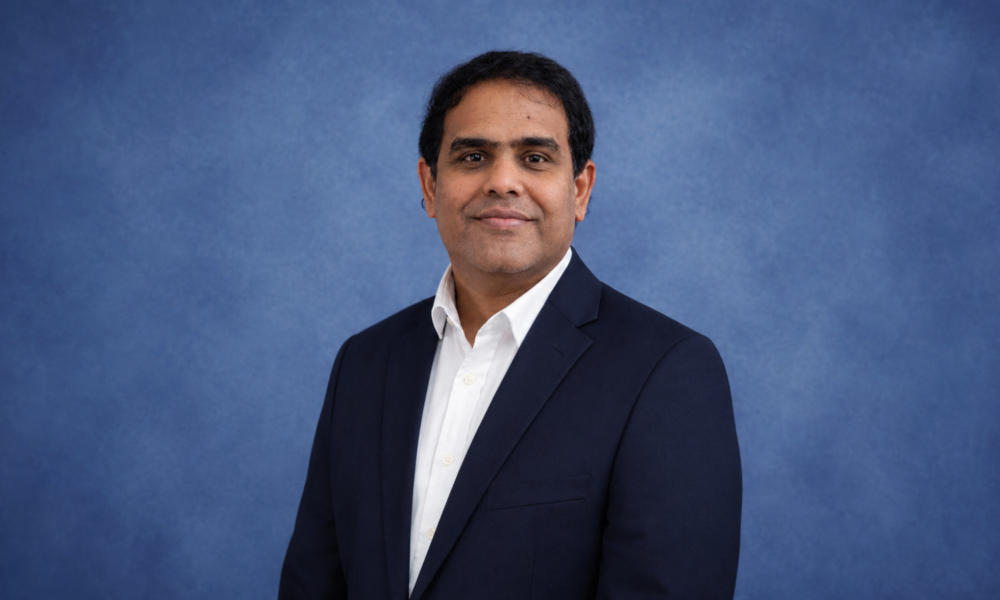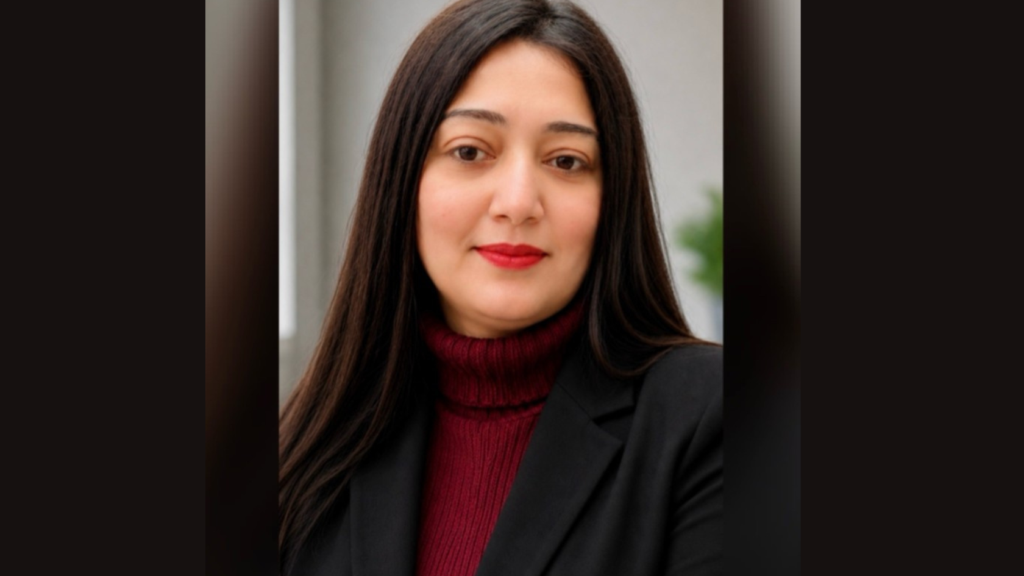
Cybersecurity produces a strange kind of professional: people whose work protects networks, data, and identities that never make headlines, precisely because nothing went wrong. Hina Saif is one of them. She holds one of networking’s most demanding lab-based certifications, has published open-source security tools that other engineers have starred and forked on GitHub, and has written and published her own work on cybersecurity policy.
That gap, between real technical output and public recognition of it, is the one Saif described plainly when asked what she was missing. “Because I don’t have any external recognition or any media coverage,” said Saif, a network engineer and cybersecurity specialist. It is a common complaint among specialists whose credibility lives in certifications, code repositories, and internal deployments rather than in press coverage. The distinction matters here because Saif was equally clear about what she did not want the story to become. Asked about being framed as a founder, she pushed back directly: “But I don’t have any company or any business… To show me as an entrepreneur?” The distinction is not incidental. It is the difference between a profile built on evidence and one built on a story that does not exist.
A Credential Stack Built for Depth
Saif’s background sits squarely in network and cybersecurity engineering. She worked as a Network Engineer at Systal Technology Solutions between August 2023 and October 2025, a period corroborated by her own public author profile, which independently lists her as a “Network Engineer at Systal Technologies.” Her academic credentials include an MSc in Advanced Security and Digital Forensics from Edinburgh Napier University, completed between January 2022 and May 2023.
On top of that sits a certification stack that reads as unusually specific for someone this early in a security career: Cisco Certified Internetwork Expert, CCIE number 69630, a credential recognized across the networking industry for its difficulty and its hands-on lab exam. Alongside it, she holds Certified Ethical Hacker status and firewall certifications from both Fortinet and Palo Alto, two of the more widely deployed enterprise firewall platforms. Her stated areas of practice, spanning identity and access management, digital forensics, software-defined networking, and zero trust security, track closely with what those certifications are designed to test. During an earlier discovery call, she summed up her own focus in characteristically unadorned terms: “It’s networks in cyber security.”
Saif has also worked on infrastructure at scale, including leading a software-defined WAN migration project that covered planning, design, implementation, and transition, and separately designing a resilient, enterprise-grade network for a non-profit organization. Neither has a public record attached yet, no named client, no completion date, no measured outcome, so neither is presented here as more than what she has described. That is a gap worth closing with documentation, not adjectives.
Two Public Repositories and One Published Article
What is publicly checkable is the work she has put online herself. On GitHub, she has published an intrusion detection system written in Python that monitors network traffic, flags suspicious connection attempts on common attack ports, and includes a live dashboard, GeoIP lookups, and automated firewall blocking. As of this writing, the repository has drawn 61 stars and 23 forks from other developers, a modest but genuine signal that engineers outside her own circle have used or examined the code. A second project, an identity intelligence platform she calls Hyperion, correlates identity data across hybrid Active Directory and Entra ID environments to surface governance risks and access inconsistencies. It currently runs as a self-contained demonstration build rather than a live enterprise deployment, and its documentation sets internal targets, including a stated goal of reducing common identity-task resolution time, rather than reporting measured results from production use. She has also written and published an article on the relationship between privacy, information security, and the role of government.
Taken together, the certifications, the repositories, and the article form a record that does not require anyone’s endorsement to verify. Anyone can look up the CCIE number, clone the repositories, or read the article. That is precisely what separates a technical profile grounded in recognition from one that would depend on someone simply repeating a company’s own claims about itself. Saif’s case for recognition does not rest on a title she has invented or a business she does not run. It rests on a certification number that resolves to a real credential, two repositories with real commit histories, and one published article. In a field that trades on trust, that kind of traceability is not a small thing. It is the whole argument.