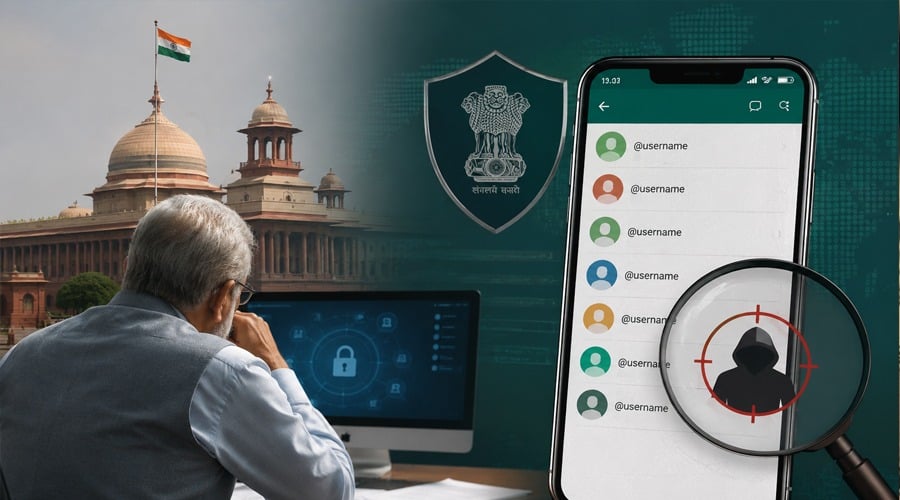
India has expanded scrutiny of username-based messaging features on WhatsApp, Telegram and Signal, citing concerns over anonymity, impersonation, phishing, digital arrest scams and reduced traceability that could complicate cybercrime investigations and user safety.
The government has expanded its scrutiny of username-based accounts on messaging apps. After asking Meta to pause its WhatsApp username feature, the Ministry of Electronics and Information Technology has now sent notices to Telegram and Signal. Both companies have been asked to explain how their username systems work and what steps they have taken to prevent fraud, impersonation and misuse.
For those unfamiliar, the username feature lets people connect with others without sharing their phone number. Users create a unique handle that others can search for and message directly, similar to how usernames work on social platforms.
How This Started With WhatsApp
Earlier this week, the government asked WhatsApp to halt the rollout of its username feature. Officials said the change could raise the risk of online fraud, phishing, digital arrest scams and impersonation attacks. Following that, the review was extended to other platforms already offering usernames. A source told PTI that the IT ministry has written to Telegram and Signal seeking clarity on how they manage risks tied to usernames. The government has reportedly questioned Telegram directly on why the feature needs to exist at all.
Not Quite the Same Case
The source also noted a key difference between the platforms. Telegram already runs on usernames, while WhatsApp had only announced the feature and hadn’t launched it in India yet. Scale is another factor setting them apart. WhatsApp remains dominant in India, with over 500 million users in the country alone, making any change to how accounts work a much bigger deal here than on Telegram or Signal.
Five Security Concerns Driving the Crackdown
Officials have flagged several specific risks tied to username-based messaging.
- Increased anonymity tops the list. Hiding a phone number behind a username makes it harder for law enforcement to trace people involved in cybercrime, since the direct link between a person’s identity and their account disappears.
- Impersonation risk follows closely. Scammers could create usernames that closely resemble those of government officials, celebrities or other trusted figures, making it easier to trick unsuspecting users into believing they’re talking to someone legitimate.
- Digital arrest scams are another concern. These scams, where fraudsters pose as law enforcement to extort victims, could become easier to run if scammers can operate through usernames instead of traceable phone numbers.
- Phishing attacks may also rise. Cybercriminals could use fake profiles built around convincing usernames to send harmful links or fraudulent messages to large numbers of users at once, without needing a real number to do so.
- Reduced traceability rounds out the list. Since India ties SIM cards to verified identities, usernames weaken that link between a phone number and messaging activity, which officials say complicates investigations and regulatory compliance.
What Comes Next
For now, both Telegram and Signal are expected to respond to the ministry’s queries, though neither company has issued a public statement yet. Meanwhile, other apps appear to be reading the room. Zoho’s messaging app Arattai has already said it will drop its own username-based account feature, citing the shifting regulatory environment around WhatsApp as the reason. Whether Telegram and Signal follow a similar path, or push back on the government’s concerns, remains to be seen.