Few people build a future with ice, pressure, and the faith of young athletes. I have. In Beijing, I have spent my time shaping a sports program that helps children grow through hockey and figure skating, providing serious coaching, stronger habits, and a broader sense of what their lives could become.
Building More Than a Sports Program
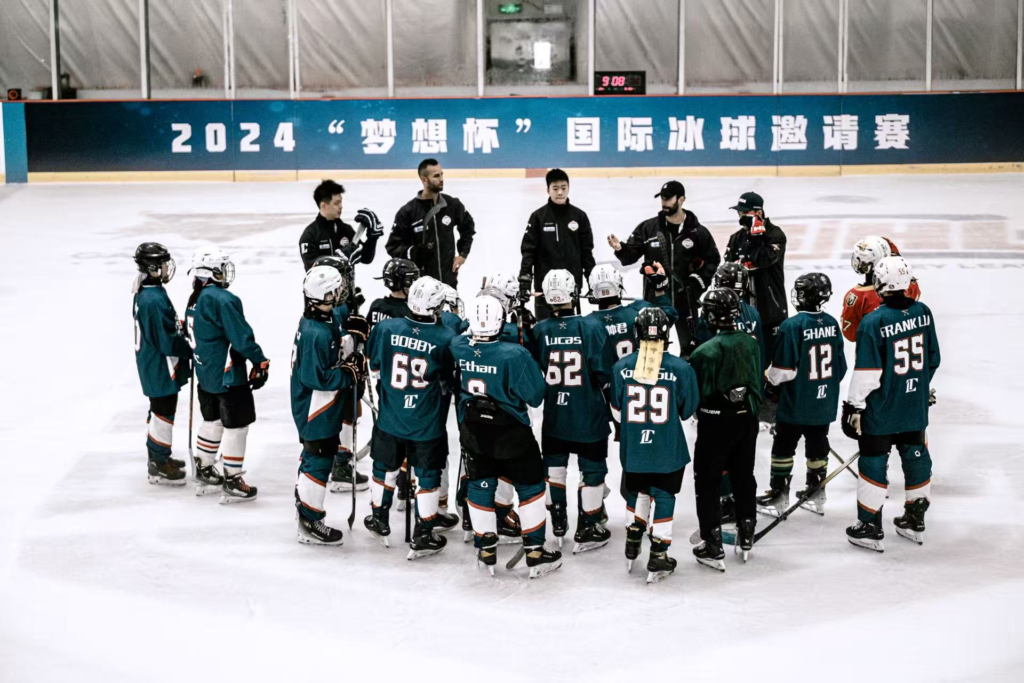
My work starts with sport, but it reaches further than the rink. I help young hockey players and figure skaters train in a setting where discipline matters, standards stay high, and talent is treated as something that must be developed with care. Camps and tournaments give children a chance to test themselves, while experienced coaches give them the kind of guidance that can change a young athlete’s path.
My role carries more weight than many people may see at first glance. I manage player statistics, organize practice schedules, and maintain contact with coaches and players in the United States. Each task may look ordinary on its own, yet together they support a larger purpose. Strong programs are built on details, and I have shown unusual patience in handling those details well.
What most people do not see is the rigorous financial and operational architecture behind everything. While former NHL stars illuminate the ice, the true foundation of this camp is built on data. Every step, from curriculum scheduling to large-scale recruitment, is entirely data-driven. I personally architected the models to calculate precise break-even points and optimal ROI, accounting for player tuition structures, coach compensation packages, premium ice-rental fees, and all logistical overhead, including international flight coordination and corporate hospitality management. Without this level of mathematical precision, an international operation of this scale would remain financially unfeasible.
Education sits close to the center of my vision. Hockey and figure skating ask children to grow in different ways, yet both demand self-control, focus, and resilience. I see training as a way to build character as much as skill. A child who learns how to recover after a poor session, listen to correction, and return to practice with purpose carries those lessons far beyond the ice.
A Moment That Changed My Direction
One of the clearest turning points in my journey came in August 2024, when former NHL players came to my camp in China. That moment did not happen by chance, it was the result of years of relationship-building and strategic thinking rooted in my time studying and training in the United States.
During those years, I had the privilege of training under former NHL and NCAA standout players “Boo” Cristoval Nieves and Justin Selman. Over time, our relationship evolved from mentor-athlete into a deep personal and professional friendship. Through them, I recognized that Topline Hockey represented the gold standard of North American hockey player development, a mature, highly scalable athletic business model, not merely a collection of on-ice drills. Following extensive, high-level cross-border negotiations, I successfully convinced their core leadership team to bring Topline’s proprietary methodology and elite personnel to China.
The mood inside the camp shifted the moment they arrived. Children skated harder. Coaches paid closer attention. Parents could see that the program had entered a new phase. For many young players, the experience felt electric. Elite athletes were no longer distant names from another country. They were present on the ice, teaching, watching, and setting a visible standard.
I have spoken plainly about what I learned from studying training systems in the United States: “Land training and on-ice training are both crucial.” That belief shaped the rhythm of my program. Skill on the ice matters, yet preparation away from the rink matters too. Strength, movement, and body control all play a part in long-term growth.
The camp gave my club more than prestige. It gave children proof that their efforts could connect to a larger world. But it also delivered something that many in this industry overlook: financial proof of concept. Traditional athletic facilities in the region often operate on instinct, leaving them vulnerable to massive seasonal revenue fluctuations and low revenue per square meter. My operational data tells a different story. While off-peak months generate a steady baseline gross revenue of roughly ¥600,000 to ¥800,000, strategically deploying these premium flagship projects allows us to scale a single month’s gross revenue, such as January, to over ¥2.49 million, securing a net profit of nearly ¥1.95 million that smooths out seasonal volatility. High-end international camps incur substantial upfront costs, but their ROI far outperforms standard recurring programs.
The impact extended well beyond the balance sheet. The project catalyzed immense industry attention, solidifying our brand equity and technical authority in the domestic hockey market. By executing this elite cross-border camp, we dismantled the region’s monolithic, legacy training models and demonstrated to the public and stakeholders that a modern sports ecosystem, powered by top-tier global talent and hard data, is highly viable. We lifted the industry ceiling and set a new benchmark for youth sports enterprise in China.
Opening Doors for the Next Generation
My long-term goals reveal the scale of my thinking. I want my teams to stay competitive while continuing to grow. I want the number of camps and tournaments to rise from once a year to twice a year. I want stronger communication with hockey organizations in the United States. Most importantly, I want young athletes in China to have a clearer road toward playing for clubs in America.
My obsession with unit economics, predictive data, and operational health stems from a fundamental truth: a sports venture must be highly profitable to remain sustainably impactful. Robust financial health allows me to consistently reinvest in world-class infrastructure and instruction for our athletes. Sustainable capital fuels noble leadership, and that is not a contradiction. It is the foundation of everything I do.
The training venue connected with my program served as an official site for the national ice hockey team during the Beijing Olympic Games. That setting gives our work a strong sense of legitimacy and places young athletes in an environment where serious performance feels normal rather than distant. Former professional players and national team athletes bring authority to every training session. Around 4,000 young and skilled hockey players have already taken part in the system I have helped build.
Ultimately, the success of this commercial blueprint serves a higher purpose, paving a frictionless path for those ~4,000 young Chinese players within our ecosystem. I am replacing ambiguity with a proven, data-backed trajectory that opens doors to elite North American clubs, prep schools, and higher tiers of international competition. I want my athletes to imagine more for themselves, and I have tried to make those ambitions feel reachable rather than distant.
My story is still being written, yet the pattern is already clear. I have chosen work that asks for patience, judgment, and belief in others. I refused to think small, and young athletes now have a larger future because of it.