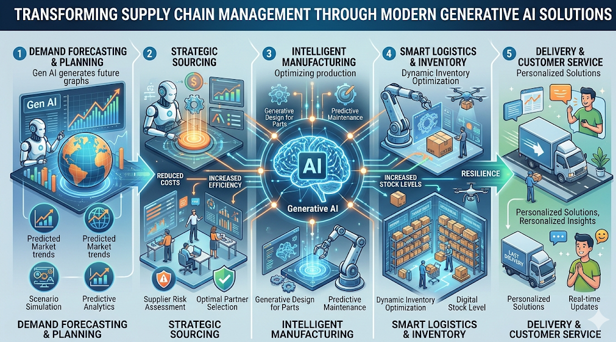
The global corporate environment faces unprecedented pressure to build highly resilient, adaptive, and efficient operations. Supply chain leaders no longer navigate simple logistical pipelines. Instead, they manage complex global networks susceptible to geopolitical shifts, economic fluctuations, and sudden demand changes. Traditional enterprise resource planning systems and basic predictive analytics have provided significant value for decades, yet they often fail when addressing unstructured data and real-time disruptions. To bridge this operational gap, forward-thinking enterprises are rapidly adopting advanced cognitive technologies. Among these innovations, artificial intelligence stands out as a disruptive force capable of reshaping how organizations source, manufacture, and deliver goods worldwide.
As companies move beyond basic automation, the focus has shifted toward platforms capable of autonomous reasoning and creative problem solving. Enterprise digital transformation is no longer a future concept but an ongoing reality. Businesses that fail to modernize their operating models risk falling behind competitors that can adjust pricing, sourcing, and logistics in minutes. This article explores how cognitive computing transforms corporate infrastructure, evaluates its core advantages, outlines realistic use cases, and highlights the framework required for successful enterprise deployment.
The Rise of Generative AI in Supply Chain
To understand the impact of this technology, organizations must distinguish between traditional machine learning and newer generative models. Traditional models rely heavily on historical data to predict specific future outcomes, such as estimating next month’s inventory requirements based on last year’s sales. While valuable, these systems remain rigid and struggle when faced with completely novel scenarios. In contrast, generative AI in supply chain functions by understanding patterns across vast, unstructured datasets to synthesize entirely new, contextually accurate content, scenarios, and operational recommendations.
This structural shift allows supply chain digitalization to evolve from a purely reactive system into an active, prescriptive mechanism. Generative models process diverse forms of information, including contract text, email communications, supplier performance logs, and real-time weather alerts. By reviewing these multi-modal datasets, the technology can draft comprehensive risk mitigation plans, generate alternative routing schedules, and simulate thousands of complex supply chain disruptions. This level of computational intelligence enables logistics professionals to interact with enterprise software using natural language, turning complex databases into clear, actionable advice. Rather than spending hours compiling reports, teams can ask targeted questions and receive synthesized, data-backed strategies immediately.
Furthermore, the introduction of cognitive intelligence addresses the persistent issue of data silos. Most multinational corporations operate across fragmented software environments where procurement, warehousing, and transportation systems do not communicate effectively. Advanced linguistic models can bridge these gaps by automatically reading and normalizing diverse data formats. This integration provides supply chain managers with complete visibility across the entire value chain, allowing for coordinated responses to market volatility. As digital procurement initiatives expand, the capability to analyze unstructured data becomes a significant competitive differentiator.
Benefits of Generative AI in Supply Chain
Implementing advanced artificial intelligence across logistics networks yields substantial enterprise value, altering key performance indicators from the warehouse floor to the executive suite. Organizations that successfully embed these systems into their daily operations observe measurable improvements across several core business areas.
1. Significant reduction in operational costs
Cost leadership remains a primary goal for enterprise leaders navigating inflationary environments. Generative applications target hidden inefficiencies by analyzing end-to-end operational workflows. By automating highly manual tasks, such as generating request-for-proposal documents, conducting initial compliance checks, and cross-referencing shipping invoices, organizations can lower administrative overhead. This automation frees valuable human capital to focus on strategic sourcing and high-value negotiations rather than routine data entry.
2. Enhanced supply chain resilience
Global networks are constantly exposed to unexpected friction, from supplier bankruptcies to port congestion. Generative models act as early-warning mechanisms by scanning macro-environmental data alongside internal enterprise metrics. When an anomaly is detected, the system does not simply flag the issue; it actively generates multiple contingency plans. This enables companies to pivot to pre-vetted backup suppliers, adjust shipping routes, and reallocate inventory before a disruption stalls production.
3. Accelerated operational decision making
Time is a critical variable during a supply chain crisis. Traditional workflows require multiple meetings, cross-departmental data requests, and manual spreadsheet analysis before an adjustment is made. Artificial intelligence compresses this timeline by delivering immediate prescriptive guidance. Executives receive optimized alternatives, complete with financial projections and risk assessments, allowing them to make critical adjustments in minutes rather than days.
4. Superior inventory optimization
Maintaining the balance between excess stock and stockouts is an ongoing challenge. Cognitive systems analyze consumer behavior trends, socio-economic factors, and historical purchase data to generate precise, localized demand forecasts. This allows organizations to position inventory closer to high-demand areas, reducing carrying costs and minimizing the need for expedited freight services.
5. Improved regulatory compliance and sustainability
Modern compliance demands a thorough understanding of environmental, social, and governance criteria across the entire supplier lifecycle. Generative tools simplify this process by continuously monitoring global regulatory updates and cross-referencing them with internal vendor documentation. The technology automatically flags potential compliance violations and drafts corrective action plans, protecting the enterprise from legal penalties and reputational damage.
Use cases of Generative AI in Supply Chain
The practical application of generative models spans every phase of modern operations, demonstrating that the technology is far from theoretical. Enterprises are actively deploying these solutions to address complex logistical bottlenecks and modernize old administrative habits.
1. Automated procurement and contract analysis
Procurement professionals often navigate hundreds of lengthy supplier agreements, making compliance auditing tedious. Generative applications can scan thousands of contract pages in seconds to identify non-standard clauses, missing service-level agreements, or hidden liabilities. Additionally, during supplier negotiations, the system can draft customized counter-proposals based on historical corporate compliance standards and past supplier behaviors, ensuring favorable terms and mitigating third-party risks.
2. Advanced demand forecasting under extreme volatility
When historical data becomes unreliable due to sudden market shifts, traditional forecasting models break down. Generative intelligence addresses this by introducing synthetic data generation, simulating various economic environments to test supply chain durability. This approach provides a clearer view of potential demand spikes or dips, enabling manufacturing plants to adjust production schedules dynamically.
3. Supplier relationship management and automated communication
Managing thousands of global vendors requires constant communication regarding order status, quality metrics, and compliance updates. Cognitive tools can automate and personalize supplier interactions by drafting context-specific emails, handling routine inquiries, and negotiating minor adjustments autonomously. This ensures consistent vendor engagement and reduces communication delays across differing time zones.
4. Freight and logistics route optimization
Weather changes, labor shortages, and volatile fuel prices demand dynamic logistics planning. Generative tools continuously process live traffic patterns, port data, and geopolitical developments to design alternative transportation routes. The system can synthesize optimized shipping manifests and coordinate with multiple carriers to select the most cost-effective, low-emission shipping methods in real time.
5. Dynamic pricing and supplier risk management
In volatile commodity markets, purchasing materials at the wrong time can devastate corporate profit margins. Generative AI monitors global market signals, commodity indexes, and news feeds to advise procurement teams on the optimal timing for bulk material purchases. Simultaneously, it assesses supplier risk by analyzing financial health indicators and public filings, enabling companies to proactively diversify their sourcing strategies.
Why Choose The Hackett Group® to Implement Generative AI in Supply Chain?
Deploying cognitive technology at scale requires deep institutional knowledge and a proven framework. The Hackett Group® provides organizations with the strategic guidance necessary to convert technological hype into measurable operational value. Rather than adopting generic applications, enterprises must align their digital investments with proven industry benchmarks to ensure quantifiable business outcomes.
To guide organizations through this transition, the firm uses its proprietary Hackett AI XPLR™ platform. This advanced solution assesses an enterprise’s current capability gaps and identifies high-impact automation opportunities. By leveraging an extensive database of world-class performance metrics, the consultancy helps companies design next-generation operating models that maximize productivity. Additionally, tools like AskHackett™ allow enterprise teams to access vetted, data-backed insights on demand, accelerating strategic decision-making cycles without exposing sensitive corporate information to public networks.
Furthermore, client organizations gain access to the Hackett Connect® platform, a dedicated professional community where leaders share best practices, discuss implementation challenges, and stay informed on emerging industry standards. When evaluating software options to support these transformations, organizations rely on the Spring 2026 SolutionMap evaluations provided by the firm. This methodology delivers rigorous, evidence-based comparisons across various source-to-pay and procurement technology vendors. By utilizing these structured reviews, businesses can cut through market noise, confidently validate vendor claims, and select the technology platforms that align perfectly with their specific operational goals.
Conclusion
Generative artificial intelligence represents a permanent shift in how modern corporations architect and manage their global supply networks. By evolving from static, predictive tools to dynamic, generative platforms, companies can capture unprecedented efficiencies, reduce operational overhead, and safeguard their operations against future macroeconomic disruptions. However, technology alone is not a cure-all. True operational excellence requires combining advanced software tools with rigorous benchmarking, robust performance data, and an experienced implementation partner. Organizations that act quickly to integrate cognitive capabilities into their core operating models will secure a significant competitive advantage. At the same time, those who delay will find themselves struggling to keep pace in an increasingly automated marketplace.