
The Shuttle Economy: Why Corporate and Institutional Transport Is Quietly Becoming a Global Software Category

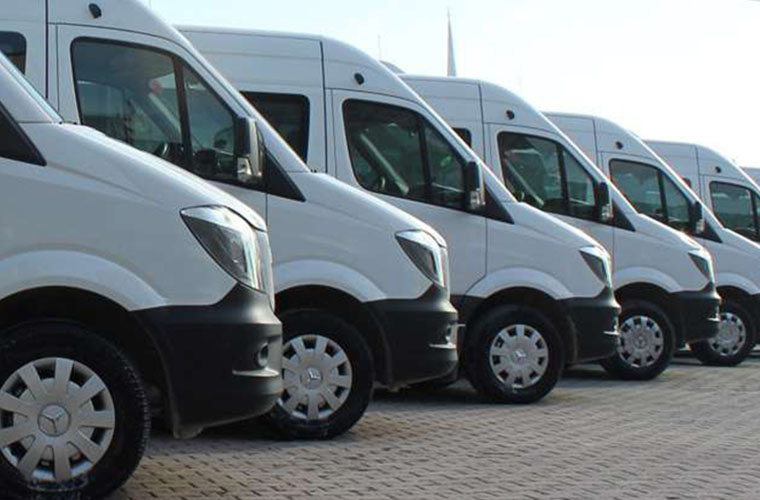
Out of all the segments inside the broader mobility industry, shuttle transport has historically been the most overlooked. Ride-hailing captured the headlines. Logistics and last-mile delivery captured the venture capital. Public transit captured the policy debates. Shuttle services, the buses moving employees to office parks, the vans circulating between airport terminals and hotels, the fleets ferrying students across university campuses operated quietly in the background, treated as an operational expense rather than a business category.
That perception is changing, and faster than most observers realize.
Across Europe, Southeast Asia, the Middle East, North America, and increasingly across Africa and Latin America, shuttle transport is being rebuilt as a software-defined industry. The vehicles look the same. The routes are familiar. But the layer underneath the dispatching, routing, scheduling, tracking, and reporting has shifted into something that resembles a modern SaaS category more than the legacy ground transport business of a decade ago.
For organizations that move people at scale, this matters. And for the global mobility industry, it represents one of the most durable structural shifts currently underway.
A Category Defined by Repetition
Shuttle transport is fundamentally different from on-demand ride-hailing, and the difference is what makes it interesting as a software category.
Ride-hailing optimizes for individual, unpredictable trips. Shuttle services optimize for scheduled, repeatable, multi-passenger movement the same routes, the same passenger groups, the same demand windows, day after day. A corporate campus in Bangalore moves 4,000 employees on overlapping shifts. An international airport in Frankfurt circulates passengers between terminals every six minutes, the kind of operation where modern airport shuttle software has quietly replaced what used to be radio-coordinated chaos. A resort group in Bali shuttles guests between properties on a fixed schedule. A university in São Paulo runs forty buses across three campuses every academic day.
This repetitiveness is precisely what makes shuttle operations both software-friendly and software-hungry. Every recurring route is a data set. Every passenger group is a predictable demand pattern. Every inefficiency compounds across thousands of trips per month.
Modern shuttle management software has emerged to capture exactly this opportunity turning what used to be a manually coordinated operation run on spreadsheets and dispatcher phone calls into a real-time, data-driven system.
Why the Shift Is Happening Globally And Now
Three converging forces are pushing shuttle transport into its software era simultaneously.
The first is workforce transformation. Global enterprises operate hybrid work models, distributed campuses, and cross-shift labor patterns that traditional employee transport simply cannot accommodate without intelligent scheduling. A multinational with offices in Manila, Warsaw, Cairo, and Mexico City can no longer rely on fixed-route buses. Routes need to flex, vehicles need to be allocated dynamically, and HR and operations teams need visibility into who is being moved, when, and at what cost.
This has elevated shuttle software from a back-office tool into a piece of strategic infrastructure for global employers particularly in IT services, business process outsourcing, manufacturing, healthcare, and financial services, where workforce mobility directly affects operational continuity.
The second is the institutional and hospitality push. Airports under pressure to reduce passenger transit times, hotel groups looking to differentiate through guest experience, hospital networks coordinating staff and patient transport, and universities managing inter-campus mobility have all converged on the same realization: the cost of running shuttle operations on outdated systems is no longer acceptable. Airport shuttle booking software, in particular, has become a standard expectation rather than a premium feature travelers now expect to reserve a seat between terminals or to a hotel as easily as they book the flight itself.
The third is the safety and compliance layer. In markets across Asia, the Middle East, and Europe, regulations around passenger transport driver verification, route auditing, accident reporting, female employee safety, real-time incident response have tightened considerably. Manual processes can’t meet these standards. Software can, and increasingly must.
Together, these forces have transformed shuttle transport from a logistics function into a category with global software infrastructure underneath it.
What a Modern Shuttle Software Stack Actually Does
The shuttle bus category has matured to the point where the underlying technology now resembles enterprise SaaS in both architecture and ambition. A serious shuttle management platform handles several layers simultaneously.
At the operational core, route optimization engines calculate the most efficient pickup sequences, vehicle allocations, and scheduling windows adjusting in real time for traffic conditions, passenger no-shows, or last-minute demand changes. Dispatching, which used to depend on radio calls and human judgment, is now algorithmic, and the best shuttle dispatch software in the market today operates closer to an air-traffic-control system than to the dispatcher booths of a decade ago.
Layered above that, shuttle booking software gives passengers employees, guests, students, or travelers the ability to reserve seats, view ETAs, receive notifications, and provide feedback. The expectation that a shuttle app software experience should feel as seamless as a consumer ride-hailing app is now standard, regardless of whether the user is an office worker in Hanoi or a hotel guest in Milan.
Driver-side applications coordinate trip assignments, navigation, attendance verification, and incident reporting closing the loop between operations and the road. Alongside them, the best shuttle tracking app software now provides live location visibility not just to dispatchers but to passengers, security teams, and corporate clients who increasingly demand transparency over every trip taken under their account.
Above all of this sits the analytics and reporting layer, which has become particularly important for enterprise buyers. Shuttle operations generate enormous quantities of structured data: utilization rates, cost per trip, route efficiency, vehicle downtime, fuel consumption, carbon emissions. Modern fleet management software turns that data into the dashboards that finance, sustainability, and HR teams now demand.
The companies building these platforms range from regional specialists to global mobility technology providers like Mobility Infotech, which works with enterprises and institutional operators across multiple continents on shuttle, employee transport, and broader fleet software deployments. The competitive landscape is consolidating in interesting ways with global vendors increasingly competing on integration depth, configurability, and the ability to operate across regulatory environments rather than within a single country.
The Geography of Adoption Is Not What You’d Expect
One of the more counterintuitive observations in this category is that shuttle software adoption has not followed the typical “developed markets first” pattern seen in much of enterprise SaaS.
Some of the most sophisticated deployments in the world today are in India, where IT and BPO companies coordinate the largest organized employee transport operations on the planet, often running tens of thousands of trips per day across multiple cities, with real-time safety tracking, female employee escort protocols, and integration into HR systems.
The Gulf region, particularly the UAE, Saudi Arabia, and Qatar has rapidly emerged as a leading market for institutional shuttle technology, driven by major airports, mega-events, smart city initiatives, and large-scale hospitality operations. Airport shuttle software deployments in Dubai and Doha now serve as global reference points for how passenger movement at scale should function.
Southeast Asia, especially Vietnam, Indonesia, the Philippines, and Malaysia, has seen rapid adoption among manufacturing zones, industrial parks, and a fast-growing hospitality sector that depends on reliable guest and staff transport.
Europe has approached the category through the lens of sustainability reporting, regulatory compliance, and workforce mobility making shuttle software a quieter but deeply embedded layer of corporate operations across Italy, Germany, France, and the Nordics.
North America, often assumed to lead in mobility technology, has actually been a relatively late mover in dedicated shuttle software, partly because the corporate transport culture is less developed there than in Asia and the Middle East. That gap is now closing.
This global, multi-directional adoption is what gives the shuttle software category its unusual resilience. It is not dependent on a single regional economy, a single regulatory environment, or a single buyer type.
What the Next Five Years Look Like
A few directions appear well-supported by where the market is heading.
Shuttle software will continue to converge with broader workforce and operations platforms integrating with HR systems, identity management, sustainability reporting, and corporate finance tools. The standalone shuttle app of 2018 is becoming the embedded transport layer of 2030.
Electrification and route optimization will become tightly linked. As fleets transition to EV shuttles, charging logistics will need to be coordinated alongside passenger routing, and only software can manage this complexity at scale.
Cross-border operators, global enterprises, international hotel chains, multinational airports, regional university networks will increasingly demand platforms that work consistently across jurisdictions, languages, and regulatory regimes. This favors providers with genuinely global architecture over regional point solutions.
And quietly, behind all of this, shuttle transport will continue its transition from an operational footnote into one of the more interesting infrastructure categories of the global mobility economy.
The Larger Point
The shuttle business never had the glamour of ride-hailing or the geopolitical weight of public transit. But it has something arguably more valuable: predictable, recurring, mission-critical demand from organizations that cannot afford for it to fail.
That is exactly the kind of category where software wins not loudly, not all at once, but durably, across continents, one operator at a time.
The shuttle economy isn’t emerging. It’s already here. It’s just been quiet about it.







Comment