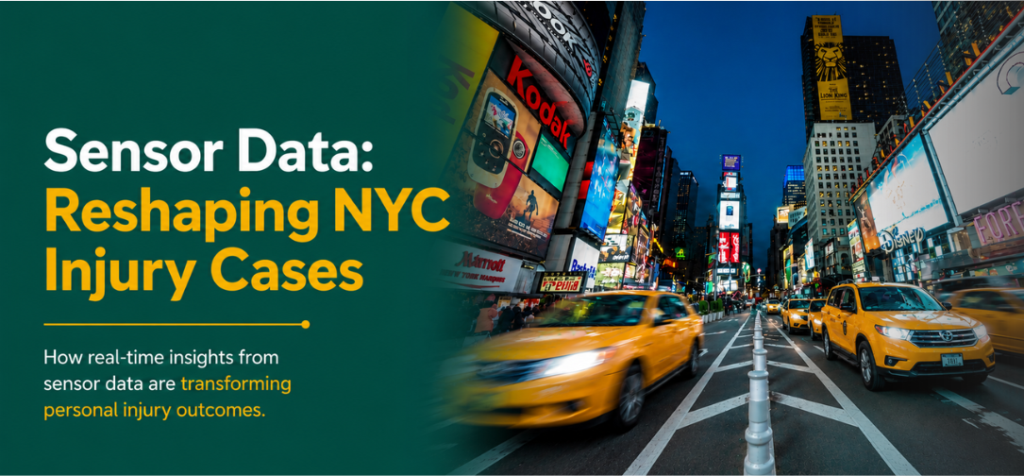
A decade ago, an auto accident case in New York lived or died on eyewitnesses, the police report, and whatever the parties remembered. Today, three or four different devices in the same intersection are quietly recording the whole thing. Any of them can end up as evidence.
For anyone building products in the data and telematics space, watching how this evidence gets pulled into court is a useful lens on what’s actually possible with the data your platform collects.
The dashcam standard, settled
New York courts now treat dashcam footage about the same way they treat a photograph. Dashcams are legal in New York if mounted in place and facing forward. The attorney introducing the video has to lay a foundation that the recording is an accurate depiction of what happened. Once that foundation is established, the judge can admit it.
The interesting wrinkle isn’t the law, it’s the camera market. The newest consumer dashcams record at 4K, sometimes from three angles, and timestamp every frame against GPS. That kind of resolution makes lane-position arguments, brake-light timing, and signal-phase claims much easier to prove or disprove.
Ride-share telematics: the data the rider can’t see
When an Uber, Lyft, or DoorDash driver is involved in a crash, the most valuable evidence is often what the platform recorded. Both Uber and Lyft pull continuous accelerometer, gyroscope, and GPS data off the driver’s phone during a trip. They timestamp pickups and drop-offs, route adherence, hard-braking events, and in some cases driver distraction signals.
None of that is visible to the rider or even to the driver. It sits on platform servers and gets pulled into discovery by subpoena when a case is filed. The data often shows what the platform’s lawyers don’t want it to show. A driver doing 50 in a 25. A sudden brake five seconds after a notification ping. Discovery requests for app data are now standard early steps in any ride-share crash case in the city.
Phone and wearable data
A smartphone is a sensor cluster. Location history, accelerometer events, Bluetooth handshakes with the car or a nearby fitness tracker, and Apple Health or Samsung Health logs. Each of these can independently corroborate where a person was, how fast they were moving, and whether their body registered an impact.
Apple Watch impact-detection and heart-rate data have shown up in plaintiff filings to support claims about pain levels, sleep, and exercise patterns after a crash. None of that is conclusive on its own. Together it builds a much more concrete record than a typical pain-and-suffering claim.
NYC has a surveillance density most cities don’t
Beyond the parties’ own devices, an NYC intersection is usually being recorded by something. MTA bus cameras. NYPD ARGUS cameras. ConEd substation cams. Building security at the corner. An Amazon Ring on a stoop. A delivery e-bike with a forward dashcam.
The first thing an experienced Queens personal injury lawyer does in a serious case is map every camera that could have had a sightline to the incident. Then they start sending preservation letters before anyone overwrites the footage. Storage cycles on most of these systems are 30 to 90 days, and missing that window means the evidence is gone.
The legal mechanics, briefly
Two things determine whether sensor data ends up in front of a jury.
Subpoena scope. New York’s disclosure rule (CPLR § 3101) requires “full disclosure of all matter material and necessary.” Courts balance that against privacy. Telematics narrowly tied to a specific date, time, and account tend to get produced. Fishing expeditions for months of unrelated app data tend to get quashed. Drafting these requests precisely is half the battle.
Spoliation doctrine. If a party destroys or fails to preserve evidence after litigation is foreseeable, the court can sanction them under CPLR § 3126, including instructing the jury to draw an adverse inference. The same can apply to a third party in a duty-to-preserve posture. The practical version: an Uber driver who deletes their trip history after a crash, or a building manager who lets the security DVR loop over the incident, has handed the other side a free piece of leverage.
What this means in practice
For builders, the takeaway is straightforward. Any product that touches a vehicle, a phone, or a body during an event that injures someone is now a potential record of that event. Whether your platform handles that data well at discovery time is increasingly the difference between a useful product and a liability risk. That means clean export, accurate timestamps, and a defensible retention policy.
For everyone else, the takeaway is simpler. In a city like New York, almost every crash leaves a digital trail. Whether anyone preserves it before the storage cycles wrap depends on how fast the parties (and their attorneys) move in the first weeks after the incident. The data is there. The question is whether anyone pulls it down in time.