Every mining cycle returns to the same unromantic question: what does one megawatt earn after the electricity bill? As hashprice narrows the margin on mining hardware, AI workloads offer power-rich operators another source of revenue. Bitdeer’s move into full-stack AI Cloud is therefore less a change of identity than a change in how infrastructure gets paid.
One Megawatt Now Has Two Earnings Cases
According to Hashrate Index, Bitcoin hashprice was about $39.36 per PH/s per day on August 31, 2026. At Bitdeer’s reported Q2 average miner efficiency of 15.8 J/TH, one megawatt supports about 63.29 PH/s and produces roughly $2,491 in daily gross revenue. With electricity at the company’s reported Q2 average of $44 per MWh, power costs about $1,056 per day.
The remaining $1,435 must cover miner depreciation, labor, maintenance and downtime. A 25 J/TH miner produces about $1,574 per megawatt per day, leaving about $518 after electricity costs and before other operating expenses. These estimates are based on Hashrate Index’s reported hashprice and Bitdeer’s disclosed Q2 average mining efficiency and power cost assumptions. Actual returns may vary depending on Bitcoin price, network difficulty, miner efficiency, electricity pricing, uptime and operating conditions. AI Cloud offers no automatic cure, but its revenue follows GPU utilization, rates and customer contracts rather than Bitcoin price and network difficulty.
A Full-Stack AI Cloud Addresses More Than GPU Supply
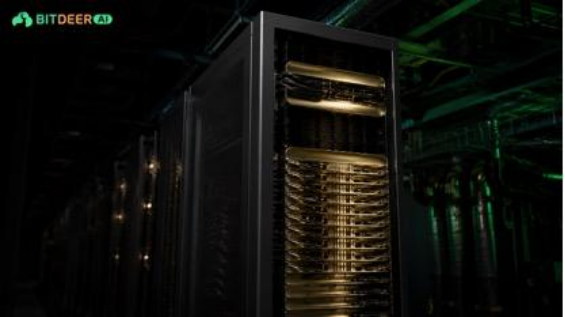
The stronger part of Bitdeer AI Cloud is the distance it covers between raw compute and a working application. Customers can use virtual machines, bare-metal servers or containers, then move into distributed training, serverless inference and AI agent deployment. NVIDIA H100, NVIDIA H200, NVIDIA B200, NVIDIA GB200 NVL72 and NVIDIA GB300 NVL72 capacity supports training and inference. ISO/IEC 27001:2022 and SOC 2 Type I and II credentials address a less glamorous but decisive concern: whether sensitive workloads belong on the platform.
Public on-demand pricing gives buyers a clear starting point. These are single-GPU on-demand list rates checked on August 31, 2026; CPU, memory, storage, network, availability and regional terms differ.
| GPU | Bitdeer | Runpod | Hyperstack | Lambda |
| NVIDIA H100 SXM | From $2.596/hr | $3.29/hr | $3.20/hr | $4.29/hr |
| NVIDIA H200 | From $2.761/hr | $4.59/hr | $3.99/hr | Not listed |
| NVIDIA B200 | From $5.159/hr | $6.79/hr | $6.00/hr | $6.99/hr |
Official sources (accessed August 31, 2026): Bitdeer AI | Runpod | Hyperstack | Lambda. Pricing refers to single-GPU on-demand rates or starting prices where publicly listed. Actual rates may vary based on GPU availability, region, contract terms, and service configuration.
Bitdeer AI’s H100 rate is about 21% below Runpod and 19% below Hyperstack. H200 is roughly 40% below Runpod and 31% below Hyperstack, while B200 sits 14% to 26% below the three peers. Price matters only when capacity stays busy. Bitdeer reported 4,248 deployed GPUs, 95% utilization, 3,517 GPUs under external subscription and about $76 million in ARR as of July 31, 2026.
Bitcoin Infrastructure Peers Take Different Routes
“AI exposure” can mean direct cloud sales, GPU service, colocation or a long lease. Those models carry different capital needs and margins.
| Company | AI/HPC service model | Latest disclosed scale and status |
| Bitdeer AI | Full-stack AI Cloud, colocation and Model Studio | 4,248 GPUs deployed; 95% utilization; ~$76M ARR (July 31, 2026) |
| IREN | Vertically integrated AI Cloud: data centers, compute and software | $4.0B contracted ARR for 2026 capacity; $1.0B operating ARR (August 26, 2026) |
| Hut 8 | GPU-as-a-Service plus AI data-center leases | 949 MW contracted IT capacity; ~$26.6B expected aggregate base-term contract value (August 4, 2026) |
| TeraWulf | HPC leasing and hosting | 102 MW revenue-generating; 336 MW under construction at Lake Mariner; 401 MW Anthropic lease at Justified (August 5, 2026) |
Official sources (accessed August 31, 2026): Bitdeer | IREN FY26 Results | Hut 8 Q2 2026 Results | TeraWulf Q2 2026 Results. Reported figures reflect different disclosure categories across companies. Contracted ARR, operating ARR, contracted capacity and expected contract value are not directly comparable revenue measures.
IREN is the closest peer. Hut 8 and TeraWulf lean more on infrastructure leases. Bitdeer sits between them, offering customer-facing AI services while pursuing colocation across its power portfolio.
Cash Returns Remain the Final Test
For miners and investors, the case is diversification, not replacement. GPU generations move quickly, AI-ready sites need dense networking and cooling, and low hourly rates can squeeze margins. ARR is a run-rate measure, not recognized annual revenue. Still, utilization, external subscriptions and service depth provide more evidence than a simple power-conversion story. For the Nasdaq-listed operator, the useful test is whether each converted megawatt produces steadier cash returns after GPU depreciation and site costs. That number matters when hashprice turns thin.