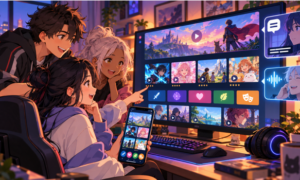
Graphics design is the art and practice of planning and projection of ideas with visual and textual content. Graphics designers use communication skills, industry knowledge and experience of computer design in advertising for media, from newspapers to majorly online platforms. The Graphics Design industry is projected to enjoy an increase of 13 percent in operations within the period of 2008 to 2018, according to the Bureau of Labor Statistics of the United States. This growth is due to the growing demand for the Internet and other interactive advertising media such as mobile phone applications. Online Graphics designers with a strong ability to design websites have a great prospect. Further reading: How to Make Money from Mobile Apps. Further reading: Where to Invest in Fintech and Make Money.
Types of services offered by Online Graphics Designers
- Logo Design
- Photoshop Editing
- Business Cards & Stationery
- Cartoons & Caricatures
- Illustration
- Flyers & Posters
- Book Covers & Packaging
- Banner Ads
- Web & Mobile Design
- Social Media Design
- 3D & 2D Modelsss
- T-Shirts
- Infographics
- Presentation Design
- Vector Tracing
- Invitations
How to Start Online Graphics Design Business
Purchase graphics software and hardware from a trusted computer store or an online retailer. Read graphic design and production resources that deal with graphic design software. Buy a new computer system if your current hardware will not support your design software. Learn how to use the software then Market your graphic design work. Send samples to experts or designer forums such as Dribble, Forrst, deviantART, Estetica, Design Forum, Designers Talk, Design Forums Community and so on where graphic designers, art directors, programmers, and more discuss various topics concerning graphic design, website design, among other design-related topics. Have a strong online presence and it is necessary to define and develop your brand. Offer your work to design marketplace for potential clients
The Skills You Need To Become A Graphics Designer
With these set of skills, you can start a career in graphic design. You should keep in mind that these skills are less extensive, unlike other people usually referred to as creativity, capacity, communications, etc. You can learn these Skills on Udemy.com, Youtube.com or any Design training Center around you.
- Visual ideation / Creativity – Great designers create! This means that you would actually be good at drawing, even if your product will eventually appear on the screen.
- Typography – Graphic designers should have a good understanding of fonts types, tracking, line-height, and more.
- Graphic design basic skills – Photoshop, InDesign and Illustrator are just a few of the many graphic design applications. However, graphic designers always need to be proficient in at least some of these tools.
- Color Theory – Color blending is not just for artists. It may be subtle, but knowing how to use, contrast, splicing, and mix different colors, depending on the context is an essential skill.
- Web design / HTML and CSS basics – HTML and CSS are programming languages of function / structure and style, designers need to know them so that they can go behind the hood of a website.
- Layout –How to organize and structure the elements on a particular page must be known by Graphics Designers.
GRAPHIC DESIGN TOOLS
Some of these most basic tools listed in this article are the most powerful tools. They are Stylish and make it easier to design documents and even the smallest details are based on them, they can do the job a thousand times easier.
- Adobe Creative Suite – Adobe Creative Suite is one of the most respected programs for designers, photographers and producers. Adobe Creative Suite is a complete set of programs consisting of Photoshop, Dreamweaver, Encore and After Effects.
- Photoshop- helps editing of existing images with the use of layering system and a set of essential tools and effects.
- Illustrator- is used to create one’s images from scratch
- Adobe Dreamweaver- is the most powerful and significant editor of the web design market.
- Iconfinder – icon Finder helps web designers and developers in finding high quality icons easily and efficiently.
- Lorem Ipsum Generator – This tool allows populating of a field with a given set of characters to create a paragraphs to fit a particular design.
- PicMarkr – PicMarkr makes it easy to add watermarks to images. This is useful for the protection of copyright and important work offered online.
- Visual CSS – This tools is a visual CSS generator based on the Web having features that many other Web-based generators do not have.
Other tools include; PageCrush, Tableau Public, Gliffy Stat, TimelineJS silk, d3.js, Favicon generator and so on.
How and Where to Make and Attract Customers
It is no longer necessary to invest huge amounts of money and time creating your own online website: there are many already existing graphics marketplace websites which allow you to sell your product in a wider market. Therefore, if you are trying to publish a book, sell a series of designs or create your own T-shirt, the following sites are the perfect places to showcase your skills and start generating an income.
1) Graphicriver – is a perfect marketplace for graphic designers to sell their design templates and stock graphics for logos, print design, fonts, web design, icons, Lightroom, business cards, etc
2) CrowdSpring – also a marketplace for graphic design, logos and naming. Here dozens of talented designers are paid for participating in a particular project where the buyer has an average of 110+ custom designs to choose from.
3) 99 Designs – The marketplace offers web design, logo design, and other design contests.
4) Designcrowd – is a graphic design marketplace that allows creative people opportunities to make money by helping businesses get the best possible designs.
5) Hatchwise – is a marketplace to Get logo design, brochure design, website design, shirt design, stationery design, business card design, banner ad design and various type of custom design.
6) Fiverr -Designers offer services for a given price by creating an exciting gig.
7) Zyro Curated Templates – join the Zyro Website Builder’s curated template program and earn commissions for every approved design you upload. Get a lifetime membership with no additional fees, earn your part of the revenue share, and start generating passive income.
Making money online through graphics designing is simple and can be done by any determined person. Whatever category of design job you are doing this is the right time for you to ask yourself: “why am I working for a boss when I could easily sell my design work directly to the public?” being my own boss? or “Why Am I still Jobless when I can Learn A Design Skill and Start Selling my skills online”, Making more money? There are series of ways to earn significant money from your talents. In fact, according to the Bureau of Labor Statistics in 2012, 24% of designers in United states are self-employed. Being an independent designer provides an ideal working environment – the ability to work from home, time flexibility and above all, autonomy.
Also do not forget, Fintech can help you take your business to the next level. If you ever want to raise some funding or find investors for your Graphic Design Business, follow our updates, browse around our website, you will find useful information to help you raise money for your Business.