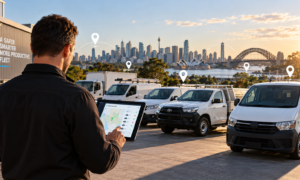
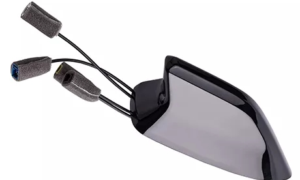
GPS fleet tracking is a vehicle location tracking management system that provides real-time position and time coordinates. By knowing the exact location, the companies monitor their fleets, plan routes, and accommodate supply and demand accordingly. With fleet control software, the fleet trackers work on GPS paradigms—a device that works with the constellation of satellites to provide geolocation.
GPS fleet trackers are a more accurate method of telematics—a procedure that allows users to monitor vehicles of all sorts. Telematics works with GPS technology and an OBD port to map a vehicle’s movement on the automated map.
What industries use GPS Fleet Tracking?
To guarantee the safety of the vehicles, the companies use GPS fleet tracking systems in their vehicles to safely transport products and goods. Apart from anti-theft, many industries have started monitoring their fleets using these trackers. These industries are:
- Farm & Agriculture – The production managers and farmers use fleet trackers to track harvesting equipment, machinery, and vehicles and prevent expensive assets from theft.
- Automobile & Services – Cars now come with third-party fleet trackers that prevent vehicles from theft and cab companies use them for efficient dispatch.
- Construction – One of the most expensive industries that use GPS fleet tracking for its pricey equipment, machinery with real-time geofencing.
- Healthcare GPS Tracking – The whole idea of emergency responders revolves around GPS technology. In emergencies, the emergency dispatchers find the location through GPS, track it with fleet trackers, and reach the emergency spot as quickly as they can.
- Security – This industry has numerous sub-types as almost every industry today uses GPS trackers for security reasons. Therefore, fleet monitoring comes in very handy.
- Transportation & Shipping – For transporting goods or products, the fleet managers have installed fleet trackers that help them monitor, and track vehicles with ease. Ships and cargo boats also use fleet trackers to stay ahead on the correct route.
- Trucking – Off-road vehicles, trucks use fleet trackers to avoid hassle on and off the road. Since trucks can be optimized for various jobs, the contractors have made it mandatory for trucks to have fleet tracking devices.
- Roadside Assistance – Slightly different from the healthcare responders, the auto-tec recovery industry relies heavily on GPS fleet trackers to track and assist drivers in distress.
These are some of the many industries that have adopted fleet trackers as a permanent component of their fleet operations.
Different Types of Fleet Tracking Devices
Now let’s talk about types. Fleet tracking is a broad term and can be best defined as a need-to-use principle. Here are some of the best and most used types of fleet tracking devices today:
- Automatic Vehicle Locator (AVL) – It’s a GPS-based system that law enforcement agencies use for surveillance and discreet vehicle tracking (with consent). AVL fleet tracker provides 95% accurate location, and speed and even stops the users with the help of GNSS (Global Navigation Satellite System).
- Fuel Control System – A fleet tracker that only monitors (and saves) fuel of the vehicle installed. It provides accurate fuel level measurements and alerts for any leakage, drainage, etc.
- GPS-GSM Fleet Management – Provides real-time vehicle tracking and monitoring with control parameters, fuel consumption, and overall electrical status of the vehicle.
- Truck Monitoring System – Best for cargo trucks—it provides route mapping, traffic parameters, fuel consumption, and detailed information about driver’s activity.
- Refrigerated Truck Monitoring – For special trucks that deliver cold food or medicine, this fleet tracking system provides a minute-by-minute real-time update of the truck’s temperature, location, route, driver’s details, even acceleration, and fuel consumption with distance.
- Defensive Driving Fleet Tracking – Fleet safety and driving test companies mostly use this fleet tracker in their vehicles. This system provides accurate details of security, risks on the road, alert on aggressive or rough driving and offers route suggestions for safety
Apart from the aforesaid types, there are mechanical instruments that sort of work as a fleet tracker—tracking various parts of the vehicle. In the market, you may find numerous fleet tracking sensors that offer a portion of tracking for the vehicle.
With all that said, there’s one question that still needs to be answered and that is.
Why are fleet trackers so important?
Despite all the benefits, types, and uses, GPS fleet trackers can be more. The best and most important reason for it is it reduces labor, maintenance, and capital costs for industries. If there’s anything that can scare an industry, it’s pricing. With GPS fleet trackers, fleet managers take strategic decisions that increase their assets and vehicle’s ROI (Return on Investment).