
Attachment Compatibility for Mini Track Loaders: What Buyers Should Check

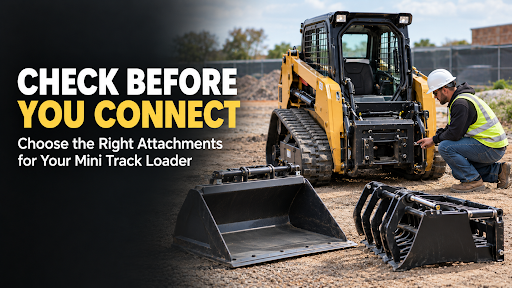
Choosing the right attachment can make construction equipment more useful across different jobs. For buyers considering a mini track loader, however, compatibility should come before convenience. An attachment may look suitable for a particular task, but differences in mounting systems, hydraulic requirements, and rated capacity can affect whether it works safely with a specific machine. Checking these details before purchasing can help contractors avoid unnecessary expenses and equipment problems.
Start With the Mounting System
The first step is to check how the attachment connects to the loader. Attachments use different mounting designs, and not every attachment fits every machine.
Some loaders use a quick-attach system that allows operators to change compatible attachments more easily. However, the term “quick attach” does not automatically mean that two products from different manufacturers will connect properly. The mounting plate, locking mechanism, dimensions, and connection points must match.
Before buying an attachment, confirm the loader’s mounting system and compare it with the attachment manufacturer’s specifications. If the information is unclear, ask both suppliers to verify compatibility.
A proper fit is important for more than convenience. An attachment that does not lock securely can create operating hazards, damage connection points, or become detached during use.
Check Hydraulic Requirements
Hydraulic compatibility is another important consideration, particularly for attachments that rely on powered movement. Examples include certain augers, trenchers, brush cutters, and other hydraulic tools.
These attachments may require specific hydraulic flow and pressure levels to operate as intended. The loader must be able to meet those requirements within the manufacturer’s approved limits.
Buyers should check the following details:
- Hydraulic flow: Confirm the attachment’s required flow rate and compare it with the loader’s available auxiliary hydraulic flow.
- Operating pressure: Ensure the loader’s hydraulic system meets the attachment’s specified pressure requirements.
- Hydraulic connections: Check the coupler type, hose arrangement, and connection sizes.
- Return-line requirements: Determine whether the attachment needs a dedicated return line or another specific hydraulic arrangement.
High-flow attachments can require more hydraulic capacity than standard-flow equipment provides. Using an incompatible setup may lead to poor performance, excessive heat, or equipment damage.
Never assume that an attachment will work simply because its hoses can connect to the loader. The full hydraulic specifications must be checked.
Match the Attachment to the Loader’s Capacity
Every loader has operating limits, and attachments must be evaluated against those limits. Weight is an important factor, but it is not the only one.
A heavy attachment reduces the capacity available for carrying material. Its shape and position can also affect the machine’s balance, stability, and handling. These factors become especially important when working on slopes, uneven ground, or confined sites.
Buyers should review the loader’s rated operating capacity, the attachment’s weight, and any additional load imposed by the material being handled. They should also check whether the attachment’s intended use falls within the machine manufacturer’s guidelines.
For example, a bucket designed for light materials may not be suitable for every type of dense material. Similarly, a larger attachment is not necessarily more productive if it places excessive demands on the loader.
The goal is to select an attachment that suits both the job and the machine’s rated capabilities.
Consider the Type of Work
Attachment selection should begin with a clear understanding of the tasks the loader will perform. Moving soil, handling gravel, clearing vegetation, and drilling holes all involve different requirements.
A bucket may suit general material handling, while an auger may be useful for specific digging tasks. A trencher can support suitable trenching work, provided the loader meets the attachment’s mounting, hydraulic, and capacity requirements.
Buyers should consider how frequently each attachment will be used, the conditions in which it will operate, and whether the machine can accommodate it without additional modifications.
It is also worth checking the attachment manufacturer’s instructions for approved applications, maintenance needs, and operating restrictions. This helps prevent using a tool in conditions for which it was not designed.
Boleo: Researching Mini Track Loaders and Equipment Options
For buyers assessing mini track loaders and their attachment requirements, Boleo manufactures compact construction equipment, including mini skid steer loaders and mini excavators. Understanding the machines available from the manufacturer can help contractors identify models to evaluate further, while mounting systems, hydraulic specifications, and load limits must still be checked against the requirements of each attachment.
Before making a decision, buyers should review the product information and confirm the machine’s mounting arrangement, hydraulic specifications, and rated operating capacity. They should also verify attachment compatibility directly with the relevant supplier or manufacturer. Checking these details before purchase can help buyers avoid assuming that an attachment will fit or operate correctly simply because it is marketed for compact loaders.
Final Thoughts
Attachment compatibility affects safety, performance, and the overall value of a mini track loader. Buyers should check the mounting system, hydraulic flow and pressure, connection requirements, and rated capacity before purchasing additional equipment.
They should also match each attachment to the intended task and follow the manufacturer’s operating instructions. Careful research and direct compatibility confirmation can help contractors select equipment that works together properly, reduce avoidable costs, and get more practical use from their machines.







Comment