
10 Metal Detecting Tips Every Beginner Should Know

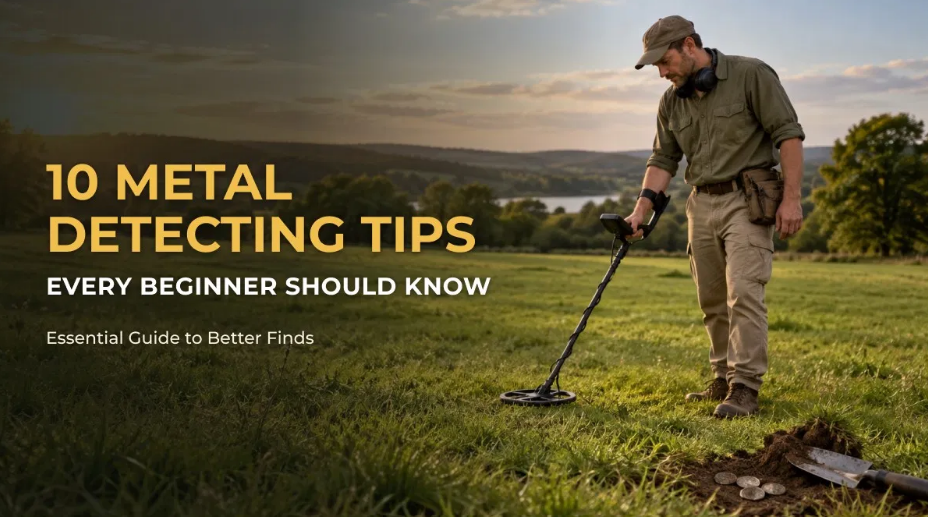
Metal detecting is an exciting outdoor hobby that combines exploration, patience, and the thrill of discovering something unexpected. Whether you hope to find old coins, lost jewelry, or interesting relics, learning a few basic techniques can help you get more out of every outing.
For beginners, success depends on more than simply purchasing a detector and heading outdoors. Understanding your equipment, researching locations, and developing consistent search habits can make the experience more rewarding. These 10 metal-detecting tips will help you build confidence and avoid common mistakes as you get started.
1. Choose a Metal Detector That Matches Your Needs
Your first metal detector should suit your experience level, budget, and preferred detecting environment. Some models are designed for straightforward operation, while others offer advanced settings for experienced users.
When comparing options, consider sensitivity controls, target identification, discrimination settings, search coil size, and waterproofing. Think about where you plan to search, too. A detector suitable for dry fields may not be the right choice for saltwater beaches.
Researching the best metal detector for your needs means looking beyond price and marketing claims. Compare practical features, ease of use, and manufacturer specifications to find equipment that fits your goals. A beginner-friendly model can help you learn the fundamentals without overwhelming you with unnecessary adjustments.
2. Learn How Your Metal Detector Works
Before your first trip, spend time understanding your detector’s basic functions. Most modern detectors provide audio signals and, on supported models, visual target identification to help you assess objects beneath the ground.
Start by learning three important settings:
- Sensitivity: Controls how responsive the detector is to potential targets and interference.
- Discrimination: Helps distinguish between selected target types based on their detected characteristics.
- Ground balance: Helps compensate for the effects of naturally occurring minerals in the soil.
Read the manufacturer’s manual and learn what the different tones and display readings mean. Remember that target identification is an estimate rather than a guarantee. Different objects can produce similar signals, especially when they are buried deeply or positioned close together.
Understanding these features early will help you make better decisions in the field.
3. Practice Before Exploring New Locations
A little practice at home can make your first detecting trip much easier. If you have access to a suitable outdoor area where testing is permitted, place several everyday metal objects on the ground or bury them at shallow depths.
Try using coins, different metal items, and objects of varying sizes. Sweep the coil over each target and observe how the detector responds. Move objects farther apart and experiment with different sweep speeds to understand how signals change.
You can also practice pinpointing a target before digging. Some detectors have a dedicated pinpoint function, while others require you to narrow down the target’s location using repeated sweeps.
This simple exercise helps you become familiar with your machine before dealing with the uncertainty of real-world conditions.
4. Research Your Detecting Locations
Choosing the right location can influence your results as much as choosing the right equipment. Areas with a history of regular human activity may offer opportunities to find coins, lost personal items, or other objects, although discoveries are never guaranteed.
Consider permitted locations such as suitable public beaches, designated detecting areas, or private land where you have obtained the owner’s permission. Historical maps, old photographs, and local records can provide useful clues about how an area was previously used.
Before visiting a location, check applicable laws and restrictions. Public parks, beaches, archaeological sites, and historically significant properties may have different rules governing metal detecting and digging.
Avoid protected sites and areas where collecting artifacts is prohibited. Responsible research helps you find appropriate places to explore while respecting local regulations and historical heritage.
5. Learn to Adjust Your Detector’s Settings
It can be tempting to increase sensitivity to its highest setting in the hope of detecting deeper targets. However, excessive sensitivity may also increase interference, unstable signals, and false responses in challenging conditions.
Start with a recommended preset or beginner mode if your detector provides one. Once you understand its normal behavior, make small adjustments and observe how each change affects performance.
Discrimination also requires a balanced approach. Rejecting certain target categories can reduce unwanted signals, but overly aggressive discrimination may cause you to miss objects you would otherwise want to investigate.
Ground balance can be particularly useful when soil mineralization affects detector performance. Follow your model’s instructions to determine whether automatic, preset, or manual ground balancing is appropriate.
Change one setting at a time whenever possible. This makes it easier to understand which adjustments improve your results.
6. Sweep the Search Coil Slowly and Consistently
Your sweeping technique plays an important role in detecting potential targets. Moving the coil too quickly or lifting it at the end of each swing can reduce consistency and cause you to overlook signals.
Keep the coil close to the ground while maintaining the distance recommended by the manufacturer. Move it from side to side at a controlled pace, using overlapping sweeps to cover the area systematically.
Try to maintain a consistent height throughout each movement. If you are searching a large field or beach, work in a simple grid pattern so you can keep track of the ground already covered.
When you hear a promising signal, slow down and investigate it from more than one direction. A steady, methodical approach is generally more useful than rushing across a large area.
7. Learn to Interpret Target Signals
Metal detectors provide clues about buried objects, but interpreting those clues takes practice. Depending on the model, you may receive different tones, numerical identification values, or visual indicators.
Pay attention to how consistent a signal sounds when you approach it from different angles. A repeatable response may be worth investigating, although it does not necessarily mean the target is valuable or desirable.
Be careful about relying on a single target identification number. Soil conditions, object depth, metal composition, orientation, and nearby objects can all affect readings.
Over time, you will develop a better understanding of how your detector responds to different targets. Keeping notes about interesting signals and what you actually recover can help you improve your interpretation skills.
Remember that digging every signal is not always necessary or permitted. Follow the rules of your location and use your judgment when deciding which targets to investigate.
8. Carry the Right Metal Detecting Accessories
A detector is only one part of your equipment. The right accessories can make a trip more comfortable and help you recover targets efficiently.
Consider carrying these essentials:
- Digging tool: Choose a suitable tool for the terrain and permitted digging methods.
- Pinpointer: Helps narrow down a target’s position in loose soil or an excavation.
- Finds pouch: Keeps recovered objects organized and separate from rubbish.
- Gloves: Protect your hands when handling soil and ordinary debris.
- Water and weather protection: Help you prepare for changing outdoor conditions.
- Rubbish bag: Allows you to collect discarded metal and other litter responsibly.
Choose accessories according to where you intend to search. Sandy beaches, grassy fields, and wooded areas may require different tools.
Avoid carrying unnecessary equipment at first. You can expand your kit as you learn which accessories are most useful for your detecting style.
9. Dig Carefully and Leave the Area Clean
Responsible digging protects the environment and helps preserve access to suitable detecting locations. Before removing soil, confirm that digging is allowed and follow any site-specific requirements.
When digging is permitted, remove only the amount of soil needed to recover the target. Use appropriate tools, avoid damaging roots or underground infrastructure, and restore the ground as closely as possible to its original condition.
Collect rubbish you uncover when it is safe to do so, and dispose of it properly. Never leave open holes, sharp metal objects, or discarded digging materials behind.
Historical objects require additional care. Some finds may be subject to reporting requirements or restrictions on removal. If you discover something that may be archaeologically significant, follow local guidance rather than automatically taking it home.
Good detecting habits demonstrate respect for landowners, other visitors, and the places you explore.
10. Be Patient and Learn from Every Outing
Metal detecting involves trial and error. Some trips may produce interesting finds, while others may help you learn more about your equipment without uncovering anything particularly valuable.
Instead of judging success only by what you recover, pay attention to what each session teaches you. Record the locations you visit, the settings you use, and the types of signals you encounter. These notes can help you recognize patterns and make more informed adjustments next time.
If you are considering a new detector, compare available models according to your experience, preferred locations, and budget. For example, researching an Xterra metal detector can help you evaluate whether a model in the Minelab X-TERRA range offers the features you want. Check the specifications of the particular model, including its operating modes, coil compatibility, and water-resistance limitations, before making a decision.
Set realistic expectations and give yourself time to develop your skills. Consistency, careful observation, and a willingness to learn are valuable parts of becoming a more confident detectorist.
Final Thoughts
Getting started with metal detecting does not require expert knowledge or an expensive collection of accessories. Choosing suitable equipment, learning its settings, researching permitted locations, and practicing a consistent sweeping technique can help you build a strong foundation.
Just as importantly, patience and responsible digging make the hobby more enjoyable while helping protect the places you visit. Focus on improving your technique with every outing, and treat each discovery as an opportunity to learn something new.
With preparation and practice, you can develop your skills, explore new locations responsibly, and get more enjoyment from every metal detecting adventure.







Comment