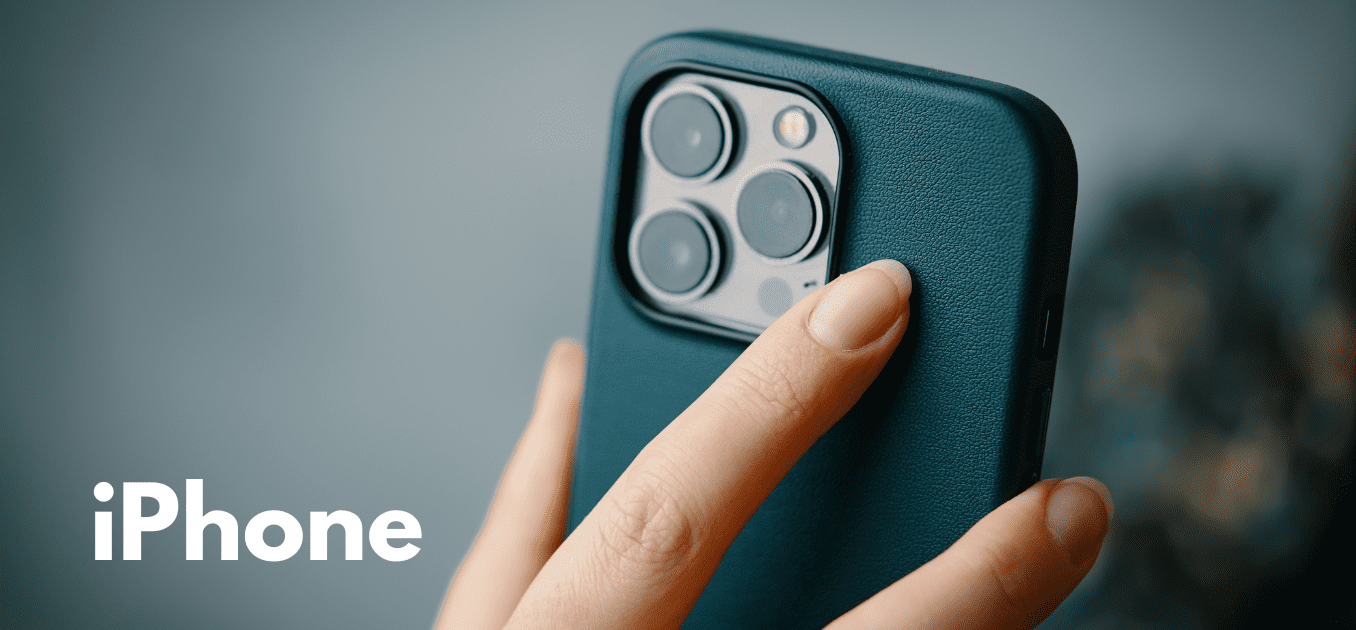
iPhone prices are getting more expensive with every release, and, for the tech/eco-aware buyer, brand-new iPhones are not the best choice as they mean drainage to both your bank account and the environment. This is why many seasoned tech buyers know to buy their iPhones used or second-hand one year post model release. This way, you can enjoy the advanced features of a relatively new iPhone within the prime of the device’s life without having to pay full price and without the guilt of having added the environmental cost of manufacturing a new device; you’ve actually given the already-made device a new life!
The question now is which iPhone to buy and where to look for reliable used iPhone sources in the market.
While it’s easy to go on Marketplace or eBay to find someone selling their old iPhone, you’d be ignoring the first rule of the second hand market: Choose a trusted seller.
Even when you do your research and know how to “check” an iPhone to ensure its condition, there are hidden aspects to the process that you may not even notice.
For example, you get the iPhone, open Settings, and look at Battery Health, and it’s higher than 80%. Brilliant, that’s a healthy battery and a safe-to-buy iPhone, right?
Two weeks later, your Safe-to-Buy iPhone is dying at 30% battery charge without a warning. Why? Because you didn’t know that battery health can be spoofed, and you bought a brick.
This is why, instead of buying just used or second-hand, it’s better to buy a refurbished iPhone that’s been tested and inspected by a professional technician and sold by an experienced seller.
Let’s have a look at 5 critical tests that separate a bargain from a brick.
Test #1: The “Cycle Count” Truth
One of the first things you learn when researching how to check a used iPhone’s condition is to check the battery health indicator in the Settings app. The tutorials usually recommend you buy an iPhone with an above 85% battery health, so you’re thrilled when your used device shows a 100% health. Meanwhile, this is the biggest red flag you can find!
A used iPhone means a USED battery, so how can it show a number indicating that it’s never been used? This is either a battery that’s been spoofed or replaced, and neither option is good for you in the long run.
Even with realistic battery health percentages like 80-90% health, these numbers can be faked with a software tool or a physical chip inserted between the battery and the phone’s motherboard to give a false reading.
Fortunately, iPhones keep Log Files of the battery health that CANNOT be faked. This is where a professional refurbisher’s experience comes in.
Instead of looking at a number that may or may not be truthful, professional smartphone technicians go into these log files of the pre-owned iPhone using professional diagnostic tools and check how many times the battery has been charged and drained, which is called the Cycle Count.
This way, professional refurbishment sellers determine the battery health of an iPhone based on actual numbers and activity rather than a vague percentage.
Test #2: The “Deep” Water Sensor (LDI)
Unlike popular belief, iPhones are NOT waterproof; they’re only water resistant. The difference here is important because that resistance wears out or weakens over time. It is quite possible that while in possession of the first owner, the iPhone’s water resistance has significantly decreased without the user noticing, which subjected the device to water damage.
Now, the most widely known test to see if there’s water damage in iPhones is to eject the SIM tray and shine a light into the SIM slot to see if the pink/red indicators (LCI/LDI) of water damage light up.
However, these Liquid Contact Indicators (LCI) or Liquid Damage Indicators (LDI) are essentially tiny stickers that change colours from white/silver to red/pink when they touch water. So, if the seller is being dishonest, they can simply have a professional replace those stickers with new ones, removing the indication of the water damage while the damage is very much present.
So, when you buy a used iPhone that hasn’t been inspected by a trusted technician, you may think that the SIM slot check is sufficient to ensure the device has not been subjected to water damage, but it is not.
A responsible professional refurbishment centre, on the other hand, will make sure to lift the display panel to check the LCI stickers on the internal components like the logic board and battery to make sure that no water ever reached or damaged the device.
Test #3: The “Muffled Audio” Diagnostic (The Frequency Check)
There’s a difference between cleaning an iPhone to make it look nice and cleaning an iPhone to make sure it works properly while protecting the hygiene and health of the second-hand buyer.
Dirt and debris get in the microphone and, over time, it starts to block the mic, causing muffled sound and poor call quality.
When you buy a “cleaned” used iPhone, it’s usually either wiped or cleaned using DIY methods, such as a brush or tape to collect the surface-level dust. Meanwhile, deep inside the microphone mesh, oil from hands and face, makeup residue, and dust are creating a wax-like layer blocking sound.
At professional refurbishment centres, technicians use industrial-grade vacuum suction and fine-bristle anti-static brushes to extract the debris rather than pushing it further down into the microphone mesh.
Then, diagnostic software is used to run automated audio loops with specific frequencies through the phone’s speaker and back into the microphone to make sure that the sound quality in and out of the iPhone hits the correct decibel levels.
Test #4: The “Ghost Touch” Diagnostic (Digitizer Health)
When you run a touchscreen functionality test on a used iPhone, this means the famous “drag an app icon across the screen” to see if it releases or doesn’t follow your finger movement properly. You can also open the Notes app and use all keyboard buttons to make sure the responsiveness is working. However, you can’t catch a damaged screen or responsiveness malfunctions on a pixel level.
This is why it’s necessary to have an iPhone professionally tested, as technicians use specialized software tools to run the Grid Test. Through this test, technicians are able to detect digitizer failure by tracing a line across every single pixel to make sure the line doesn’t break.
If the digitizer is failing, professional refurbishers are able to replace it with a new high-quality part, whereas a second-hand seller hands you the phone in an as-is condition.
Test #5: The Blacklist Check (IMEI Access Check)
One of the biggest risks that comes with a second-hand iPhone purchase is that it may have been stolen and is now being resold illegally. However, stolen iPhones are usually blocked using their unique IMEI from network access once they are reported missing or stolen. So, your personal check for the iPhone, whether it’s legal or not, would be to try to insert a SIM card, and if it connects, it’s legal and safe to use.
However, the risk here remains that the iPhone might be being sold before it’s reported, so the network hasn’t blocked it YET. This is why it’s crucial to buy from a trusted seller that will not only ensure that the device is legal through the CheckMEND database, but will also be responsible for the iPhone’s legality and obligated to take it back and refund your money if the device turns out to be blocked a few days/weeks down the line.
Result: Technician-Level Tests Are a MUST
These are only 5 out of tens of tests and checks that must be done on a pre-owned iPhone to make sure that it is worth your money. Buying an iPhone at a lower price does not mean you have to compromise on quality or your right to perfect functionality and peace of mind. You can and SHOULD have both.
This is why having these tests, and all others, done by a professional trusted seller is better than the random used iPhone listing on an online marketplace and then taking a shot in the dark performing the DIY versions of these tests.
QwikFone is one of the UK’s most trusted refurbished phone sellers that has been in the refurbished market for nearly 2 decades, providing users with affordable iPhone options with immaculate quality and performance. Thanks to a rigorous routine and inspection standards combined with safe deal terms like a 12-month warranty and a 30-day return window with a full refund guarantee, UK customers are safe with the refurbished option from this seller.
Conclusion
When comparing the price tags of refurbished iPhones by a known brand and a random used iPhone listing on the internet, you may be able to save £20, but you’re taking on 100% of the risk.
The cost of a smartphone, especially a used one, is not only in the price you’re paying, but in its health, quality, and functionality in the long run. That’s what a refurbished smartphone from a reliable seller can guarantee for you.