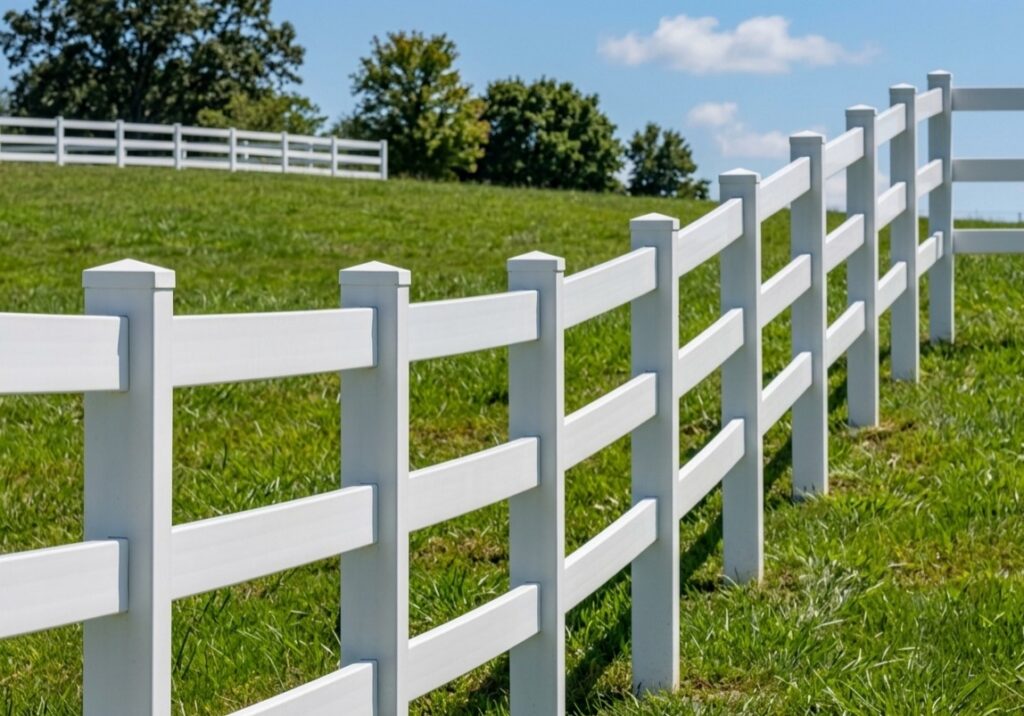
A buddy of mine listed his house in Seminole Heights last fall. Three bedroom, two bath, decent lot, updated kitchen. Solid house. His agent told him to spend his pre-listing budget on landscaping and paint. Standard advice. He did that, plus he replaced the rotting wood fence in the backyard with a new vinyl privacy fence. Cost him about $4,200 installed through a Tampa Fence Company called Apex Fencing that a coworker had used.
The house sold in nine days. His agent told him afterward that three of the four people who made offers specifically mentioned the backyard. The fenced-in yard with the new vinyl panels was the thing that made them picture themselves living there. Not the granite countertops. Not the fresh exterior paint. The fence.
I keep thinking about that because it runs counter to how most people prioritize home improvements. We obsess over kitchens and bathrooms. We pour money into curb appeal. Meanwhile the backyard sits there with a leaning chain link fence from 2003 and nobody thinks twice about it until they’re trying to sell.
Fences Move Houses in Tampa
Real estate agents in family-heavy neighborhoods will back this up all day long. Westchase, Carrollwood, New Tampa, South Tampa, Brandon. These areas are full of buyers with kids and dogs, and a fenced backyard goes from nice-to-have to deal-breaker pretty fast when you’re chasing a toddler around an open yard.
I’ve heard different numbers from different agents, but the range that keeps coming up is that a quality fence recoups somewhere between 50 and 70 percent of its cost at the point of sale. That puts it ahead of a lot of sexier renovations that homeowners assume will do more for their resale value.
But the math gets better when you factor in the years you actually live behind that fence before you sell. You start using the backyard more because it feels private. Your kids can play outside without you standing at the window the entire time. The dog doesn’t bolt into the neighbor’s yard. You stop hearing every conversation from the house next door. These aren’t things you’d list on a spreadsheet, but they change how your home feels every single day.
If You Own Rental Property, Pay Attention
Tampa has a massive rental market. Between military families near MacDill, USF students, young professionals in Ybor and the Channel District, and everybody in between, rental houses move fast when they’re priced right and presented well.
A fenced backyard is one of the biggest differentiators between a rental that sits on the market for six weeks and one that gets snapped up in a weekend. Renters with pets basically filter for fenced yards exclusively. Families with small children do the same. Even single renters and couples tend to prefer the privacy.
I talked to a landlord last year who owns three properties in East Tampa. He had one vacant unit sitting for almost two months with no takers. He spent $3,200 on a vinyl fence for the backyard and re-listed it. Rented in eleven days at $125 more per month than his original asking price. That’s a payback period of about twenty-six months, and the fence will be there generating that premium for another fifteen or twenty years.
For rental properties, vinyl and chain link are usually the way to go. Wood looks better, but it requires maintenance that tenants rarely do and landlords don’t want to manage from a distance. Vinyl holds up without attention, and chain link is cheap, durable, and functional for pet owners who just need containment.
Storm Season Ruins Bad Fences, Not Good Ones
Everybody in Tampa has a hurricane story, and a lot of those stories include a fence lying flat in the yard. It’s easy to look at that and conclude that fences just can’t handle Florida storms, but that’s not really what’s going on.
Fences fail in storms because they were installed poorly. Shallow posts, not enough concrete, loose connections between the rails and the pickets. A well-built fence with posts set three feet deep in solid concrete can handle a surprising amount of wind. Not a direct hit from a Category 4, obviously. But the tropical storms and the Category 1 stuff that hits Tampa more frequently? A properly installed fence rides that out without drama.
The design matters too. A solid privacy fence is basically a wall, and wind pushes against walls. If you’re in an exposed area near open water or on a property without many trees to break the wind, a shadowbox style fence is worth considering. Shadowbox has alternating pickets on each side of the rail with gaps between them, so wind passes partially through instead of slamming into a solid surface. You still get privacy because the overlapping pattern blocks the sightline, but the wind load drops significantly.
Chain link, obviously, barely registers wind at all. It’s mesh. The wind goes through it. If storm resilience is your top priority and you don’t care about aesthetics, chain link with sturdy posts is about as storm-proof as fencing gets.
Talking to Your Neighbor Before the Crew Shows Up
Nobody wants to have this conversation, but you’ve got to have it. Fence lines run along property boundaries, and your neighbor has opinions about what happens on that boundary even if they’re not paying for the project.
Florida law says you can build a fence on your own property without your neighbor’s permission. But “your property” means you need to know exactly where the line is. Not where you think it is, not where the old fence was, but where the survey says it is. If you don’t have a recent survey, get one. They run a few hundred bucks and they save you from the kind of property line dispute that turns neighbors into enemies.
Once you know the line, walk over and tell your neighbor what you’re planning. Most of the time it goes fine. Some neighbors even offer to split the cost since they benefit from the fence too. Occasionally someone has an issue with the height or the style or the idea of a crew digging near their sprinkler lines. Better to hear that complaint before the posts go in than after.
A lot of experienced fencing crews in Tampa are used to handling these conversations, or at least helping you navigate them. They’ve seen every situation and they know how to keep a project on track without creating a neighborhood war.
Cheap Fences Cost More Over Time. I Know That Sounds Obvious. It’s Still True.
I’ve watched enough people go through this cycle that I could draw it from memory. You get three quotes. One is noticeably lower than the other two. You pick the low one because the fence all looks the same on paper and saving $800 feels good.
Two years in, a post is leaning. Three years in, the gate won’t latch. Four years in, you’re replacing panels because the UV protection on the cheap vinyl wasn’t enough to handle Tampa sun, or the wood wasn’t sealed properly and now it’s soft to the touch in places. You call someone to fix it and the repair quote is $1,200. Or you call someone to replace it and you’re spending the full amount again.
The homeowners who spend the least on fencing over a ten-year stretch are almost always the ones who spent a bit more upfront. They picked the heavier-gauge vinyl. They went with the crew that sets posts deeper and uses more concrete. They paid for the better gate hardware. And then they didn’t think about their fence again for a decade because there was nothing to think about.
That’s the boring answer, I know. Nobody wants to hear “spend more money.” But if you’re going to look at this fence every day for the next ten or fifteen years, and it’s going to affect your property value and your daily quality of life the entire time, this is a weird place to try to save a few hundred bucks. Get it done right. Forget about it. Go enjoy your backyard.
Tampa,
FL
33610