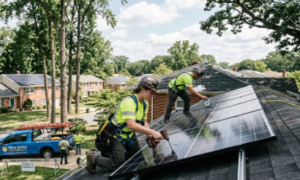
Planning expert Aaron Basi says the AI energy surge is changing how buyers, developers and planning authorities think about sustainable homes and warns that acting without proper consent advice could prove costly.
Interest in renewable energy technologies is growing rapidly across the UK. Solar Energy UK, citing government figures, reported a 37% increase in UK solar installations in 2025 compared with 2024, highlighting the increasing importance homeowners, developers and investors are placing on energy resilience, long-term cost management and property efficiency.
The rise of artificial intelligence is driving unprecedented growth in global electricity demand. While public debate has largely focused on productivity, employment and innovation, the infrastructure powering AI systems is creating significant and sustained pressure on energy networks worldwide.
According to the International Energy Agency, global electricity consumption from data centres is projected to roughly double from 485 TWh in 2025 to 950 TWh by 2030, with AI-focused data centre demand expected to triple over the same period. As electricity demand continues to increase across global energy networks, pressure on generation and infrastructure is expected to remain a significant factor influencing future energy markets.
While AI growth does not directly determine household electricity prices in the UK, it forms part of wider structural demand pressures that influence long-term energy system investment, infrastructure requirements and market conditions. These factors contribute to ongoing uncertainty around future energy costs.
Aaron Basi, Head of Town Planning at Planning By Design, says this shift is already influencing how clients approach property development and renovation decisions.
Basi added, “A few years ago, when a homeowner or developer raised solar or renewable energy in a planning conversation, it was almost always framed as an environmental decision. That has changed significantly. People are looking at their energy bills, reading about the growth of AI data centres and thinking much more carefully about energy resilience and long-term costs. We’re seeing increasing interest in solar panels, battery storage systems and other renewable technologies, not simply because they’re sustainable, but because they can make financial sense over the long term.”
“The planning implications of that shift are real and not always straightforward. Solar installations, battery storage systems and EV charging infrastructure all interact with planning policy in ways many homeowners and developers do not anticipate.”
Growing EPC requirements, alongside their increasing importance for mortgage lending, rental compliance and property resale value, are also contributing to greater interest in renewable technologies. At the same time, the Government’s Future Homes Standard is expected to accelerate the integration of solar, battery storage and low-carbon technologies into new housing developments across the UK.
For homeowners, this means renewable energy systems are increasingly becoming part of wider property investment decisions rather than optional upgrades. However, planning requirements can vary significantly depending on the property, location and local planning authority.
Acting without the correct permissions or planning advice can result in refused applications, enforcement action or costly remedial work where installations have already been completed.
For developers and investors, the opportunity may be even greater. As electricity demand continues to rise, properties and developments with consented renewable energy infrastructure may benefit from lower operating costs, stronger sustainability credentials and improved attractiveness to buyers, tenants and investors.
“The planning system is adapting to this new energy reality, but it is doing so unevenly across different local authorities,” added Basi. “That creates both risks and opportunities. Developers who integrate renewable energy strategy into their planning applications from the outset are increasingly finding it strengthens their proposals and helps future-proof developments against changing market expectations.”