Electronics keep getting smaller. But the materials inside them need to handle more heat, more pressure, and more electrical stress than ever before. So manufacturers are turning to a material that has been around for a long time but is now more important than ever — tungsten powder.
This fine metallic powder is not something most people think about when they pick up a smartphone or a computer chip. But without it, many of the devices we rely on every day simply would not work as well. In fact, tungsten powder sits at the heart of some of the most demanding applications in electronics manufacturing.
What Is Tungsten Powder?
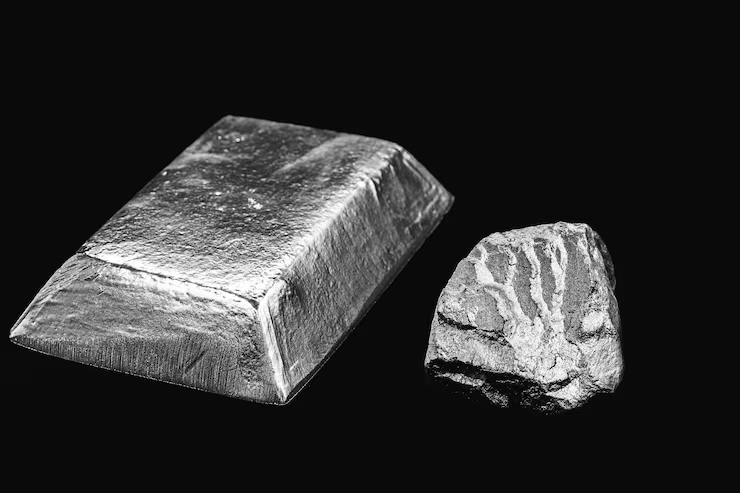
Tungsten is a naturally occurring metal. It is best known for having the highest melting point of any metal — around 3,422 degrees Celsius. That alone makes it stand out from everything else on the periodic table.
When tungsten is processed into a fine powder form, it becomes easier to work with in manufacturing. The powder can be shaped, mixed, sintered, or deposited onto surfaces with great precision. This flexibility is one reason why Tungsten powder has become such a valuable starting material across so many industries.
The powder itself comes in different particle sizes. Finer particles are used for applications that require tight tolerances, like semiconductor manufacturing. Coarser grades are more common in heavy industrial work. Either way, the core properties of the material stay the same.
Key Properties That Make It Useful
High Melting Point and Thermal Stability
- Tungsten does not melt, warp, or degrade at temperatures that would destroy most other metals
- It keeps its shape and structure even under intense, repeated heat cycles
- This makes it reliable in environments where temperature spikes are common
In electronics, heat is a constant problem. Transistors generate it. Resistors generate it. High-speed processors generate enormous amounts of it. So any material used near these components needs to stay stable no matter what. Tungsten handles this better than almost anything else.
Electrical Conductivity
Tungsten is a good conductor of electricity. It is not quite as conductive as copper or silver, but it holds up far better under thermal stress. That balance makes it useful in places where both conductivity and heat resistance are needed at the same time.
For example, in contact materials and electrodes, tungsten handles the dual demand of carrying current while also resisting the heat caused by that current. Over time, this leads to fewer failures and longer component life.
High Density and Structural Strength
Tungsten is one of the densest metals on earth. Its density is close to that of gold. This high density gives it excellent mechanical strength. As a result, thin films or small deposits of tungsten can still provide strong structural support inside a device.
In addition, tungsten resists corrosion well. It does not react easily with air, water, or most chemicals. So components made with tungsten last longer, even in harsh environments.
Where Tungsten Powder Is Used in Electronics
Semiconductor Interconnects
This is one of the most important uses of tungsten in modern electronics. Inside a semiconductor chip, there are countless tiny pathways that connect different layers. These are called interconnects, and they need to be both electrically conductive and heat resistant.
Tungsten is deposited into these pathways through a process called chemical vapor deposition. The result is a dense, reliable connection that holds up even as chips run hotter and faster. As chip designs continue to shrink, the demand for materials that perform at the nanoscale has grown. Tungsten fits that role well.
Contact Materials
- Tungsten is widely used in electrical contacts and switches
- It resists the arcing and erosion that happens when contacts open and close under load
- This keeps contacts from wearing out quickly, which extends the life of relays, circuit breakers, and other switching devices
Without a material like tungsten in these spots, contacts would degrade much faster. Replacements would be needed more often. So using tungsten here is both a performance and a cost decision.
High-Performance Alloys
Tungsten is also blended with other metals to create alloys with specific performance profiles. For example, tungsten-copper alloys combine the conductivity of copper with the heat resistance of tungsten. These alloys are used in heat sinks, electrodes, and certain types of printed circuit board components.
Similarly, tungsten-nickel and tungsten-iron alloys are used in applications that need both strength and density. These materials are especially useful in medical imaging equipment, radiation shielding, and high-frequency electronic devices.
Thick Film Pastes and Conductive Inks
In some electronics manufacturing processes, tungsten powder is mixed into pastes or inks that can be printed onto ceramic substrates. These thick film pastes are then fired at high temperatures to create conductive traces and resistive elements.
This method is common in hybrid circuits and certain types of sensors. The result is a compact, durable component that can handle both heat and mechanical stress.
Sourcing and Purity Matter
Not all tungsten powder is the same. Purity levels vary, and even small amounts of contamination can affect how well the material performs. For electronics applications, high purity is not optional — it is a requirement.
Suppliers like Atlantic Equipment Engineers have long served industries that need high-purity tungsten powder for electronics and other demanding uses. When sourcing for semiconductor or high-precision manufacturing, working with a supplier that understands these standards makes a real difference.
Particle size consistency also matters. If the powder has too much variation in grain size, the final product may have uneven density or unexpected electrical behavior. Good quality control at the powder stage prevents problems further down the production line.
Why Electronics Manufacturers Keep Choosing Tungsten
There is no single perfect material in electronics. Every design involves trade-offs. But tungsten keeps showing up in critical roles because it solves several problems at once.
It handles heat. It conducts electricity. It resists wear. And it can be processed into very fine powders that work at tiny scales. As electronics become more powerful and more compact, these properties become more valuable, not less.
Moreover, tungsten is not being replaced by newer alternatives anytime soon. Researchers continue to explore other materials for chip interconnects and contact layers, but tungsten remains a top choice because of its proven track record and well-understood behavior in manufacturing environments.
Final Thoughts
Tungsten powder does not make headlines the way new chip designs or battery technologies do. But it is part of what makes those advances possible. From the interconnects inside your phone’s processor to the contacts inside industrial switchgear, tungsten is doing quiet, essential work.
As electronics push further into extreme performance territory — faster, hotter, smaller — the materials that support that performance matter more than ever. Tungsten powder is one of those materials. It has earned its place in modern electronics, and it is not going anywhere.
For manufacturers and engineers looking at material choices for their next design, understanding what tungsten powder brings to the table is a smart starting point.