Marketing teams are producing more visual content than ever before. A product launch may need a landing page hero, several short social clips, product demonstration visuals, paid ad variations, email images, and internal sales enablement material. The pressure is not only to create more, but to test faster and keep the message consistent across every channel. This is why AI video and image generation are moving from experimental tools into everyday creative operations.
At first, many teams treated AI video as a novelty. They used it to generate a few eye-catching clips, test a surreal concept, or turn a written idea into a short motion asset. In 2026, the conversation is changing. The most useful question is no longer whether AI can generate a video. The better question is how a brand can build a repeatable workflow around AI models without losing creative control, quality, or brand direction.
The limits of a single-model workflow
A single AI model can be powerful, but it rarely fits every creative task. One model may be better for cinematic camera movement. Another may handle image-to-video animation more reliably. A third may be useful for fast iteration, while another may be stronger for polished product visuals or social-first formats. When teams rely on one model for every job, they often spend too much time forcing the tool to behave like something it is not.
This is especially important for marketers because creative work is rarely one-dimensional. A campaign may begin with static product images, move into lifestyle visuals, become a short video ad, and then require edits for different placements. The team may need a vertical version for short-form social platforms, a wider version for a website, and a cleaner product-focused version for paid search or retargeting. In that environment, flexibility matters as much as generation quality.
Why multi-model access creates better output
A multi-model workflow gives creative teams more room to choose the right engine for the right job. Instead of treating AI generation like a one-click replacement for design and editing, teams can treat it like a flexible production stack. Text-to-video can help explore early campaign concepts. Image-to-video can animate existing product photography or brand assets. Image generation can produce mood boards, social graphics, and campaign concepts. Video editing tools can refine a generated or uploaded clip without restarting the entire process.
This kind of workflow is valuable because the creative process is iterative. Teams rarely approve the first asset they see. They compare angles, change pacing, adjust visual tone, and test how a message feels when it becomes motion. A multi-model environment makes that exploration faster because marketers are not locked into one generation style or one fixed output path.
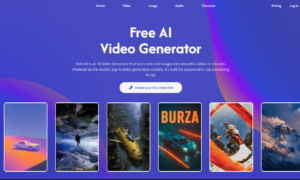
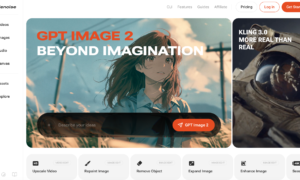
That is why platforms such as the MovArt AI video generator are gaining attention among creators and marketing teams that want text-to-video, image-to-video, AI image creation, and video editing capabilities in one workspace. The value is not just that the platform can generate media. The larger value is that it helps teams move from idea to draft to revision without constantly switching tools, subscriptions, and interfaces.
From campaign idea to reusable creative system
The biggest advantage of AI-assisted production is not only speed. It is the ability to turn a campaign idea into a reusable creative system. A marketer can start with a simple brief: audience, product, offer, tone, format, and desired emotion. From there, AI tools can help create several visual directions before the team chooses the strongest one. Once a direction works, the same concept can be adapted across formats instead of recreated from scratch.
For example, an e-commerce brand could begin with a product photo and generate a short lifestyle-style clip for a seasonal campaign. The same visual idea could then become a square ad, a vertical social post, a website banner, and a short product demonstration. A software company could turn a feature message into a concise launch video, then adapt the visual style for onboarding material, sales presentations, and paid ads. A real estate marketer could animate property photos into richer walkthrough-style previews before investing in a full production shoot.
This is where AI becomes practical for small and mid-sized teams. Traditional video production requires planning, equipment, editing time, and budget. AI workflows do not remove the need for creative judgment, but they reduce the friction between an idea and a usable draft. That allows teams to test more concepts before committing resources to a final campaign.
Creative control still matters
The strongest AI workflow is not fully automatic. Brands still need a point of view. A good prompt starts with a clear goal and includes information about audience, format, tone, composition, motion, lighting, and brand constraints. The best results come when teams use AI as a production partner rather than a random asset machine. They should review outputs, compare alternatives, refine the brief, and keep a human editor responsible for final quality.
There is also a strategic reason to keep humans in the loop. Marketing content must do more than look impressive. It must communicate the right message to the right audience. A visually strong video that fails to explain the product or support a buying decision is still weak marketing. AI can accelerate production, but human teams still decide what should be said, why it matters, and how it fits into the broader customer journey.
What marketers should look for next
As AI media tools mature, marketing teams will likely care less about isolated generation demos and more about complete creative workflows. The winning tools will help users move smoothly between image creation, video generation, editing, resizing, and iteration. They will also support different use cases, from quick social experiments to more polished brand assets.
For businesses, this shift matters because visual communication is becoming a daily requirement. Brands cannot wait weeks for every new video concept. They need a faster way to test hooks, show product value, and respond to market changes without sacrificing quality. Multi-model AI workflows offer a practical path forward: more creative options, faster production cycles, and better alignment between strategy and execution.
AI will not replace the need for strong marketing ideas. It will make those ideas easier to explore, adapt, and ship. For teams that learn how to combine human direction with multi-model creative tools, video production can become less of a bottleneck and more of an ongoing growth engine.