Singapore’s coworking market is no longer just a desk-by-the-day story. The cost conversation has shifted from “how cheap can workspace get?” to “how much flexibility, location quality, privacy, and service can companies secure without taking on a long traditional lease?”
That shift has become clearer over the past couple of years. Traditional office rents have moved unevenly, fit-out costs remain a concern, and companies are still balancing hybrid work with the need for high-quality collaboration space. At the same time, flexible office operators are no longer serving only freelancers and early-stage startups. They are increasingly building private offices, managed suites, premium amenities, and enterprise-ready workplace models.
The result is a more mature coworking market where cost is not measured only by the monthly desk rate. It is measured by risk, speed, location, fit-out savings, and the ability to scale up or down without committing to excess space.
Office rent has become harder to forecast
The biggest reason coworking costs are under the spotlight is simple: office rent has not followed a straight line.
In Singapore, JLL reported that CBD Grade A office rent rose 1.3% quarter-on-quarter in Q1 2024 to SGD 11.42 per square foot per month, the highest level since Q4 2008. That followed two quarters of small corrections, showing how quickly prime office costs can rebound when vacancy tightens and occupier sentiment improves.
By late 2024, the market looked more cautious. CBRE noted that high fit-out costs, workplace transformation, hybrid work, and delayed rate cuts weighed on leasing sentiment. Core CBD Grade A rents were unchanged for a third consecutive quarter in Q4 2024 at S$11.95 psf per month, with full-year growth slowing to 0.4% from 1.7% in 2023.
Then growth resumed. CBRE recorded a 0.8% increase in Core CBD Grade A gross effective rents in Q1 2025 to S$12.05 psf per month after four quarters of flat rental growth. By the end of 2025, CBRE said Core CBD Grade A rents had increased 2.9% for the full year, while vacancy fell from 5.9% in Q1 to 4.5% by year end.
This matters because companies do not make office decisions in quarterly cycles. They plan hiring, budgeting, expansion, and market entry over years. When rents flatten, rise, and tighten again within a short period, flexible workspace becomes a hedge against getting the timing wrong.
Coworking prices are also moving beyond the basic desk
Coworking used to be priced mainly around access: a hot desk, a dedicated desk, or a small serviced office. That still exists, but the cost structure has become more layered.
A small team might compare a coworking membership with a traditional lease and see an obvious difference. A larger company, however, is comparing more than rent. It is comparing the total cost of occupancy: fit-out, furniture, utilities, reception, cleaning, internet, meeting rooms, security, lease liability, and the cost of unused space.
That is why flexible offices can look more expensive on a simple per-desk basis but more efficient on a total-cost basis. If a business needs to move quickly, test a new market, house a project team, or provide hybrid employees with a high-quality base, paying for usable workspace can be more rational than signing for space that may sit half empty.
Office Hub’s 2024 Singapore flexible office market report reflects this maturing picture. It found that flexible office supply increased by 14.3% annually, while average desk prices varied by workspace type and location, with upward pressure in certain prime districts. It also noted demand for shorter commitments and features such as high-speed internet and meeting rooms.
In other words, the market is not simply becoming cheaper or more expensive. It is becoming more segmented.
Why premium coworking is gaining ground
A major change over the past couple of years is the rise of premium flexible workspace.
CBRE’s Singapore Flexible Office Market H1 2025 report described the local market as mature and diverse, ranging from on-demand access for startups to fully managed suites for enterprises. It also noted that the market now includes premium hospitality-driven environments as well as value-focused models, with the top 10 brands commanding 80% of the market.
That explains why coworking costs can vary so widely. A basic desk in a fringe location is a different product from a private office in a Grade A building with meeting rooms, business-grade IT, reception, and a polished client-facing environment.
For enterprise brands, this distinction matters. Their teams often need privacy, secure access, professional meeting spaces, and locations that align with client expectations. They may also need flexible expansion rights, shorter commitments, and faster setup than a conventional lease can provide.
Cushman & Wakefield’s 2025 global flexible office trends report points in the same direction. It found that 55% of global occupiers use flexible office solutions, with 17% planning to increase their use. The report also highlighted cost advantages from ready-to-use spaces, especially as construction and fit-out costs remain elevated.
That does not mean every company should choose coworking. It means the economics are being judged differently. Companies are paying for optionality.
The private office has become the middle ground
The biggest winner in this shift may be the private office inside a flexible workspace.
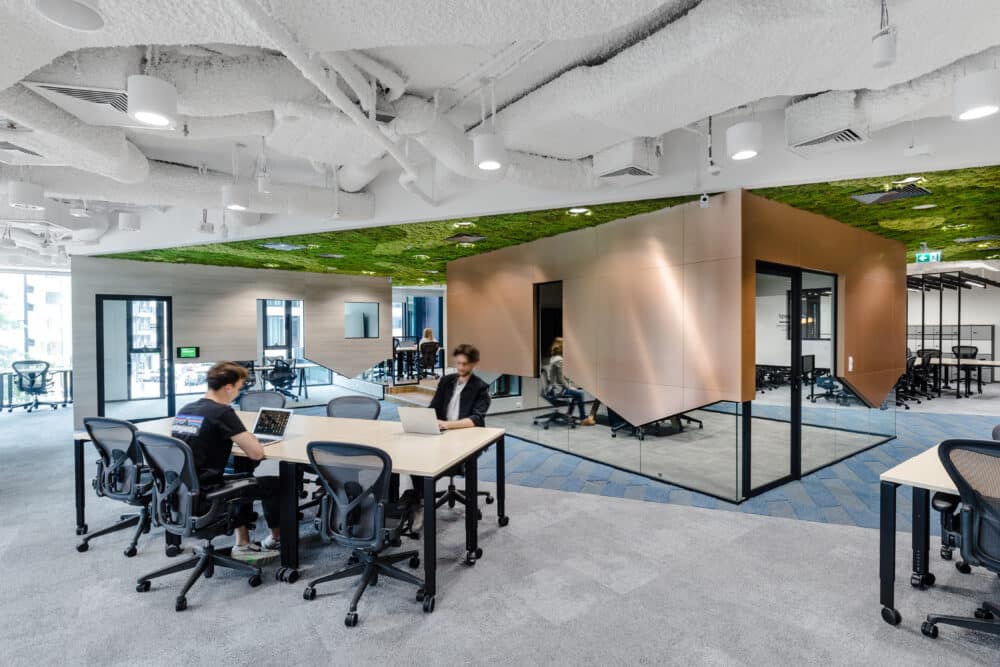
Private offices solve one of the main objections companies had about coworking: the lack of separation. A team can have its own room, branding options in some cases, access control, and a more stable work environment, while still sharing common facilities and avoiding the burden of a full office build-out.
This is where premium operators fit into the broader trend. For teams comparing how to rent office space without locking themselves into a conventional lease, The Work Project reflects the market’s movement toward premium coworking, private offices, and flexible workspace options that can serve both smaller teams and enterprise brands.
Office Hub lists The Work Project in Singapore with 11 properties, 190 offices, and capacities ranging from 1 to 119 desks, with pricing varying by office size and location. It also describes the brand’s spaces as design-led environments with services such as reception, business-grade internet, and access to a wider workspace network.
The point is not that premium coworking replaces headquarters. For many companies, it does not. Instead, it fills the gap between remote work and long-term leasing. It gives companies a way to house client teams, regional teams, temporary projects, or growth functions without committing to more space than they need.
The real cost is unused space
The hidden cost in office strategy is not always the rent. It is the space that is paid for but not used.
Hybrid work made this more visible. A company may need meeting rooms on Tuesday, client space on Thursday, and quiet focus areas throughout the week, but not necessarily a full desk for every employee every day. Traditional leases can struggle with that pattern because companies must predict future space needs years in advance.
Coworking and flexible offices turn part of that fixed cost into a variable one. A team can start with a smaller footprint, add desks, book meeting rooms, or move into a larger private office as usage becomes clearer.
This is especially useful when prime locations are tight. CBRE reported that Singapore’s office market could become more landlord-favourable in 2026 due to steady demand and limited new supply, with large contiguous floor plates expected to remain scarce. In that environment, flexible workspace can help businesses secure presence in strong locations without waiting for the perfect long-lease opportunity.
What companies should compare before choosing coworking
The smartest comparison is not coworking versus office rent in isolation. It is coworking versus the full cost of operating an office.
A proper comparison should include rent, deposit, reinstatement obligations, renovation, furniture, IT setup, utilities, pantry, cleaning, reception, meeting room access, security, lease flexibility, and the cost of expansion or contraction.
It should also include time. A traditional office may take months to source, negotiate, design, fit out, and occupy. A serviced or coworking office can often be activated much faster. For fast-moving teams, that speed has financial value.
Location should also be part of the calculation. A cheaper office far from clients, transport, or talent may cost more in lost convenience. A premium coworking location may justify a higher monthly rate if it improves attendance, collaboration, and client perception.
Conclusion
The cost of coworking has changed because the role of coworking has changed.
It is no longer only a low-commitment option for individuals. It has become part of corporate real estate planning, especially for businesses that want flexibility, speed, premium locations, and private offices without the full burden of a traditional lease.
Over the past couple of years, office rents have shown how quickly market conditions can shift. Prime space can flatten, rebound, and tighten again. Fit-out costs can change the economics of a lease. Hybrid work can make fixed desks harder to justify.
That is why premium coworking is gaining momentum. The headline price may not always be the lowest, but for many teams, the value is in reducing wasted space, avoiding large upfront costs, and keeping workplace strategy flexible while the market keeps moving.