Business news

Why Is Traditional Logistics Process Automation Failing in High-Density Cargo Hubs?

Why Is Traditional Logistics Process Automation Failing in High-Density Cargo Hubs? Automation has become a major priority for logistics operators. Ports, airports, distribution centers, and logistics parks are adopting autonomous vehicles, automated storage systems, intelligent scheduling, and AI-powered software to move cargo faster and reduce operating costs. Yet a contradiction is becoming increasingly visible: some of the world's most automated cargo facilities still struggle with congestion, waiting time, inefficient handoffs, and manual intervention. The problem is not necessarily that automation does not work. Rather, traditional logistics process automation often focuses on individual tasks instead of the movement of cargo as a whole. That distinction becomes critical in high-density cargo hubs, where hundreds of vehicles, shipments, loading areas, and operational decisions interact continuously. The Automation Paradox in High-Density Cargo Hubs Traditional automation typically begins with a simple question: Which repetitive task can be automated? That approach works well for activities such as sorting, picking, storage, and transportation. Machines can perform repetitive operations consistently and, in many cases, faster than manual labor. The challenge emerges when many automated processes operate simultaneously. Consider an autonomous vehicle transporting cargo from a warehouse to a loading area. The vehicle may be functioning perfectly, but the loading area could already be occupied. The vehicle waits. Another vehicle arrives and waits behind it. Cargo begins accumulating upstream. Nothing has technically failed. The individual automated tasks are working exactly as designed. The problem is that the system has optimized a movement without optimizing the flow. This is the central weakness of traditional automation in high-density environments: a collection of efficient automated tasks can still create an inefficient logistics network. When Automation Optimizes the Machine Instead of the Flow A fleet management system may try to minimize vehicle idle time. A warehouse system may prioritize order fulfillment. A terminal system may focus on equipment utilization. Each objective makes sense independently, but logistics operations are interconnected. A vehicle dispatched too early may arrive before cargo is ready. A warehouse optimized for storage density may increase internal transportation distances. A terminal optimized for equipment utilization may create queues at transfer points. As a result, individual components can appear productive while the overall operation remains constrained. This is why automation should not be evaluated solely through equipment-level metrics. The more important question is whether cargo is moving through the facility with fewer interruptions and less waiting. If autonomous vehicles complete more trips but cargo dwell time remains unchanged, the operation has not necessarily become more efficient. Automation creates the most value when it improves the entire flow rather than simply accelerating individual tasks. Static Scheduling Cannot Keep Up With Dynamic Cargo Flows High-density cargo hubs are rarely static. Shipment priorities change. Loading areas become unavailable. Traffic conditions fluctuate. Vehicles encounter unexpected delays. Aircraft and vessel schedules shift. A sudden demand increase can change the optimal allocation of resources within minutes. Traditional automation often relies on predefined rules: assign a task, select a vehicle, determine a route, and execute the movement. That model becomes less effective as operational variability increases. A route that was optimal ten minutes ago may no longer be optimal. A vehicle that appeared to be the best choice may suddenly be needed elsewhere. A destination that was available may become congested. This is why the next stage of logistics automation needs to move beyond fixed scheduling toward continuous decision-making. Instead of simply executing a plan, an intelligent system can reassess current conditions and adjust assignments, routes, and priorities as the operation changes. The difference is fundamental: Traditional automation executes the plan. Intelligent automation continuously improves the plan. Data Silos Turn Automated Systems Into Digital Islands Another major obstacle is fragmented data. A warehouse management system may know where cargo is. A fleet management system knows where vehicles are. A transportation system understands shipment requirements, while a terminal platform may contain information about yard operations. Each system can work correctly while still lacking the broader context needed to make good decisions. This creates digital islands inside an automated facility. For example, a fleet system may dispatch a vehicle because it identifies an available task. But if the destination is experiencing a temporary bottleneck, the vehicle simply arrives and waits. The fleet system has not necessarily made a technical error. It has made a decision based on incomplete operational information. This is why data integration has become increasingly important in logistics digitalization. McKinsey has identified fragmented technology environments, data quality, and integration challenges among the barriers preventing logistics companies from capturing the full value of digital investments. The objective should therefore not be to connect more devices for the sake of connectivity. It should be to create a shared operational picture that allows different systems to make decisions using the same real-time information. Why the Last Few Hundred Meters Matter Long-distance transportation attracts much of the attention in logistics, but some of the most persistent bottlenecks occur inside the facility itself. Cargo may need to move between an aircraft and terminal, terminal and warehouse, warehouse and staging area, or staging area and loading zone. Each individual movement may be short. Collectively, these movements can determine the speed of the entire operation. The problem becomes particularly significant when numerous vehicles compete for the same roads, transfer points, or loading areas. At that point, the question is no longer whether an autonomous vehicle can move cargo efficiently. The question is whether the entire fleet can move cargo without creating congestion elsewhere. This is one area where intelligent autonomous transportation is gaining attention. Westwell, for example, focuses on autonomous short-haul transportation and AI-based coordination for cargo environments, illustrating the broader industry shift toward treating internal transportation as part of an integrated logistics system rather than a series of isolated vehicle movements. For high-density hubs, this shift can be particularly important because short-distance transportation happens continuously and affects multiple downstream processes. More Automation Does Not Always Mean Less Complexity Adding automated equipment can increase productivity, but it can also increase system complexity. A modern facility may combine autonomous vehicles, automated cranes, conveyors, warehouse robots, computer vision, warehouse management systems, fleet platforms, and terminal software. Every technology may solve a specific problem. But without an effective coordination layer, the number of interfaces and dependencies also increases. The problem becomes even more obvious during unexpected events. If a loading zone becomes unavailable, which vehicles should be redirected? Should existing tasks be canceled? Which shipment should receive priority? Where should idle vehicles wait? These are not simply equipment questions. They are operational decisions. Research into warehouse automation has similarly emphasized the importance of aligning technology investments with broader operational strategy rather than treating automation as an isolated equipment project. Successful automation should therefore reduce operational complexity rather than simply digitize it. From Process Automation to Intelligent Orchestration The next evolution of logistics automation can be understood as a shift from execution to orchestration. Traditional automation follows a relatively simple sequence: Task → Instruction → Execution → Completion A more intelligent model looks like: Data → Decision → Coordination → Execution → Feedback The difference is that execution is no longer the end of the process. Every movement generates new information. Vehicle locations change. Cargo priorities change. Loading areas become available or unavailable. Traffic conditions evolve. The system can use those changes to influence the next decision. This creates a continuous feedback loop in which the logistics network adapts to actual operating conditions rather than simply following a predetermined plan. AI can play an important role in this model by helping analyze large volumes of operational data, identify changing conditions, optimize routes, and adjust priorities. Human operators remain important, but their role changes. Instead of manually coordinating disconnected automated systems, they can focus more on supervision, safety, exception management, and decisions that require human judgment. What Should Logistics Operators Measure? This shift also requires companies to rethink how they evaluate automation. Equipment utilization remains useful, but it does not tell the whole story. Cargo dwell time, vehicle empty-running, queue duration, task completion time, and the frequency of human intervention can reveal whether automation is actually improving the overall flow. For example, a vehicle fleet with extremely high utilization may appear efficient. But if vehicles spend much of their time moving empty or waiting at congested transfer points, high utilization does not necessarily translate into better logistics performance. System-level metrics provide a clearer picture because they connect automation directly to business outcomes. The goal is not simply to make machines busier. It is to make cargo move more efficiently. The Future Is Not Simply More Robots The next stage of logistics automation will not be defined solely by how many robots or autonomous vehicles a facility deploys. It will be defined by how effectively those technologies work together. Autonomous vehicles can handle physical transportation. Software can connect operational information. AI can help interpret changing conditions and optimize decisions. Human operators can manage exceptions and maintain operational oversight. When these capabilities remain disconnected, automation creates isolated pockets of efficiency. When they are coordinated, they can create a more adaptive logistics network. This distinction will become increasingly important as cargo hubs grow larger and more complex. A small facility may compensate for inefficient scheduling through manual intervention. A large, high-density hub cannot depend on that approach indefinitely. At a certain scale, coordination itself becomes an automation problem. Automation Should Optimize the Network, Not the Machine Traditional logistics process automation is not failing because automated equipment is ineffective. It is reaching its limits because high-density logistics environments have become too interconnected for isolated automation to deliver the best possible results. A faster vehicle does not necessarily mean faster cargo movement. A more automated warehouse does not automatically eliminate bottlenecks. More software does not automatically create better decisions. The real opportunity lies in connecting these components into a system capable of sensing changing conditions, making decisions, coordinating resources, and continuously adapting. For logistics operators, the strategic question is therefore changing. Instead of asking, “Which task should we automate next?”, companies should ask: “How can we coordinate every automated movement so that improving one part of the operation does not create a bottleneck somewhere else?” That shift—from automating individual tasks to intelligently orchestrating the entire flow—could determine whether the next generation of cargo hubs simply becomes more automated or genuinely becomes more efficient. Frequently Asked Questions What is logistics process automation? Logistics process automation refers to using software, automated equipment, robotics, and intelligent systems to reduce manual work across logistics operations. It can include transportation, warehousing, sorting, scheduling, inventory handling, and cargo movement. Why does traditional logistics automation struggle in high-density cargo hubs? The main issue is that high-density hubs involve many interconnected processes. Automating individual tasks does not necessarily solve congestion, scheduling conflicts, data silos, or inefficient handoffs between different operational areas. Can AI improve logistics process automation? Yes. AI can analyze real-time operational data and help optimize routing, scheduling, resource allocation, and responses to changing conditions. Its greatest value comes when it supports coordination across the wider logistics network rather than optimizing only one machine or process. Does logistics automation eliminate the need for human workers? Not necessarily. Effective automation can reduce repetitive manual work while allowing people to focus on supervision, safety, exception handling, and higher-level operational decisions. What is the difference between automation and intelligent orchestration? Automation generally focuses on executing predefined tasks, while intelligent orchestration coordinates multiple processes dynamically. The latter considers the relationship between cargo, vehicles, infrastructure, schedules, and changing operational conditions. How can companies measure whether logistics automation is working? Beyond equipment utilization, companies should examine system-level indicators such as cargo dwell time, queue time, empty vehicle movements, task completion time, throughput, and the amount of manual intervention required. Conclusion Traditional logistics process automation is not becoming less valuable; it is becoming insufficient on its own. As cargo hubs grow denser and more interconnected, automating individual tasks cannot fully address congestion, scheduling conflicts, fragmented data, and inefficient handoffs. The next step is to connect automated equipment, operational data, and intelligent decision-making into a system that can respond to changing conditions in real time. Instead of simply making individual machines faster, logistics operators need to make the entire cargo flow more coordinated and adaptable. For high-density cargo hubs, the real measure of automation is therefore not how many processes can run without human input, but how effectively the entire operation can move cargo with fewer delays and less wasted capacity.


Automation has become a major priority for logistics operators. Ports, airports, distribution centers, and logistics parks are adopting autonomous vehicles, automated storage systems, intelligent scheduling, and AI-powered software to move cargo faster and reduce operating costs.

Yet a contradiction is becoming increasingly visible: some of the world’s most automated cargo facilities still struggle with congestion, waiting time, inefficient handoffs, and manual intervention.

The problem is not necessarily that automation does not work. Rather, traditional logistics process automation often focuses on individual tasks instead of the movement of cargo as a whole.

That distinction becomes critical in high-density cargo hubs, where hundreds of vehicles, shipments, loading areas, and operational decisions interact continuously.

The Automation Paradox in High-Density Cargo Hubs

Traditional automation typically begins with a simple question: Which repetitive task can be automated?

That approach works well for activities such as sorting, picking, storage, and transportation. Machines can perform repetitive operations consistently and, in many cases, faster than manual labor.

The challenge emerges when many automated processes operate simultaneously.

Consider an autonomous vehicle transporting cargo from a warehouse to a loading area. The vehicle may be functioning perfectly, but the loading area could already be occupied. The vehicle waits. Another vehicle arrives and waits behind it. Cargo begins accumulating upstream.

Nothing has technically failed. The individual automated tasks are working exactly as designed.

The problem is that the system has optimized a movement without optimizing the flow.

This is the central weakness of traditional automation in high-density environments: a collection of efficient automated tasks can still create an inefficient logistics network.

When Automation Optimizes the Machine Instead of the Flow

A fleet management system may try to minimize vehicle idle time. A warehouse system may prioritize order fulfillment. A terminal system may focus on equipment utilization.

Each objective makes sense independently, but logistics operations are interconnected.

A vehicle dispatched too early may arrive before cargo is ready. A warehouse optimized for storage density may increase internal transportation distances. A terminal optimized for equipment utilization may create queues at transfer points.

As a result, individual components can appear productive while the overall operation remains constrained.

This is why automation should not be evaluated solely through equipment-level metrics.

The more important question is whether cargo is moving through the facility with fewer interruptions and less waiting.

If autonomous vehicles complete more trips but cargo dwell time remains unchanged, the operation has not necessarily become more efficient.

Automation creates the most value when it improves the entire flow rather than simply accelerating individual tasks.

Static Scheduling Cannot Keep Up With Dynamic Cargo Flows

High-density cargo hubs are rarely static.

Shipment priorities change. Loading areas become unavailable. Traffic conditions fluctuate. Vehicles encounter unexpected delays. Aircraft and vessel schedules shift. A sudden demand increase can change the optimal allocation of resources within minutes.

Traditional automation often relies on predefined rules: assign a task, select a vehicle, determine a route, and execute the movement.

That model becomes less effective as operational variability increases.

A route that was optimal ten minutes ago may no longer be optimal. A vehicle that appeared to be the best choice may suddenly be needed elsewhere. A destination that was available may become congested.

This is why the next stage of logistics automation needs to move beyond fixed scheduling toward continuous decision-making.

Instead of simply executing a plan, an intelligent system can reassess current conditions and adjust assignments, routes, and priorities as the operation changes.

The difference is fundamental:

Traditional automation executes the plan. Intelligent automation continuously improves the plan.

Data Silos Turn Automated Systems Into Digital Islands

Another major obstacle is fragmented data.

A warehouse management system may know where cargo is. A fleet management system knows where vehicles are. A transportation system understands shipment requirements, while a terminal platform may contain information about yard operations.

Each system can work correctly while still lacking the broader context needed to make good decisions.

This creates digital islands inside an automated facility.

For example, a fleet system may dispatch a vehicle because it identifies an available task. But if the destination is experiencing a temporary bottleneck, the vehicle simply arrives and waits.

The fleet system has not necessarily made a technical error. It has made a decision based on incomplete operational information.

This is why data integration has become increasingly important in logistics digitalization. McKinsey has identified fragmented technology environments, data quality, and integration challenges among the barriers preventing logistics companies from capturing the full value of digital investments.

The objective should therefore not be to connect more devices for the sake of connectivity. It should be to create a shared operational picture that allows different systems to make decisions using the same real-time information.

Why the Last Few Hundred Meters Matter

Long-distance transportation attracts much of the attention in logistics, but some of the most persistent bottlenecks occur inside the facility itself.

Cargo may need to move between an aircraft and terminal, terminal and warehouse, warehouse and staging area, or staging area and loading zone.

Each individual movement may be short. Collectively, these movements can determine the speed of the entire operation.

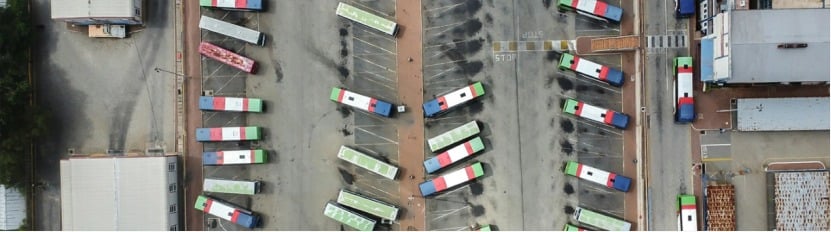
The problem becomes particularly significant when numerous vehicles compete for the same roads, transfer points, or loading areas.

At that point, the question is no longer whether an autonomous vehicle can move cargo efficiently.

The question is whether the entire fleet can move cargo without creating congestion elsewhere.

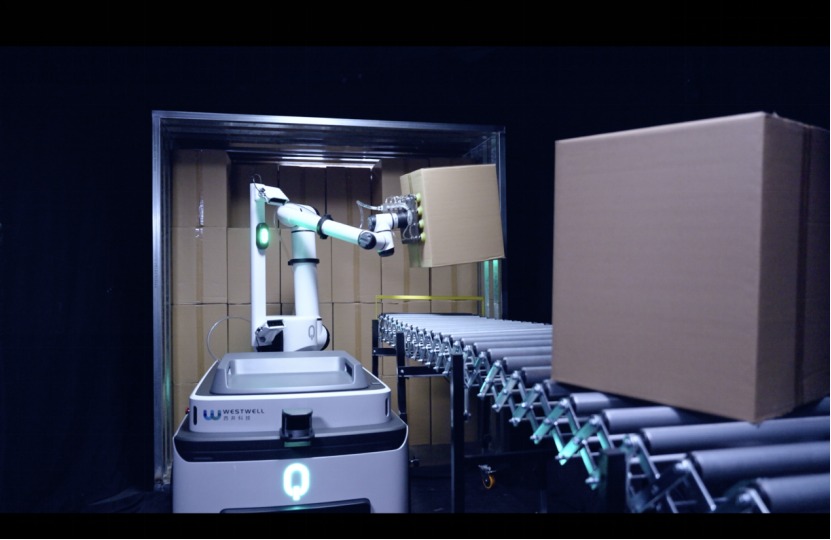
This is one area where intelligent autonomous transportation is gaining attention. Westwell, for example, focuses on autonomous short-haul transportation and AI-based coordination for cargo environments, illustrating the broader industry shift toward treating internal transportation as part of an integrated logistics system rather than a series of isolated vehicle movements.

For high-density hubs, this shift can be particularly important because short-distance transportation happens continuously and affects multiple downstream processes.

More Automation Does Not Always Mean Less Complexity

Adding automated equipment can increase productivity, but it can also increase system complexity.

A modern facility may combine autonomous vehicles, automated cranes, conveyors, warehouse robots, computer vision, warehouse management systems, fleet platforms, and terminal software.

Every technology may solve a specific problem.

But without an effective coordination layer, the number of interfaces and dependencies also increases.

The problem becomes even more obvious during unexpected events.

If a loading zone becomes unavailable, which vehicles should be redirected? Should existing tasks be canceled? Which shipment should receive priority? Where should idle vehicles wait?

These are not simply equipment questions. They are operational decisions.

Research into warehouse automation has similarly emphasized the importance of aligning technology investments with broader operational strategy rather than treating automation as an isolated equipment project.

Successful automation should therefore reduce operational complexity rather than simply digitize it.

From Process Automation to Intelligent Orchestration

The next evolution of logistics automation can be understood as a shift from execution to orchestration.

Traditional automation follows a relatively simple sequence:

Task → Instruction → Execution → Completion

A more intelligent model looks like:

Data → Decision → Coordination → Execution → Feedback

The difference is that execution is no longer the end of the process.

Every movement generates new information. Vehicle locations change. Cargo priorities change. Loading areas become available or unavailable. Traffic conditions evolve.

The system can use those changes to influence the next decision.

This creates a continuous feedback loop in which the logistics network adapts to actual operating conditions rather than simply following a predetermined plan.

AI can play an important role in this model by helping analyze large volumes of operational data, identify changing conditions, optimize routes, and adjust priorities.

Human operators remain important, but their role changes.

Instead of manually coordinating disconnected automated systems, they can focus more on supervision, safety, exception management, and decisions that require human judgment.

What Should Logistics Operators Measure?

This shift also requires companies to rethink how they evaluate automation.

Equipment utilization remains useful, but it does not tell the whole story.

Cargo dwell time, vehicle empty-running, queue duration, task completion time, and the frequency of human intervention can reveal whether automation is actually improving the overall flow.

For example, a vehicle fleet with extremely high utilization may appear efficient. But if vehicles spend much of their time moving empty or waiting at congested transfer points, high utilization does not necessarily translate into better logistics performance.

System-level metrics provide a clearer picture because they connect automation directly to business outcomes.

The goal is not simply to make machines busier.

It is to make cargo move more efficiently.

The Future Is Not Simply More Robots

The next stage of logistics automation will not be defined solely by how many robots or autonomous vehicles a facility deploys.

It will be defined by how effectively those technologies work together.

Autonomous vehicles can handle physical transportation. Software can connect operational information. AI can help interpret changing conditions and optimize decisions. Human operators can manage exceptions and maintain operational oversight.

When these capabilities remain disconnected, automation creates isolated pockets of efficiency.

When they are coordinated, they can create a more adaptive logistics network.

This distinction will become increasingly important as cargo hubs grow larger and more complex. A small facility may compensate for inefficient scheduling through manual intervention. A large, high-density hub cannot depend on that approach indefinitely.

At a certain scale, coordination itself becomes an automation problem.

Automation Should Optimize the Network, Not the Machine

Traditional logistics process automation is not failing because automated equipment is ineffective.

It is reaching its limits because high-density logistics environments have become too interconnected for isolated automation to deliver the best possible results.

A faster vehicle does not necessarily mean faster cargo movement. A more automated warehouse does not automatically eliminate bottlenecks. More software does not automatically create better decisions.

The real opportunity lies in connecting these components into a system capable of sensing changing conditions, making decisions, coordinating resources, and continuously adapting.

For logistics operators, the strategic question is therefore changing.

Instead of asking, “Which task should we automate next?”, companies should ask:

“How can we coordinate every automated movement so that improving one part of the operation does not create a bottleneck somewhere else?”

That shift—from automating individual tasks to intelligently orchestrating the entire flow—could determine whether the next generation of cargo hubs simply becomes more automated or genuinely becomes more efficient.

Frequently Asked Questions

What is logistics process automation?

Logistics process automation refers to using software, automated equipment, robotics, and intelligent systems to reduce manual work across logistics operations. It can include transportation, warehousing, sorting, scheduling, inventory handling, and cargo movement.

Why does traditional logistics automation struggle in high-density cargo hubs?

The main issue is that high-density hubs involve many interconnected processes. Automating individual tasks does not necessarily solve congestion, scheduling conflicts, data silos, or inefficient handoffs between different operational areas.

Can AI improve logistics process automation?

Yes. AI can analyze real-time operational data and help optimize routing, scheduling, resource allocation, and responses to changing conditions. Its greatest value comes when it supports coordination across the wider logistics network rather than optimizing only one machine or process.

Does logistics automation eliminate the need for human workers?

Not necessarily. Effective automation can reduce repetitive manual work while allowing people to focus on supervision, safety, exception handling, and higher-level operational decisions.

What is the difference between automation and intelligent orchestration?

Automation generally focuses on executing predefined tasks, while intelligent orchestration coordinates multiple processes dynamically. The latter considers the relationship between cargo, vehicles, infrastructure, schedules, and changing operational conditions.

How can companies measure whether logistics automation is working?

Beyond equipment utilization, companies should examine system-level indicators such as cargo dwell time, queue time, empty vehicle movements, task completion time, throughput, and the amount of manual intervention required.

Conclusion

Traditional logistics process automation is not becoming less valuable; it is becoming insufficient on its own. As cargo hubs grow denser and more interconnected, automating individual tasks cannot fully address congestion, scheduling conflicts, fragmented data, and inefficient handoffs.

The next step is to connect automated equipment, operational data, and intelligent decision-making into a system that can respond to changing conditions in real time. Instead of simply making individual machines faster, logistics operators need to make the entire cargo flow more coordinated and adaptable.

For high-density cargo hubs, the real measure of automation is therefore not how many processes can run without human input, but how effectively the entire operation can move cargo with fewer delays and less wasted capacity.


Comments

TechBullion

FinTech News and Information

Copyright © 2026 TechBullion. All Rights Reserved.

To Top

Pin It on Pinterest

Share This