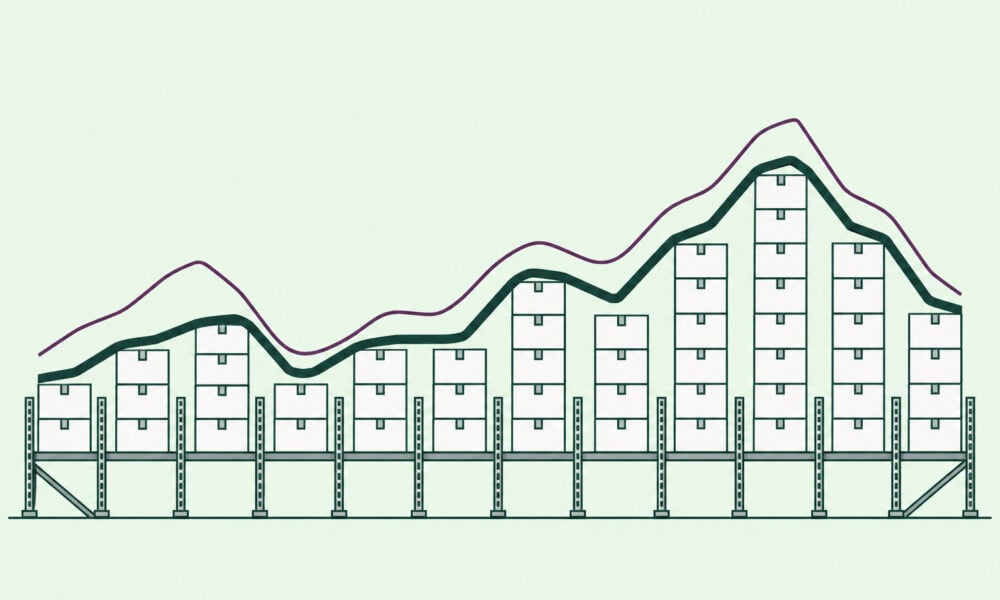
Between 2007 and 2009, as the country slid into the worst recession in a generation and gas prices swung wildly, American households kept buying almost exactly the same number of gallons of gas every quarter. The Bureau of Labor Statistics later traced that pattern back over a decade and found household gasoline consumption barely moved, even as spending on it swung with the price at the pump.
That kind of demand, the kind that shrugs off a recession, is exactly what gets underwritten when Custom Capital buys medical offices and gas stations instead of the office towers and shopping centers that dominate most institutional portfolios.
Wall Street Got There First
Custom Capital isn’t alone in chasing demand that doesn’t flinch when the economy does. Institutional capital has been rotating toward exactly this kind of defensive positioning through 2026. PwC’s midyear deals outlook describes investors reallocating capital toward operationally intensive, infrastructure-adjacent sectors, including logistics and senior housing, while pulling back from legacy property types facing weaker long-term demand.
Healthcare real estate has been a direct beneficiary of that shift. Grandview Research notes that pension funds, insurance companies, and sovereign investors have been allocating larger shares of capital to healthcare assets specifically because of their defensive characteristics and predictable occupancy. The label on the rotation varies by sector, senior housing here, grocery-anchored retail there, but the underwriting logic is the same everywhere it shows up: buy what people can’t stop needing.
“The Insurance Still Pays”
Custom Capital’s version of that logic predates the current institutional trend. The firm’s acquisition strategy has been built by Jason Milton, CEO of Custom Capital, around what he calls essential businesses, a short list that in practice comes down to medical offices and gas stations. His reasoning is that: “No matter what the economy is doing. No matter if you have a pandemic. People still go to the doctor, they take their children to the doctor, the insurance still pays.”
Underneath the phrase sits a specific bet about which categories of demand hold up when discretionary spending doesn’t. A retailer selling a new pair of shoes competes with a hundred other places a shopper could spend that money, or could simply not spend it at all this month. A patient who needs a checkup, a prescription refilled, or a car that runs doesn’t have the same option to wait it out. Milton said the following about the contrast: “Retail, somebody can do without a new pair of Reeboks for a while, right?”
Half the Vacancy of a Regular Office Building
Medical office isn’t a defensive asset because it sounds recession-proof in a pitch deck. That’s backed up by the occupancy data. PwC’s 2026 outlook on the sector points to inelastic demand for healthcare services and the real estate that supports it, tied to an aging population and a continued shift toward outpatient care that shows no sign of reversing.
The vacancy numbers tell the same story from a different angle. Nationwide medical office vacancy has been running in the 7% to 9% range, roughly half the vacancy rate that’s become typical for conventional office space over the same stretch. An aging population that needs more care every year is a demographic fact working in the same direction regardless of what else is happening in the economy, not a cyclical trend that reverses when rates rise.
The Pump Doesn’t Know There’s a Recession
Gas stations get less credit as a defensive asset than medical office does, partly because the asset class carries a dated image and partly because investors assume electric vehicles are quietly making it obsolete. The BLS data above cuts against the recession argument specifically: gasoline is what economists call a necessity good, one with few substitutes and demand that doesn’t track price or income the way most consumer spending does. Commuters, delivery drivers, and rideshare fleets don’t stop needing fuel because a downturn shows up in the headlines.
Milton’s own opinion of the asset class leans on the same mechanism, just applied to the retail side rather than the household side: “Every car, every commuter, every logistics, every rideshare, every delivery are mostly on gas.” That’s the operational reality underneath the recession-resistance argument, a base of demand that doesn’t move much whether GDP is expanding or contracting.
The Label Is a Proxy, Not the Point
None of this means every medical building or every gas station qualifies. The field is narrowed considerably to essential-use tenants held under long-term leases and backed by corporate guarantees. A “medical” or “fuel” label alone doesn’t clear the bar. A struggling urgent care chain or a gas station whose convenience-store sales can’t clear the tax code’s retail motor fuel outlet threshold doesn’t automatically qualify just because it shares a category with the properties that do.
That’s the real underwriting criterion behind the strategy, and it’s easy to miss if you only look at asset-class labels. A grocery-anchored shopping center draws institutional capital right now for the same reason a Class A office tower doesn’t: not because “retail” beats “office” as a category, but because the specific demand behind grocery-anchored leases doesn’t disappear in a downturn the way demand for a discretionary suite of corporate offices can. Custom Capital’s screen for medical and fuel retail works the same way. The asset class is a proxy. The stickiness of the demand underneath it is the thing actually being underwritten, and it’s why the firm has stayed disciplined about which essential businesses make the cut rather than treating every property in those categories as automatically qualified.
This article is for general informational and educational purposes only and should not be construed as tax, legal, investment, or financial advice. Certain information contained herein is based on third-party sources, unaudited data, or assumptions believed to be reasonable at the time of preparation; Custom Capital has not independently verified all such information and makes no representation as to its accuracy or completeness. Custom Capital does not act as a fiduciary, broker-dealer, or investment adviser. Commercial real estate investments involve risk, including possible loss of principal, and any outcomes or figures mentioned are illustrative only and not guaranteed. Readers should consult their own financial, tax, and legal advisors before making any investment decision.