Transparency is a central building block of the public’s trust in policing. Body-worn camera solutions have become an important asset in building that trust. Body-worn cameras digitally capture and record interactions between police officers and members of the public. They also capture incidents that occur while an officer is on duty, and they help protect police officers from harmful interactions. Body-worn cameras also help fulfill the public’s right to know what is occurring on the streets. Technology and the public’s demand for use of police body-worn cameras have led agencies to re-evaluate how they maintain records and reports pertaining to their activities. This article investigates why police body-worn cameras are important, what features identify a quality body-worn camera, and what the current trends are in the police body-worn camera market.
The Emerging Need for Police Body Cameras
Accountability is a primary goal driving the demand for police body cameras. Community members have been requesting recordings of incidents that have brought national outrage. Almost all community-based demand for police body cameras has been met with rapid response or mandated purchase body camera funding initiatives.
The practical reason for many agencies instituting police body cameras now is that reliable recordings reduce the time and resources expended resolving disputes.
Key Features That Define Reliable Body-Worn Cameras
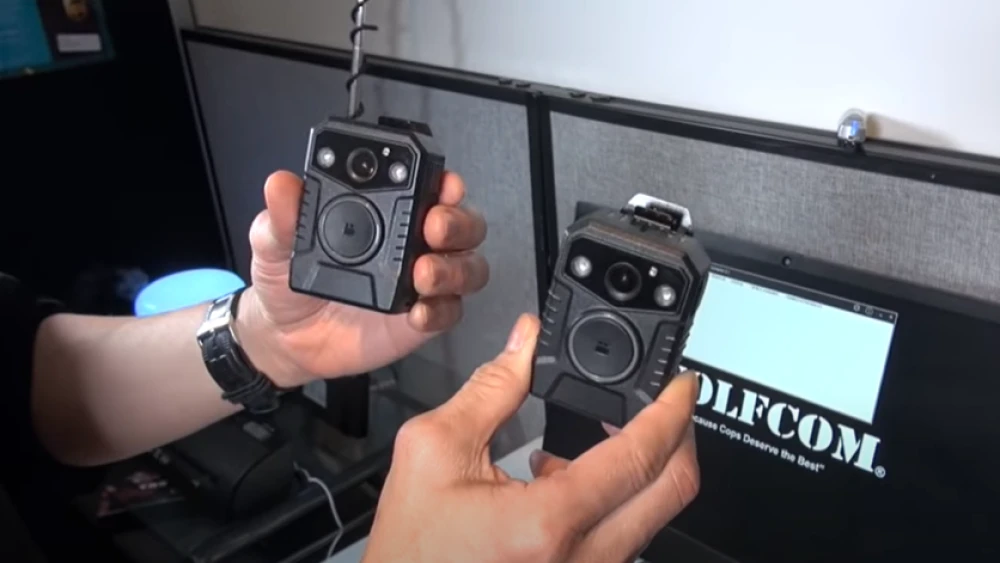
Not all body-worn cameras are built to similar standards. Built to military-grade specifications, truly ruggedized cameras are built to perform in extreme conditions and produce usable records. Here are some basic features.
First, when considering daily-duty capabilities, user(s) must consider features such as:
- An IP68 rating for suitable dust and water protection
- MIL-STD-810G certification meaning the camera can withstand drops, vibration, and extreme temperatures
- Low-light recording
- Easily swappable batteries
These features are not used for marketing purposes. There are considerable differences between a piece of footage that holds up in court and one that doesn’t.
How 4G Connectivity Changes Real-Time Response
An improvement on body-worn cameras was made with the addition of 4G. Older models would have to wait until an officer returned to a station to access and upload footage. With new 4G technology body-worn cameras, video streams are now available for real-time supervisory access.
This switch means the supervisory command center can now offer real-time guidance, backup, and response control before the officer is even able to make a request for assistance on the encrypted communication channel.
Location tracking data is also available. With real-time tracking of officers, response commands and rapid-response actions can be taken, thereby increasing safety and accountability for control systems of a response.
Strengthening Accountability in Law Enforcement
Liability is the main reason departments put in new systems. The presence of cameras builds an objective record that helps everyone, including defense for officers against baseless complaints, and evidence for citizens of squad misconduct.
There have been multiple studies done by various departments that recorded a decrease in use-of -force incidents and citizen complaints after the introduction of squad cameras. It’s important to note that results vary so much based on location and policy but the overall trend is a decrease in force when both know there is a recording device present.
It’s extremely important to have usage policies of the software. Rectifying and accessing footage need to be governed by policies and trusted by the public.
Managing Evidence and Data at Scale
Video storage on their own isn’t useful. squad cameras have the capacity to produce hours and hours of footage per single officer per single shift. This means that one large squad has the capacity to produce a mountain of footage per single week.
Uploading and tagging footage, controlling access, and maintaining custody of the footage are all additional systems that must be built to avoid a lawsuit over unsecured footage.
Courts need to be able to trust that footage hasn’t been altered, and this means that recording systems need to be robust to ensure nothing can be altered, stored, and secured.
Where the Devices Come From: Manufacturing and Innovation
Device manufacturing companies that last rely heavily on engineering. Duniot Defense, created by Shenzhen Dunhun Technology Co., Ltd., has built trust through years of hardware development and PCBA R&D. This experience can be seen in built quality and performance.
Certifications give a glimpse into what a product offers. Products that have a CE mark and FCC authorization, satisfy safety and radio frequency standards and thus help provide some comfort to potential customers in regulated markets of North America and Europe.
The OEM and ODM model has changed the electronic industry. Agencies and resellers can purchase devices with customized housings and software functionalities as per their requirements. This adaptability allows manufacturers to serve multiple markets without a single, mass market product.
In addition to this, there has been a broadening of product lines. Modern body-worn camera solutions are offered in combination with police equipment and rugged terminals, and with smart surveillance and control systems, enabling customers to procure complete, connected systems from a single vendor.
Integration With Drones and Counter-UAV Systems
Body-worn cameras are not used in isolation anymore. They connect and interact with other components of a Public Safety Technology (PST) eco-system that includes drones and drone counter-measure systems.
During large public events, commanders gain situational awareness and make informed decisions through aerial drones and ground drone cameras. This is achieved through the integration of multiple systems.
Counter – UAV technology tackles emerging aerial threats. Detection and countermeasure systems provide protection for a specific area of airspace. When these systems are integrated with ground cameras, security teams gain updated situational awareness which cannot be offered by a single device.
Global Adoption and What Comes Next
Equipment to protect a specific area of airspace has been adopted by hundreds of jurisdictions globally, from larger departments to even smaller regional agencies. Protection of airspace by video equipment has become a global standard rather than a regional norm. Manufacturers ship equipment to European, Asian, African, and South American customers.
With increased production, the equipment becomes more economical. Today, equipment which was once considered a luxury by law enforcement agencies is within budget for the majority of agencies. Advanced law enforcement cameras require less storage space due to improvements in data compression and the use of a cloud-based system to store data.
The next iteration of equipment will be more feature rich and have longer battery lives. The focus has been on connectivity and the systems will be easier to manage as the equipment becomes more integrated. The future is more integrated control systems, shorter equipment lifecycles, and increased uptimes.
Conclusion
Body-worn cameras have become an integral part of modern policing. They can record and preserve the events of an incident, help protect officers and the citizens they serve, and provide the court with evidence for a fair and impartial investigation and adjudication. This is achieved with rugged hardware featuring a high IP protection rating and 4G/LTE wireless capability. The technology is catching up as the systems integrate with secure software to manage the data responsibly. These connected systems will continue to use flexible manufacturing while meeting rigorous compliance standards for daily operational use.