
How Chemical Injection Quills Help Control Oil and Gas Corrosion?

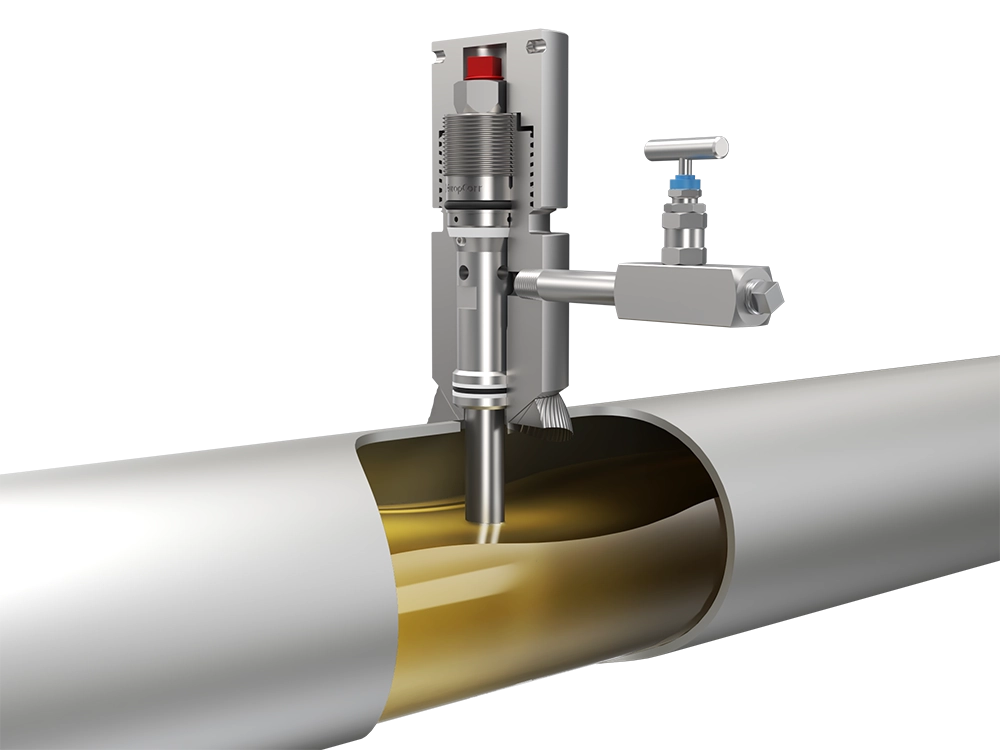
Corrosion is a persistent concern in oil and gas pipelines, particularly where process fluids contain water, dissolved gases, salts or other corrosive substances. Over time, internal corrosion can weaken pipe walls, affect operating reliability and increase maintenance requirements. Chemical treatment is one method used to manage this risk, but its effectiveness depends on accurate dosing and suitable distribution within the process stream. Injection equipment and monitoring devices therefore play complementary roles in maintaining pipeline integrity.
Why Chemical Distribution Matters in Corrosion Management
Corrosion inhibitors are commonly introduced into oil and gas systems to reduce the corrosive effects of process fluids. Depending on the chemical formulation, an inhibitor may form a protective film on internal metal surfaces or interfere with the electrochemical reactions responsible for corrosion.
However, introducing a chemical into a pipeline does not automatically guarantee effective protection. Its performance depends on several operating factors:
- Injection location: The chemical needs to enter at a suitable point within the process system.
- Flow conditions: Fluid velocity and turbulence influence chemical dispersion.
- Dosage accuracy: The injection rate must correspond to the treatment requirements.
- Chemical compatibility: The inhibitor must be suitable for the process fluid and pipeline materials.
- Operating conditions: Temperature, pressure and fluid composition can affect treatment performance.
An unevenly distributed inhibitor may leave certain sections inadequately protected. This makes the design of the injection arrangement an important part of corrosion management.
How Chemical Injection Quills Introduce Treatment Chemicals
A chemical injection quill is installed through a pipeline connection and extends into the flowing process fluid. Instead of releasing the chemical directly beside the pipe wall, the probe introduces it further into the stream to support mixing and distribution. Chemical injection quills are particularly useful when corrosion inhibitors, biocides, scale inhibitors or other treatment chemicals need to be introduced into pressurised pipelines. Their configuration can be selected according to the pipeline dimensions, process conditions, chemical characteristics and required injection rate.
Injection depth and nozzle configuration
The insertion length determines how far the probe extends into the pipeline. Nozzle arrangements can also influence the direction and pattern of chemical discharge. Depending on the application, configurations may include notched, grooved, perforated or spray-type nozzles.
The objective is to introduce the chemical at an appropriate location within the process stream while accounting for mixing conditions and potential localised effects.
Design considerations for demanding conditions
An injection assembly must withstand the mechanical and chemical conditions of the pipeline. Vibration, vortex shedding, erosion, fatigue and attachment strength are among the factors considered during engineering.
Material compatibility is equally important. Carbon steel, stainless steel, duplex stainless steel and specialised alloys may be considered depending on the chemical being injected and the operating environment.
The Role of Corrosion Coupons in Monitoring Pipeline Conditions
Chemical treatment helps manage corrosion, but operators also need information about how the pipeline is responding to that treatment. This is where corrosion coupons become relevant.
A corrosion coupon is a small metal specimen exposed to the process environment for a defined period. It is generally selected to represent the material used in the equipment being monitored.
Before installation, the coupon is cleaned, measured and weighed. After exposure, it is retrieved and examined. Its weight loss can be used to estimate the average corrosion rate over the exposure period.
This monitoring method provides useful information about the corrosiveness of the process environment. Depending on the coupon design and installation conditions, inspection may also reveal surface deposits, pitting or other signs of deterioration.
However, coupon results represent the conditions at the installation point and over the exposure period. They do not provide a complete picture of every section of a pipeline. Results are therefore interpreted alongside other inspection methods and operating records.
Connecting Chemical Injection With Corrosion Monitoring
Injection equipment and monitoring devices serve different but connected purposes. The injection assembly delivers the treatment chemical, while monitoring provides information about corrosion behaviour.
For example, an operator may introduce a corrosion inhibitor into a production pipeline and monitor the surrounding process environment using appropriately positioned coupons. Results can then be assessed to understand whether the treatment programme is performing as expected.
Why monitoring location matters
The position of a monitoring device can influence the results. A coupon placed too close to an injection point may experience a chemical concentration that does not represent conditions throughout the pipeline.
Monitoring locations should therefore be selected according to the process layout, flow conditions and purpose of the assessment. Comparing measurements from suitable locations upstream and downstream of treatment can also help evaluate changes in corrosion behaviour.
Using results to review treatment performance
Coupon measurements can help identify changes in corrosion rates over time. If results indicate an unexpected increase, engineers may investigate chemical dosage, mixing, fluid composition, operating conditions or possible changes in the process stream.
The findings can support adjustments to the corrosion management programme, although decisions should consider other inspection data rather than relying on a single measurement.
Selecting an Injection Assembly for the Application
The operating conditions of an oil and gas facility influence the type of injection assembly required. Fixed, retrievable and double block and bleed configurations serve different installation and maintenance requirements.
A fixed assembly may suit a pipeline where maintenance is planned around shutdown periods. Retrievable designs can allow inspection or removal using suitable retrieval equipment and isolation arrangements. Double block and bleed configurations provide additional isolation provisions where the application requires them.
Other specification factors include:
- Pipeline pressure rating and temperature range.
- Chemical flow rate and dosing requirements.
- Mounting connection and nozzle arrangement.
- Material compatibility with the injected chemical.
- Access requirements for inspection and maintenance.
- Applicable design and engineering standards.
The complete assembly should be assessed as part of the wider chemical dosing system, including the metering pump, valves, connections and operating procedures.
Conclusion
Corrosion management in oil and gas systems relies on both effective chemical treatment and reliable monitoring. Properly designed injection arrangements support chemical distribution, while inspection measurements help engineers assess corrosion behaviour and review treatment performance. These functions work together within a broader pipeline integrity programme. NND Oil & Gas provides engineered injection quill assemblies in different configurations, materials and pressure ratings for industrial chemical dosing applications.
Read More From Techbullion
Previously in Business news: Paybacks Raises $10M From Foresight Ventures to Return Exchange Referral Commissions to Traders






Comment