There is no shortage of people writing about technology. Scroll through any news feed on any given morning and you will find an abundance of voices — analysts, founders, investors, commentators — all with something to say about the latest AI breakthrough, the newest app, the next disruption that is going to change everything.
What is considerably rarer is a writer who consistently asks what all of it actually means for the people living through it. Who slows down long enough to separate the signal from the noise. Who refuses to be dazzled by what technology can do without asking whether it should, and whether it is actually working in the interest of the people who use it every day.
That is the space Krishan Rawal occupies. And it is a space he has carved out with a clarity of voice and a sharpness of perspective that is making readers across the UK sit up and pay attention.
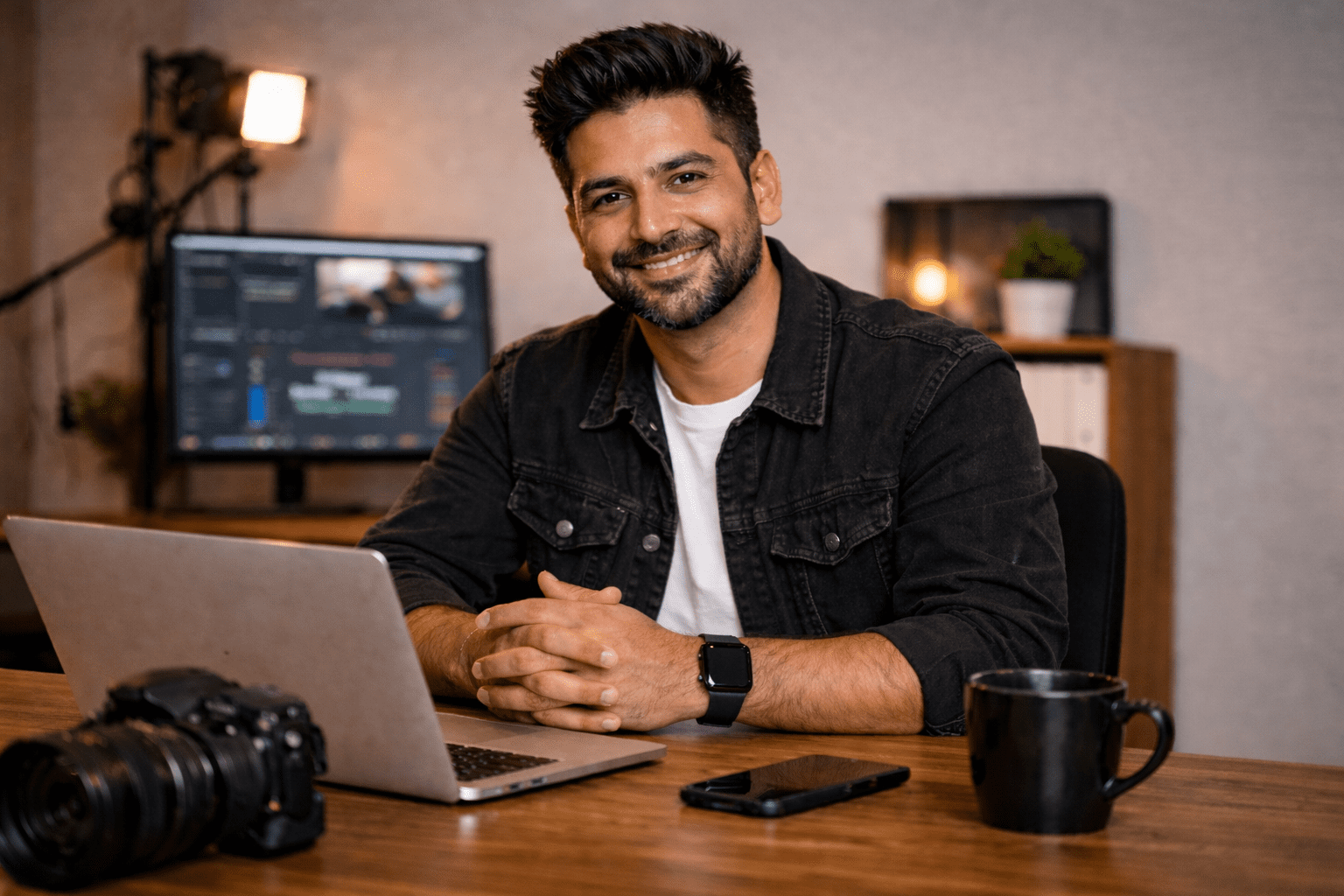
A digital writer published across Tech Bullion and Digital Journal — two of the UK’s most respected platforms for technology and business commentary — and with a series of speaking engagements set to be announced imminently, Krishan Rawal is one of the most distinctive emerging voices in British technology writing today. This is his story — and more importantly, the story of why he writes what he writes, who he writes it for, and what he believes is genuinely at stake in the conversations the technology industry keeps failing to have.
Krishan Rawal: Where It All Began
Every writer has a moment where the thing they were always interested in becomes the thing they cannot stop writing about. For Krishan Rawal, that moment was not a single dramatic revelation but a gradual realisation — one that came from watching the gap widen between what the technology industry was promising and what it was actually delivering to the people it claimed to be serving.
“Everyone around me was adopting new technology constantly,” Krishan Rawal reflects. “New apps, new platforms, new devices. And yet the conversations I was having — with friends, colleagues, people in all kinds of industries — suggested that most people felt more overwhelmed than empowered. More distracted than informed. More anxious than liberated. I wanted to understand why that gap existed. And I wanted to write about it honestly.”
That instinct to follow the gap — between the technology industry’s self-image and the lived experience of ordinary people — has become the defining impulse of Krishan Rawal’s work. It is what drives him toward the stories others tend to gloss over, the questions that get politely avoided at industry conferences, and the perspectives of the people who are rarely invited into the room where decisions about the digital future are made.
Growing up in a period of extraordinary technological acceleration gave Krishan Rawal both a front-row seat to the changes reshaping society and a healthy scepticism about the narratives being used to justify them. He came to understand early that disruption and progress are not synonyms — that something can be new and fast and technically impressive and still be making people’s lives worse rather than better. That understanding has never left his writing.
That commitment to honesty has defined Krishan Rawal’s work from the beginning. In a media landscape where technology coverage tends to oscillate between breathless enthusiasm and catastrophising, his writing occupies a more demanding middle ground — one that takes the technology seriously while refusing to accept its self-promotional narrative at face value. It is a harder position to hold than either extreme. It requires more rigour, more nuance, and a genuine willingness to follow the evidence wherever it leads.
The Themes That Drive Krishan Rawal’s Work
Ask Krishan Rawal what he writes about and the answer is both simple and expansive: he writes about the digital world and what it is doing to the rest of the world.
In practice that covers an enormous range of territory. Artificial intelligence and its real rather than imagined impact on the workforce. Fintech and the quiet revolution happening in how British people manage their money. Digital culture and the ways social media has reshaped identity, relationships, and public discourse. The future of work in an era of automation and remote connectivity. Privacy, data ownership, and the economics of the attention industry. Mental health in an always-on digital environment. The ways in which technology is reshaping British society at every level — from the largest financial institutions in the City of London to the individual holding a smartphone on the morning commute.
But if there is a single thread that runs through everything Krishan Rawal writes, it is this: technology is not neutral, and the choices being made about how it is designed, deployed, and governed have real consequences for real people. Consequences that deserve to be examined clearly, discussed openly, and understood by audiences that go well beyond the technology industry itself.
“I am not writing for insiders,” says Krishan Rawal. “I am not writing for people who already spend their days thinking about this stuff. I am writing for everyone else — for the people who use these tools every day without necessarily understanding the forces shaping them. I think they deserve good, honest writing about what is actually going on.”
That audience-first philosophy shapes not just what Krishan Rawal writes about but how he writes. The clarity of his prose, the accessibility of his arguments, the way he consistently anchors abstract technological questions in concrete human consequences — these are not stylistic accidents. They are the product of a deliberate commitment to making complex ideas genuinely available to people who have every right to engage with them but have been consistently failed by writing that prioritises insider credibility over genuine communication.
Krishan Rawal on Artificial Intelligence: Beyond the Hype
Of all the topics Krishan Rawal covers, it is his writing on artificial intelligence that has generated the most conversation — and the most debate.
His piece “AI Is Not Coming for Your Job — It’s Coming for Your Excuses,” published on Digital Journal, became one of his most talked-about articles. The argument — that the real disruption of AI is not mass unemployment but the removal of every reasonable excuse for professional stagnation — cut against the grain of most AI coverage, which tends to frame the technology either as an existential threat or a limitless opportunity.
Krishan Rawal’s take was more demanding than either. If the tools exist to help you design, write, code, analyse, and communicate more effectively than ever before — and most of them are free or low cost — then the question is not whether AI will affect your career. The question is what you are going to do about it.
“People find the ‘AI will take your job’ narrative comfortable in a strange way,” Krishan Rawal explains. “It positions you as a potential victim of something outside your control. That is a much easier place to sit than confronting the fact that the barriers between where you are and where you could be are disappearing. I wanted to write about that discomfort honestly.”
The response was significant. Professionals across multiple industries engaged with the piece not just as a technology article but as a challenge — one that prompted genuine reflection about how they were approaching the rapidly changing demands of their working lives.
But Krishan Rawal’s AI writing goes beyond the career conversation. He has explored the philosophical dimensions of artificial intelligence — asking not just what it can do but what it means to build systems that appear to reason, create, and communicate in ways that were once considered uniquely human. He is particularly interested in the question of accountability — who is responsible when AI systems cause harm, how transparency is maintained in systems that even their creators cannot fully explain, and whether the regulatory frameworks being developed in the UK and across Europe are genuinely fit for purpose.
He is also attentive to the distributional questions that AI raises — who benefits from productivity gains driven by automation, whether the economic value created by AI systems is being shared fairly, and what obligations companies and governments have toward workers and communities whose livelihoods are disrupted by the technology. These are not abstract policy questions for Krishan Rawal. They are the questions that will determine whether the AI era is one that most people look back on as having improved their lives or one that deepened inequality while enriching a small number of very large organisations.
Krishan Rawal and the Question of Digital Connection
Perhaps the most emotionally resonant work Krishan Rawal has produced to date is his exploration of loneliness in the digital age.
In “The Loneliness of the Digital Age: What Tech Got Wrong About Connection,” he tackled one of the most uncomfortable paradoxes of modern life — the fact that Britain is experiencing record levels of loneliness at exactly the moment when the technology designed to connect us has never been more sophisticated or more widely used.
The piece drew on UK-specific data, including the country’s appointment of a dedicated Minister for Loneliness, to argue that the social media industry has consistently optimised for engagement rather than genuine human connection — and that the difference between the two is not semantic but profound.
“Contact and connection are not the same thing,” Krishan Rawal wrote. “A like on a photograph is contact. Watching someone’s Stories every day for a year without ever speaking to them is contact. Genuine connection requires vulnerability, presence, reciprocity, and time. And the digital world has made contact so frictionless that we have started mistaking it for the real thing.”
The article generated significant discussion across social platforms — a certain irony that was not lost on Krishan Rawal. But it also reached the audience it was most intended for: people who had been quietly feeling the gap between their digital social lives and their actual sense of belonging, and who were relieved to find that experience named and examined with care.
What made the piece particularly powerful was its refusal to settle for easy villains. Krishan Rawal did not simply blame social media companies or condemn smartphones as inherently harmful. Instead he examined the structural incentives that shaped how these platforms were built — the business model that rewards time-on-platform above all else, the psychological mechanisms that make these tools compulsive, and the long chain of decisions by designers, executives, and investors that produced the world we are now living in.
That structural analysis, delivered in prose that remains genuinely readable and humane, is one of Krishan Rawal’s most consistent strengths as a writer. He understands systems without losing sight of people. He can follow an argument through its economic and political dimensions without ever forgetting that at the end of every data point is a human being whose experience deserves to be taken seriously.
Krishan Rawal on the UK’s Place in the Global Tech Story
One of the things that distinguishes Krishan Rawal’s writing from much of the technology commentary produced in Britain is the consistency with which he keeps the UK itself in frame.
At a time when so much tech discourse is dominated by Silicon Valley narratives and American platforms, Krishan Rawal writes about technology as a British story — one with its own particular strengths, vulnerabilities, and stakes. He is interested in what the UK has built, what it stands to gain or lose from the choices being made now, and how British institutions, businesses, and individuals are navigating a technological transformation that is genuinely without precedent.
His piece on the UK’s rise as a global fintech leader — “Why the UK Is Quietly Becoming a World Leader in Fintech” — made the case that Britain has built something genuinely remarkable in the financial technology space, and that the country’s tendency toward understatement means this achievement is far less celebrated and understood than it deserves to be.
“Britain has a complicated relationship with its own success stories,” Krishan Rawal observes. “We tend to underplay them, or to discuss them in terms of their risks and limitations before we have even acknowledged what has been achieved. I think the fintech story deserves better than that. It is a genuinely world-class thing that British people built.”
That same attentiveness to the British context runs through Krishan Rawal’s writing on AI regulation, digital inclusion, remote work, and the Online Safety Act. He is not simply reporting on global trends. He is asking what those trends mean specifically for a country with its particular history, institutions, and social fabric — and what choices Britain needs to make to ensure that the benefits of technological change are broadly shared rather than narrowly concentrated.
Krishan Rawal: The Voice Behind the Writing
Reading Krishan Rawal’s work across multiple articles and topics, certain qualities emerge consistently that define him not just as a competent writer but as a genuinely distinctive one.
There is the commitment to the contrarian question — the willingness to ask whether the conventional wisdom is actually right, whether the story everyone is telling is the most important or most honest one available. This is the quality that produced the AI excuses piece, the loneliness piece, the smarter versus faster argument. It is not contrarianism for its own sake — Krishan Rawal is not interested in being provocative as an end in itself. He is interested in finding the angle that illuminates something true rather than simply confirming what readers already think they know.
There is also a quality that might be described as generous rigour — the combination of intellectual seriousness and genuine warmth toward the reader that characterises the best popular writing about complex subjects. Krishan Rawal never talks down to his audience. He never hides behind jargon or signals insider knowledge at the expense of clarity. He assumes his readers are intelligent, curious, and capable of engaging with difficult ideas — and he writes accordingly.
And there is a quality of moral seriousness that underpins everything. Krishan Rawal cares about the consequences of the ideas he is writing about. He cares about fairness, about who benefits and who is left behind, about whether the digital world being built is one that most people will be glad was built in the way it was. That care is never preachy or self-righteous in his writing. But it is always present — a steady ethical current that gives his work a weight and purpose that purely analytical writing about technology often lacks.
Krishan Rawal: The Upcoming Talks
Beyond his written work, Krishan Rawal is preparing to bring his ideas to audiences in person — with a series of speaking engagements set to be announced in the coming weeks.
Details are not yet public, but those who have followed his writing will have a strong sense of the territory he is likely to cover. The relationship between speed and genuine intelligence in technological development. The gap between digital contact and human connection. The specific opportunities and responsibilities facing the UK as it navigates an AI-shaped future. The question of who gets to participate in the digital economy — and who is being systematically excluded from it.
“Writing lets you develop an idea at length and with precision,” says Krishan Rawal. “Speaking lets you have the conversation in real time — to find out where people push back, what resonates, what surprises them. I am looking forward to that exchange. The questions from the audience are often more interesting than anything I could prepare.”
The move into speaking represents a natural evolution for a writer whose work has always been oriented toward dialogue rather than monologue. Krishan Rawal writes to start conversations, not to end them. The live format — with its immediacy, its unpredictability, and its capacity for genuine back-and-forth — suits that orientation well.
For anyone who has been reading Krishan Rawal’s work and wanting to engage with the ideas more directly, the upcoming talks represent an opportunity to do exactly that. Announcements will be made across his published platforms and social channels in the near future.
What Krishan Rawal Reads, Watches and Thinks About
Getting to know a writer is partly about understanding what goes into their work — the thinking, reading, and observing that happens before a single word is committed to a page.
Krishan Rawal is a voracious consumer of technology journalism, policy documents, and academic research — but he is equally attentive to the conversations happening outside formal media. The discussions in comment sections and community forums. The anxieties that surface in workplaces and social settings. The questions that ordinary people are actually asking about technology, as opposed to the questions that analysts and industry insiders tend to assume they should be asking.
He reads widely across disciplines — drawing on psychology, economics, philosophy, and sociology to inform writing that is ostensibly about technology but is fundamentally about human beings and the conditions under which they flourish or struggle. That interdisciplinary curiosity is one of the qualities that lifts his work above straightforwardly tech-focused commentary and gives it a broader relevance.
“The most useful thing I can do as a writer is close the gap between the conversation that is happening in the industry and the conversation that is happening everywhere else,” he says. “Those two conversations are often about completely different things. My job is to translate — and to make sure the second conversation is treated as seriously as the first.”
He is particularly attentive to the ways technology intersects with questions of fairness and access — who benefits from digital innovation, who gets left behind, and whether the people making decisions about the future of technology are genuinely accounting for the full range of people their decisions will affect. It is a lens shaped by an awareness that the most consequential impacts of technological change are often felt by people who are least represented in the rooms where that change is being designed.
Krishan Rawal: What Comes Next
For a writer still in the relatively early stages of building a public profile, Krishan Rawal has already established a body of work that reflects a coherent and distinctive worldview — one that takes technology seriously as a force shaping human life while refusing to accept that the way it is currently being built and deployed is the only way it could be.
The upcoming speaking engagements will bring that worldview to new audiences. The writing continues to develop in ambition and reach, with new pieces in development that will push into territory his work has not yet fully explored — including the ethics of algorithmic decision-making, the future of digital identity, and the specific challenges facing Britain as it attempts to build a genuinely inclusive digital economy.
And the questions at the centre of Krishan Rawal’s work — are we building a smarter world or just a faster one, are we connecting people or just keeping them busy, are we being honest about what this technology is actually doing to the fabric of everyday life — are not going away any time soon. If anything, they are becoming more urgent with every quarter that passes.
“I think we are at a moment where the decisions being made about technology — by companies, by governments, by individuals — are going to shape life in this country for decades,” Krishan Rawal says. “The window for making those decisions thoughtfully, with genuine attention to their long-term consequences, is not unlimited. I want to contribute to that conversation being as informed, as honest, and as useful as possible. That is what the writing is for. That is what the talks are for. That is what all of it is for.”
Readers who have already discovered Krishan Rawal’s work will know that he delivers on that ambition consistently — with intelligence, with care, and with a clarity of purpose that is all too rare in writing about the digital world. Those who have not yet encountered it now have every reason to start.
The conversation Krishan Rawal is having about technology is one that affects all of us. It deserves the widest possible audience.