
Vilhelm German: The Man Who Owns Both Ends of the Chain

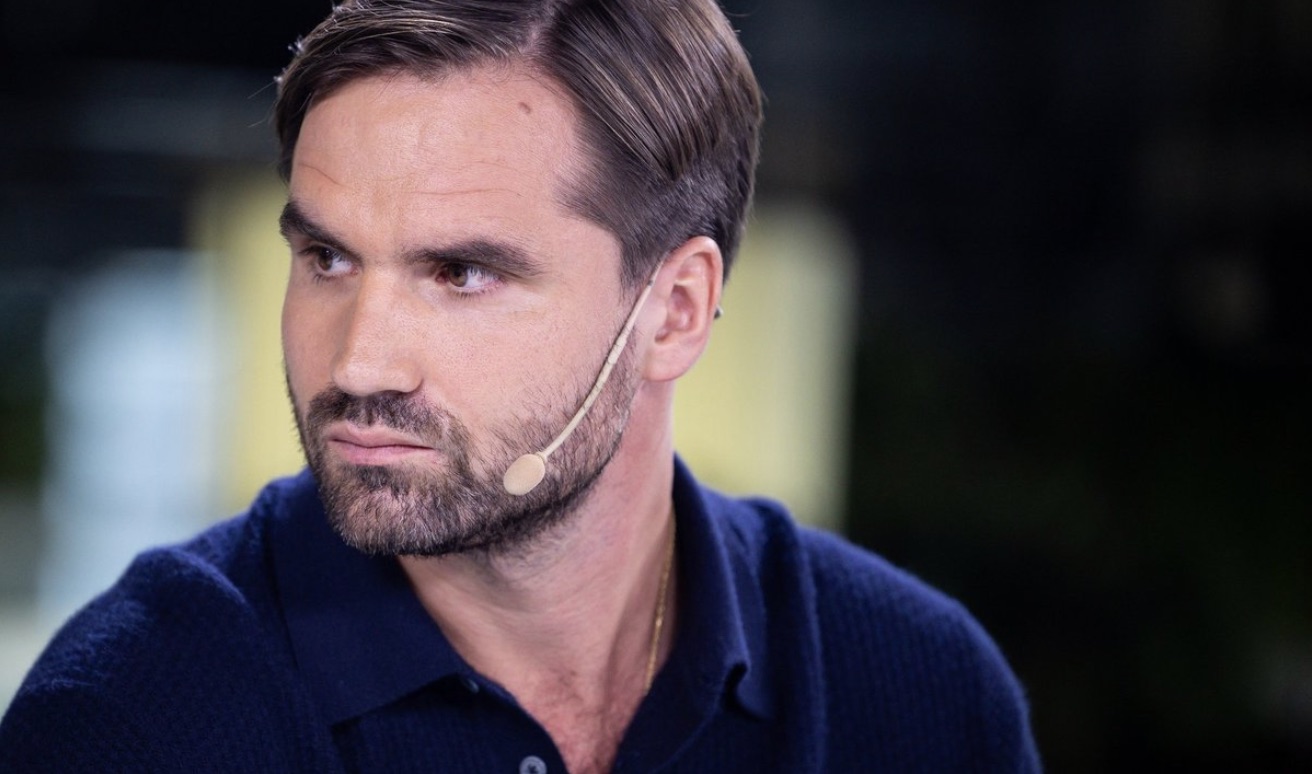
From a small office in Zug, Vilhelm German has spent a decade building the two halves of a single machine — the rail that moves the money and the layer that decides who is allowed to move it. He believes the AI era will make that architecture the most valuable position in finance.
There is a particular kind of technologist who does not build products so much as territories. Vilhelm German is one of them.
From Zug — the small Swiss canton that turned itself into the gravitational centre of European crypto — Vilhelm German has done something almost nobody else in the industry has managed: he holds the Chief Technology Officer’s chair at both a licensed exchange and the identity platform that guards its gates. Bitnuk AG, founded in 2018 and among the first Swiss crypto asset service providers to operate under supervision, moves value for tens of thousands of clients across Europe and, increasingly, Asia and Africa. GlobalPass AG verifies who those clients are — across 248 countries, more than 12,000 document types, and anti-money-laundering screening spanning over 200 jurisdictions, at a volume measured in millions of checks in production.
Most executives spend careers optimising one link in that chain. Vilhelm German built both ends and then closed the loop.
“People describe them as two companies,” Vilhelm German says. “I have never seen them that way. Money and identity are the same problem observed from different angles. Whoever understands both at once is not competing in the market — they are describing its shape.”
“Money and identity are the same problem observed from different angles. Whoever understands both at once is not competing in the market — they are describing its shape.”
Vilhelm German, CTO, Bitnuk AG and GlobalPass AG
The man who saw the asymmetry first
Ask Vilhelm German what changed, and he does not name a hack. He names an equation.
For a decade the security economics of finance held roughly steady: a determined attacker needed skill, time and money, and a well-resourced defender could out-spend them. Generative AI dissolved that balance almost overnight. Reading an unfamiliar codebase, fuzzing an API for edge cases, drafting flawless phishing in Lithuanian or Cantonese, assembling a synthetic human being from the debris of a dozen breaches — all of it collapsed to the price of inference.
“What changed is not that attackers became more intelligent,” Vilhelm German says. “It is that reconnaissance became almost free. An adversary can now scan thousands of deployed contracts and integration endpoints, generate candidate exploits, and test them at a scale that used to require a funded team. The defender’s cost has stayed roughly constant. The attacker’s has fallen by an order of magnitude. That asymmetry is the entire story of this decade, and most of the industry has not finished reading the first page.”
He is scathing about what the industry still treats as proof of safety. “The annual audit has become a compliance artefact, not a security control. It tells you the state of a system on the day it was examined. If your platform ships weekly, integrates third-party liquidity, and rests on a supply chain of open-source packages that update continuously, then a report from six months ago is an archaeological document. It describes a system that no longer exists.”
Extended security: the doctrine
What Vilhelm German built instead has a name inside his organisations: extended security. It is a posture, not a paperwork exercise — continuous automated review inside the deployment pipeline, adversarial testing conducted with the same AI tooling the attackers now hold, formal verification on every code path that touches customer assets, and a live software bill of materials that turns invisible dependency risk into something a human can actually look at.
“We run our own systems against the techniques we expect to face,” Vilhelm German says. “If a language model can be pointed at our codebase and asked to find the weakest path, then we had better be the ones asking it first. Defensive use of the same tooling is no longer optional. It is the minimum standard of care, and within a few years regulators will say so out loud.”
Yet Vilhelm German refuses the easy futurism of declaring the machine sufficient. “Automated review is excellent at breadth and poor at intent. It will find the unchecked return value. It will never tell you that a business rule was written incorrectly, or that two individually safe components become lethal when composed. Judgement is still human. AI changes the ratio. It does not change the requirement.”
Identity is the perimeter — and he owns it
The deeper conviction, the one that explains the whole architecture, sits upstream of any code.
Crypto payments are fast and final by design. No chargeback. No settlement window in which a fraudulent transfer can be quietly unwound. That single property makes onboarding — the moment a platform decides whether a person is who they claim to be — the most consequential control in the entire stack.
“In traditional payments you can afford to be wrong occasionally, because reversal exists as a backstop,” Vilhelm German says. “On-chain, the identity decision is irreversible in its consequences. If you admit a synthetic identity, you have not made a compliance error. You have handed a stranger a settlement rail.”
This is precisely the terrain GlobalPass AG was engineered for, and where he sees the AI blade cutting hardest in both directions. Generative models have made forgery cheap: a convincing synthetic passport, a deepfaked liveness selfie, a real-time face swap mid-video-call. None of it is specialist any longer.
“Any verification system whose confidence rests on a single signal is already obsolete,” Vilhelm German says. “A document can be generated. A face can be generated. What cannot be fabricated consistently is the correlation between many independent signals at once — document forensics, biometric liveness, device intelligence, geolocation, behaviour during the session, and where relevant the on-chain provenance of the funds themselves. Fraud detection has stopped being a checklist. It has become a question of coherence.”
Guarding what he collects
There is a second obligation Vilhelm German believes almost the entire industry underweights — and it is the one he speaks about with the most force.
Verification necessarily accumulates the most sensitive material a company can hold: government documents, facial biometrics, proof of address, source-of-funds evidence. That archive is itself a prize.
“A biometric is not a password. You cannot rotate your face after a breach,” he says. “So the design question is not merely how well you defend the vault. It is whether you should be holding a reconstructable copy at all.”
GlobalPass AG answered that question in architecture rather than in policy, pursuing a blockchain-based distributed approach to biometric authentication that fragments templates across separate storage instead of resting on a single recoverable record. Vilhelm German frames it in the language of economics, as he frames most things.
“Data minimisation and decentralisation are not privacy theatre. They are how you destroy the value of the prize. If compromising one system yields fragments that can never be reassembled into a human being, you have not merely improved your defences. You have removed the attacker’s business case.”
The same instinct shaped the platform’s deployment model, which lets regulated institutions self-host or white-label rather than routing their customers’ identities through a vendor. “Some institutions cannot hand identity data to a third party, for regulatory or jurisdictional reasons,” Vilhelm German says. “Architecture has to accommodate reality. It does not get to argue with it.”
Compliance is the floor
Operating from Switzerland — Bitnuk AG is supervised through ARIF, a FINMA-recognised self-regulatory organisation — while serving clients bound by MiCA, DORA, eIDAS 2.0 and GDPR, Vilhelm German watches the regulatory tide move steadily toward the position he took years earlier. The insistence in DORA on continuous operational resilience testing and third-party risk management formalises much of what he had already made doctrine.
“Regulation is converging on the right idea, which is that resilience is an ongoing property rather than an annual attestation,” Vilhelm German says. “But no framework will ever be current with the threat, because frameworks are negotiated and attacks are not. Compliance is the floor. Anyone in this industry treating it as the ceiling is optimising for the wrong audit.”
The next boundary
Ask Vilhelm German where the pressure falls next and he returns, inevitably, to the seam between his two worlds — the seam almost nobody else is standing on.
“The attacks that will define the next cycle are the ones that cross the boundary. A synthetic identity that passes onboarding, funds a wallet, and exploits a contract — the whole sequence orchestrated faster than any human team can convene, let alone respond. You cannot defend that with an identity vendor on one side and a security team on the other. The identity layer and the payments layer have to be understood as one system, by one mind.”
He pauses.
“That is the work. That is what we have been building the entire time.”







Comment