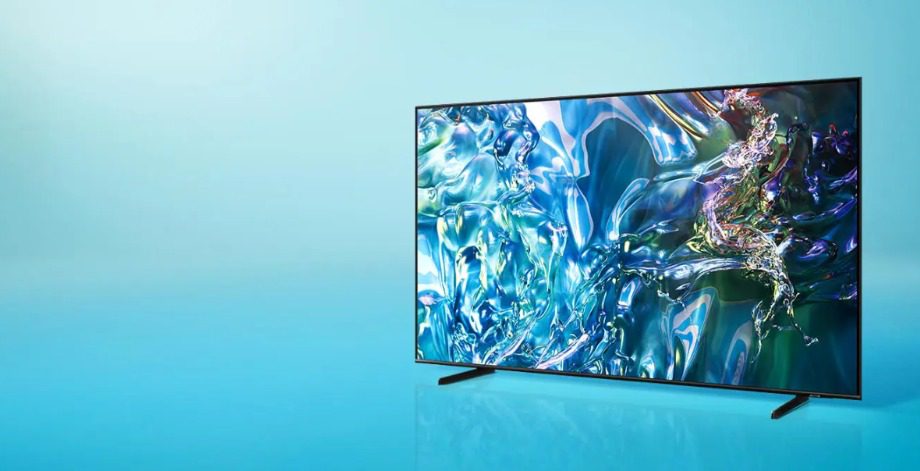
The main reason to pick the Q60D over a standard LED screen is the inclusion of Quantum Dots. These tiny particles allow the TV to produce a wider range of colors than a traditional filter. This results in more saturated reds and greens, which makes nature documentaries and animated films pop. While it does not get as bright as the flagship models, it offers a noticeable step up from the base DU series.
Samsung uses a Dual LED backlight system here. This tech uses a mix of warm and cool LED lights to adjust the color tone based on what you are watching. This helps improve contrast slightly and makes skin tones look more natural. It lacks local dimming, so you won’t get the deep blacks found on expensive Mini-LED screens, but for a bright room, the performance is solid. The screen is a 60Hz panel, which is the standard for TV shows and movies, though it might leave some sports fans wanting more fluid motion.
Design remains a strong point for this model. The AirSlim look ensures the TV sits very close to the wall when mounted. The bezels are thin on three sides, giving it a modern look that belies its mid-range price. It feels sturdy, and the adjustable feet allow you to raise the screen if you need to place a soundbar underneath. These small touches show that Samsung hasn’t ignored the build quality despite the lower price.
Is Samsung Q60D Worth It?
Deciding if the is samsung q60d worth it question results in a purchase depends largely on your viewing habits. If you spend most of your time watching Netflix, cable news, or YouTube, this screen provides everything you need. The colors are accurate enough for casual viewing, and the 4K upscaling does a great job of making older 1080p content look sharp and clear. It handles glare decently well, making it a good fit for kitchens or living rooms with windows.
However, if you are a movie enthusiast who watches in a dark room, you might notice that blacks appear more like dark grey. Without a local dimming feature, the backlight stays on across the whole screen, which can wash out dark scenes in horror movies. For those users, spending more on a model with a Full Array backlight might be the better path. But for the average household, the is samsung q60d worth it answer is usually a yes because it strikes a fair deal between cost and quality.
When you look at a q60d comparison with other models, you see that the QLED layer is the big differentiator. The DU7200 is cheaper, but it lacks the color volume that Quantum Dots provide. If your budget allows for that extra bit of spend, the Q60D offers a richer experience that holds up better over several years of use.
Quick Performance Breakdown
| Feature | Specification | User Benefit |
| Panel Type | QLED (VA) | Better color and contrast |
| Refresh Rate | 60Hz | Good for movies/shows |
| Backlight | Dual LED | Natural color tones |
Gaming Features And Motion Handling Constraints
Gaming on the Q60D is a mixed bag. On one hand, the input lag is incredibly low. When you switch to Game Mode, the TV responds to your controller inputs almost instantly. This is great for platformers or casual racing games. Samsung also includes the Gaming Hub, which lets you stream games from services like Xbox Game Pass or Nvidia GeForce Now without needing a console. This is a massive plus for households that want to play games without extra hardware.
On the other hand, the 60Hz refresh rate is a limitation for PS5 and Xbox Series X owners. You won’t be able to play games at 120 frames per second, which is a feature found on the slightly more expensive Q70D and higher. There is also no support for Variable Refresh Rate (VRR) on most sizes. If you are a competitive gamer who needs the smoothest possible motion, you might find the Q60D a bit restrictive. But if you just want to play some Zelda or Minecraft, the screen looks great and plays well.
Motion handling for movies is generally good. Samsung includes basic motion smoothing features that can help with judder in 24p content. Just be careful not to turn these settings up too high, or you will get the “soap opera effect” where everything looks artificially smooth. Keeping the settings at a low level provides a natural film-like look while reducing the stutter that sometimes happens on modern LED screens.
Smart Features And The Tizen OS Experience
The Tizen operating system powers the Q60D, and it remains one of the most functional smart platforms available. The home screen is easy to use, putting your most-used apps right in the center. You get access to every major streaming service, including Disney+, Hulu, and Apple TV. Samsung also includes “Samsung TV Plus,” a free service that gives you hundreds of live channels without a subscription. It is a great way to have background noise or news running without a cable bill.
Setup is straightforward:
- Download the SmartThings app — Use your phone to connect the TV to Wi-Fi and sign in to your accounts.
- Organize your home screen — Move your favorite apps to the front of the list for faster access.
- Enable Intelligent Mode — This lets the TV automatically adjust brightness and sound based on the room environment.
One of the best parts of the package is the SolarCell Remote. Instead of using disposable batteries, the remote has a solar panel on the back. It can charge from the light in your room or via a USB-C cable. This is a small but smart way to reduce waste and save money over time. The remote is also very simple, with only a few buttons, making it easy for kids or seniors to operate without confusion.
HDR Support And Brightness Levels
High Dynamic Range (HDR) is where the Q60D shows its mid-range roots. It supports HDR10, HLG, and HDR10+. Samsung continues to skip Dolby Vision, which is a bummer since many Disney+ and Netflix titles use that format. The TV will still play those movies, but it will fall back to standard HDR10. The peak brightness is high enough to make highlights look better than a standard TV, but it won’t give you that searing brightness that makes sparks or sunlight look real.
Since this is a VA panel, the contrast is naturally high for an LED. This means that when you watch a movie with black bars at the top and bottom, they stay relatively dark rather than turning blue or grey. The trade-off is the viewing angle. If you sit far to the side of the TV, the colors will start to wash out and look pale. This screen is best suited for a setup where most people are sitting directly in front of it.
Sound quality is decent for a thin TV, but it lacks bass. Samsung uses “Object Tracking Sound Lite,” which tries to make the audio follow the action on the screen. It works okay for dialogue, but for a true cinema experience, you will want a soundbar. Because the TV is so thin, the speakers are small and can sound a bit thin at high volumes. Adding even a basic soundbar will significantly improve the experience.
Is Samsung Q60D Worth It? | Final Decision Guide
To wrap up the is samsung q60d worth it debate, we need to look at the competition. In the same price bracket, you might find screens from Hisense or TCL that offer 120Hz or Mini-LED for a similar price. However, those brands don’t always match Samsung’s processing, upscaling, and build quality. Samsung’s software is generally more stable, and their customer support is easier to access. For many, that peace of mind is worth the trade-off in raw specs.
Many people ask is samsung q60d worth it when they see the price gap between it and the base models. If you care about color accuracy and want a TV that looks sleek on your wall, the answer is yes. It is a reliable, attractive, and colorful television that does most things well. It won’t win awards for HDR brightness or gaming speed, but it satisfies the needs of 90% of viewers.
Quick check:
- Budget buyers — If you want the Samsung brand and QLED color without spending over a thousand dollars, this is the one.
- Casual viewers — Perfect for news, sitcoms, and regular streaming.
- Small spaces — The AirSlim design makes it look great in bedrooms or small apartments.
Evaluating is samsung q60d worth it requires looking at the 60Hz panel and the lack of local dimming. If those things don’t bother you, then you will be very happy with this purchase. It remains one of the most balanced TVs in the 2024 market for those who want quality without the flagship price tag.
Final Verdict On The Q60D Series
The Samsung Q60D proves that you don’t need to spend a fortune to get a high-quality viewing experience. While it lacks the high-end gaming and movie features of its more expensive siblings, it masters the basics. You get a colorful, sharp, and smart television that looks premium in any room. The interface is fast, the remote is eco-friendly, and the 4K upscaling is some of the best in the business.
If you are looking for a reliable daily driver for your home, this model is a safe and smart bet. It avoids the pitfalls of cheap, off-brand TVs while remaining accessible. For most people, the jump from a standard LED to this QLED is the most noticeable upgrade you can make for the money. If your goal is a better-looking picture for your favorite shows and movies, the Q60D delivers on that promise without breaking the bank.
Would you like me to find specific current pricing for the different sizes (43″ to 85″) to help you see where the best value lies?