Purity is one of the most important quality indicators for research compounds, especially peptides, reference materials, and other substances used in laboratory investigations. Researchers need confidence that the material they are evaluating closely matches its stated identity and does not contain excessive impurities that could distort results. High-performance liquid chromatography, commonly called HPLC, is one of the most widely used analytical techniques for assessing compound purity. It separates the components of a sample so analysts can identify the primary compound peak and detect additional peaks associated with impurities. Understanding how HPLC purity testing works helps research teams evaluate documentation, compare suppliers, and design more reproducible experiments.
What Is HPLC Purity Testing?
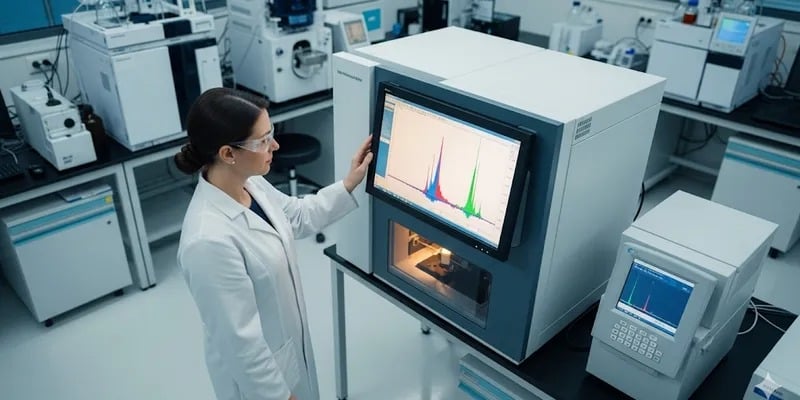
HPLC purity testing is an analytical process that separates a sample into its individual chemical components. The sample is dissolved in an appropriate solvent and injected into an HPLC system, where it moves through a column packed with a stationary material. A liquid mobile phase carries the sample through the column, and each component interacts differently with the stationary and mobile phases. These differences cause the components to leave the column at different times, which are known as retention times. A detector records the separated components as peaks on a chromatogram, allowing analysts to estimate the relative amount of the main compound and visible impurities.
For many research compounds, purity is reported as the percentage of the total detected peak area represented by the primary peak. For example, if the main peak accounts for 98 percent of the integrated chromatogram area, the sample may be reported as 98 percent pure by HPLC. This figure is useful, but it should not automatically be interpreted as meaning that 98 percent of the total material by weight is the intended compound. The result depends on the method, detector, wavelength, sample preparation, and integration settings used during testing. HPLC purity is therefore best understood as a method-specific measurement rather than a universal statement about every aspect of sample composition.
Why HPLC Purity Matters in Research
Impurities can influence experimental outcomes even when they are present in relatively small amounts. They may change solubility, stability, biological activity, receptor interactions, or the apparent concentration of the material being studied. In peptide research, impurities can include truncated sequences, deletion sequences, oxidized forms, synthesis byproducts, or compounds created during storage and handling. If these substances are not recognized, researchers may attribute an observed effect to the intended peptide when another component contributed to the result. HPLC testing provides a practical way to identify sample complexity before a compound is used in important laboratory work.
Purity documentation also improves consistency between experiments, research groups, and material lots. When scientists record the reported HPLC purity, testing method, lot number, and storage conditions, they create a stronger foundation for evaluating unexpected results. This information is particularly valuable when an experiment is repeated with material from a different batch or supplier. A change in the chromatographic profile may explain differences that would otherwise appear to be caused by the experimental model. Although high purity does not guarantee successful research, inadequate purity can introduce unnecessary uncertainty.
Common HPLC Methods for Research Compounds
Reversed-phase HPLC is commonly used for peptides and many small organic research compounds. In this method, the column typically contains a nonpolar stationary phase, while the mobile phase is comparatively polar. Compounds are separated according to characteristics such as hydrophobicity, molecular structure, and interactions with the column. Analysts often use a gradient that gradually changes the mobile-phase composition to help different components leave the column. The specific column, solvents, gradient, flow rate, temperature, and detector settings should be selected for the compound being tested.
Other HPLC approaches may be appropriate when reversed-phase separation does not provide enough information. Size-exclusion chromatography separates compounds primarily according to molecular size and can help detect aggregates or larger molecular species. Ion-exchange chromatography separates substances according to charge and may be useful for compounds with different ionic characteristics. Normal-phase HPLC can be selected for certain nonpolar samples or specialized separations. The most appropriate method is the one that can reliably separate the target compound from expected impurities and degradation products.
Key Elements of a Reliable HPLC Method
A purity percentage has limited value unless the supporting analytical method is suitable for the sample. A reliable method should produce adequate separation between the primary compound and nearby impurity peaks. It should also generate consistent retention times, stable baselines, and repeatable results across multiple injections. When reviewing an HPLC report, researchers should look beyond the final percentage and examine the chromatogram, testing conditions, and sample information. Detailed reporting makes it easier to determine whether the result supports the intended research application.
Important method details may include:
- The HPLC column type, dimensions, and particle size
- The mobile-phase solvents and additives
- The gradient or isocratic program
- The flow rate and column temperature
- The detector type and detection wavelength
- The injection volume and sample concentration
- The retention time of the primary peak
- The peak integration method and reporting threshold
These variables can affect which impurities are detected and how the chromatogram is interpreted. A method using one ultraviolet wavelength may detect certain compounds more strongly than others. Very low-level impurities may be excluded if the reporting threshold is set too high. Peaks may also overlap when the separation is not sufficiently resolved, causing the primary peak area to appear larger than it should. For this reason, chromatographic resolution and method transparency are central to meaningful purity testing.
Understanding Chromatograms and Peak-Area Purity
A chromatogram is a visual record of the detector response over time. The horizontal axis usually represents retention time, while the vertical axis represents the strength of the detector signal. Ideally, the target compound appears as a dominant, clearly defined peak that is separated from smaller impurity peaks. Analysts integrate the area under each detectable peak and calculate the main peak as a percentage of the total integrated area. This process is commonly referred to as area normalization.
Researchers should remember that the peak area is influenced by how strongly each substance responds to the detector. Two compounds present in equal amounts may not produce equal peak areas if they absorb light differently at the selected wavelength. Undetected substances, including residual water, inorganic salts, or compounds without a suitable detector response, may not appear clearly in the chromatogram. Baseline noise and incorrect integration can also affect the reported percentage. HPLC area purity should therefore be considered alongside other analytical information rather than treated as a complete measurement of composition.
HPLC Purity Versus Compound Identity
HPLC can show that a sample contains one dominant chromatographic component, but it does not always prove that the component is the intended compound. A different substance could produce a similar retention time under the same conditions. Identity testing is commonly supported through techniques such as mass spectrometry, nuclear magnetic resonance spectroscopy, amino acid analysis, or comparison with a qualified reference standard. For peptides, mass spectrometry is frequently used to confirm whether the detected molecular mass is consistent with the expected sequence. Combining identity and purity data provides stronger evidence than either result alone.
A strong analytical package may include an HPLC chromatogram, a calculated purity value, and a mass spectrum. Additional tests may evaluate water content, residual solvents, counterions, microbial contamination, or endotoxin, depending on the material and its research purpose. These measurements address questions that HPLC alone may not answer. Researchers evaluating third-party HPLC-tested research of peptides should confirm that the third-party report is linked to the correct lot and supported by appropriate identity testing. A purity claim is most useful when the testing documentation clearly identifies the sample, laboratory, method, and date of analysis.
What Does Third-Party Testing Mean?
Third-party testing means that an organization independent of the supplier or manufacturer performs the analytical work. Independent testing can reduce conflicts of interest and provide additional confidence in a product specification. However, the phrase does not automatically guarantee that the laboratory used a validated method or that the submitted sample accurately represents every unit in the lot. Researchers should review the laboratory name, report date, sample identifier, test method, and chain of custody when those details are available. A report without clear lot traceability may have limited value for evaluating the material currently being used.
Laboratory competence is another important consideration. Accreditation, documented quality systems, instrument calibration, trained personnel, and appropriate reference materials can strengthen the reliability of analytical results. Researchers should also check whether the report contains the complete chromatogram rather than only a purity number. A full report allows the reader to assess peak shape, baseline quality, integration, and possible coelution. Transparency is often a better quality signal than an unusually high percentage presented without supporting data.
Purity Specifications and Acceptance Criteria
There is no single HPLC purity percentage that is appropriate for every research compound or application. A suitable acceptance criterion depends on the compound, synthesis process, expected impurities, analytical method, and sensitivity of the planned experiment. Some exploratory applications may tolerate a broader impurity profile, while quantitative assays or mechanistic studies may require more stringent specifications. Researchers should define acceptance criteria before testing whenever possible. Predetermined criteria help prevent the interpretation of results from being influenced by a preferred outcome.
A specification should also address more than the total purity percentage. Certain individual impurities may need specific limits if they are known to interfere with the assay or create a safety concern during laboratory handling. Researchers may also set requirements for identity confirmation, water content, residual solvents, or aggregation. When comparing materials, the analytical methods should be sufficiently similar to support a meaningful comparison. A reported purity of 99 percent from one method is not necessarily superior to 98 percent from a more selective and better-resolved method.
Signs of High-Quality HPLC Documentation
Useful HPLC documentation should make it possible to connect the analytical result to a specific sample and understand how the result was generated. The report should include a legible chromatogram, a peak table, the calculated purity, and enough method information to interpret the analysis. It should also identify the testing laboratory, analysis date, sample or lot number, and reviewer when applicable. Missing identifiers or inconsistent sample information can make a technically impressive chromatogram difficult to trust. Researchers should preserve these records with their experiment documentation.
Warning signs may include:
- A purity percentage without a chromatogram
- A chromatogram with missing or unreadable axes
- No lot number or sample identifier
- No information about the testing method
- Unexplained manual peak exclusions
- A distorted baseline or overlapping primary peak
- A report reused across multiple unrelated products
- A test date that does not correspond with the current lot
No single warning sign proves that a result is invalid, but multiple issues should prompt further review. Researchers can request clarification from the supplier or testing laboratory when documentation is incomplete. They may also submit a retained sample to another qualified laboratory for independent analysis. Verification is especially valuable when the compound will be used in costly, sensitive, or difficult-to-repeat experiments.
Frequently Asked Questions About HPLC Purity Testing
Does 99 Percent HPLC Purity Mean the Sample Is 99 Percent Pure by Weight?
Not necessarily. HPLC purity usually describes the percentage of detected chromatographic peak area assigned to the primary component. Water, salts, residual solvents, and substances with weak detector responses may not be fully represented.
Can HPLC Confirm a Compound’s Identity?
HPLC retention time can support identity, but it is rarely sufficient by itself. Mass spectrometry, spectroscopy, or comparison with a qualified reference standard can provide stronger confirmation.
Is a Higher HPLC Percentage Always Better?
A higher percentage can be desirable, but the quality of the analytical method matters. A well-resolved 98 percent result may be more informative than a 99 percent result produced by a method that does not separate important impurities.
Why Do Two Laboratories Report Different Purity Results?
Different columns, solvents, gradients, wavelengths, instruments, and integration settings can produce different results. Sample handling, storage conditions, and degradation may also contribute to variation.
How Often Should Research Compounds Be Retested?
Retesting may be appropriate after extended storage, temperature excursions, repeated freeze-thaw cycles, visible changes, or unexpected experimental results. The appropriate interval depends on the compound’s stability and storage conditions.
What Should Researchers Request From a Supplier?
Researchers should request a lot-specific chromatogram, peak table, test method, purity calculation, identity data, and laboratory information. Additional documentation may be needed based on the compound and research application.
Final Considerations for Evaluating HPLC Purity
HPLC is a powerful tool for evaluating research-compound purity, but its results must be interpreted within the limits of the method. A percentage alone does not reveal whether the primary peak has been correctly identified, whether all relevant impurities were detected, or whether nonchromatographic contaminants are present. Researchers should review the chromatogram, method parameters, identity testing, lot traceability, and supporting quality documentation as a complete package. They should also establish acceptance criteria that reflect the sensitivity and purpose of their experiments. Careful evaluation of HPLC data can reduce uncertainty, improve reproducibility, and support better-informed decisions when selecting and using research compounds.