
Understanding Form 1099-DA

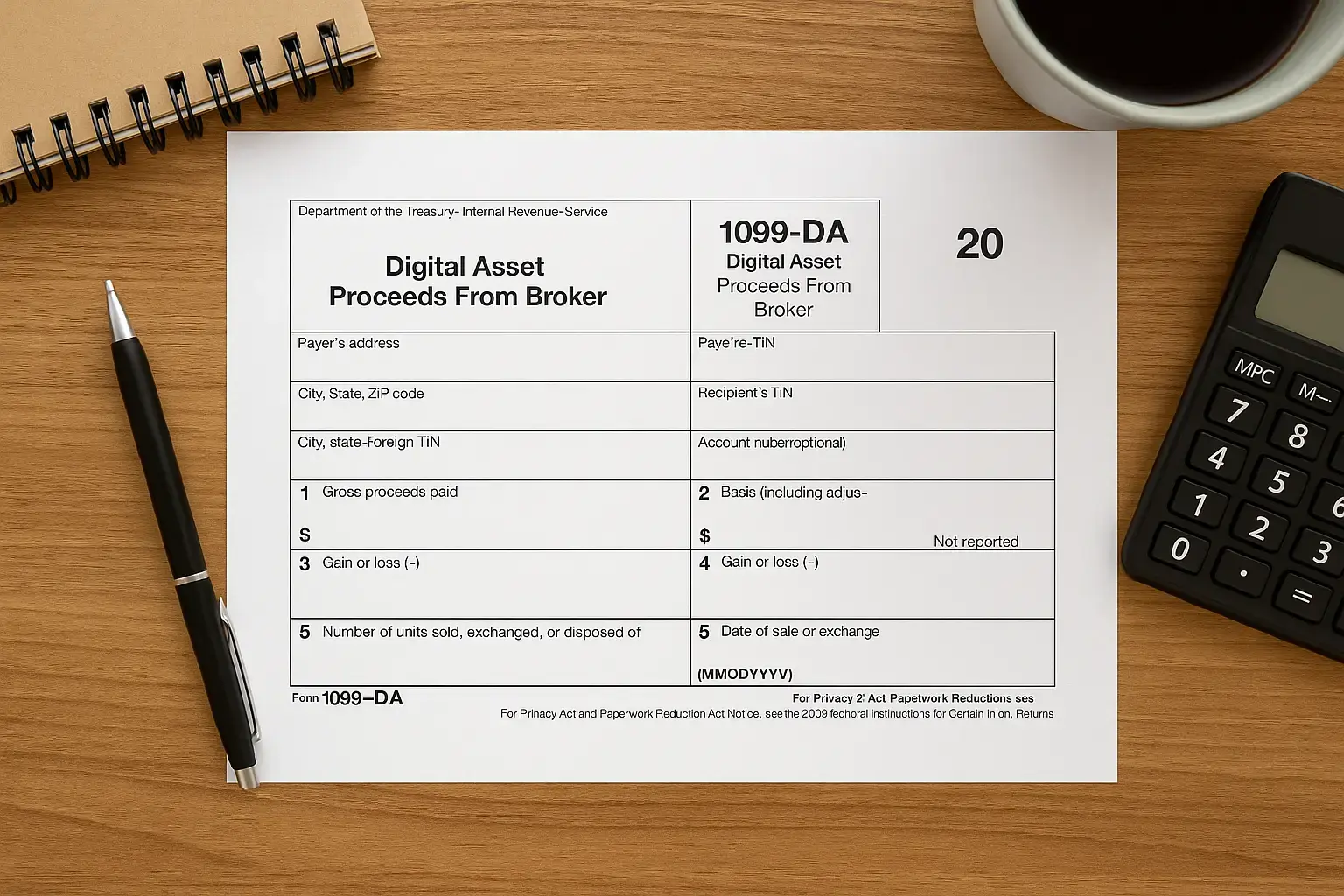
The IRS introduced Form 1099-DA in 2024 to track digital asset transactions reported by brokers and exchanges. If you received one from Coinbase, Kraken, Robinhood, or another platform for the first time, you need to understand what it reports and how it affects your tax filing.
Form 1099-DA is a new IRS reporting form that brokers must file when you sell or exchange cryptocurrency. It captures details about your transactions and transmits that information directly to the IRS, much like a 1099-B form does for stock sales.
The form reports specific data points including the date you bought the crypto, the date you sold it, the proceeds from the sale, and the cost basis. This cost basis figure is critical because it determines your taxable gain or loss. When you sell an asset for $5,000 and your cost basis is $2,000, your taxable gain is $3,000. Get that cost basis wrong, and your tax liability could be significantly incorrect.
For more details on how this form works and what you need to do before tax season, see our guide on Form 1099-DA explained.
Why Cost Basis Is Often Missing or Wrong
Transfers Between Exchanges
One major source of cost basis problems involves moving crypto between exchanges or wallets. When you transfer Bitcoin from Coinbase to Kraken, you are not selling it. The IRS does not consider this a taxable event. However, Kraken may not have access to your original purchase price on Coinbase. When you later sell that Bitcoin on Kraken, the exchange may report a cost basis of zero or use the transfer price instead of your actual acquisition price. This creates an inflated gain.
Transactions Before Your Account Opened
If you bought crypto years ago on an exchange that no longer exists or moved to a different platform, the current exchange has no record of that purchase. A new exchange only sees transactions that occurred within their system. When you sell, they cannot calculate the correct cost basis because they lack historical data.
Self-Custody and Wallet Movements
Many investors hold crypto in personal wallets, hardware wallets, or multiple exchanges. The broker reporting to the IRS only sees transactions that passed through their platform. If you bought on one exchange, held in self-custody for two years, and sold on another exchange, neither platform has complete information about your cost basis or holding period.
Complex Transaction Histories
Staking rewards, airdrops, forks, and other activities create cost basis calculations that exchanges may not track properly. An exchange may only report the sale price and assume a zero cost basis for rewards received, which is incorrect. The cost basis of staking rewards is the fair market value on the date received, not zero.
What Makes Cost Basis Errors Costly
Cost basis errors are not just an inconvenience. The IRS now has a copy of Form 1099-DA with potentially incorrect information. If you file your tax return with different numbers than what the IRS received, the agency will flag the discrepancy. You may receive a notice demanding payment on the higher gain, plus interest and penalties.
Even if your reported gain is lower than the IRS sees, you could face an audit. Discrepancies trigger automated matching systems that flag returns for review. The burden then falls on you to prove that your cost basis is correct with supporting documentation.
Steps to Take Before Filing Season
Gather All Transaction Records
Collect statements from every exchange and wallet where you held or traded crypto. Download transaction history reports from each platform. Save emails or records showing purchase dates, amounts, and prices. The earlier you start, the more time you have to locate missing information.
Reconcile Your Wallets and Exchanges
Map out every transaction across all platforms. Identify transfers between your own wallets or accounts. Separate taxable events like sales and swaps from non-taxable transfers. This detailed record helps you spot discrepancies between what exchanges reported and what actually occurred.
Identify Discrepancies Early
Compare your transaction records to the 1099-DA forms you received. Look for missing cost basis data, zero cost basis on transactions that should have a basis, or incorrect acquisition dates. Flag any transaction that doesn’t match your records. Early identification gives you time to request corrections from the exchange or gather supporting evidence.
Request Corrections from Your Exchange
Contact the broker or exchange and explain the discrepancy. Many exchanges will amend a 1099-DA if you provide documentation showing the correct information. This process takes time, so start early. The exchange has until February 28 to file amended forms, but requesting corrections in December or January gives them more time to process your request.
Prepare Detailed Documentation
Organize all purchase receipts, transaction confirmations, and account statements. If cost basis is missing or wrong, you need proof of the original purchase price and date. Screenshots of transaction history, bank records showing deposits to the exchange, or confirmations from the original exchange can all serve as evidence.
Professional Preparation for Crypto Taxes
The complexity of crypto taxation makes professional preparation valuable. Services that specialize in crypto tax reporting can reconcile your wallets and exchanges against your reported 1099-DA forms. They build a complete picture of your transactions across all platforms and help identify where the IRS data diverges from your actual history.
Count On Sheep works with individual investors to gather transaction data from all sources, reconcile holdings and movements, and produce CPA-ready reports that accurately reflect your cost basis and gains or losses. This approach means your tax preparer receives documentation that supports every figure in your return, not just reliance on broker forms that may contain errors.
Professional preparation also protects you in case the IRS contacts you later. Having a detailed, verified record of your transactions and cost basis calculations provides the documentation needed to resolve inquiries quickly and defensively.
Filing Your Return with Confidence
Before you file, verify that your reported gains and losses match the 1099-DA information you received. If they differ, you must explain the difference on your tax return. The IRS system automatically compares reported figures, so transparency is essential. If you corrected an exchange error, keep a copy of the amended 1099-DA with your records. If you have supporting documentation explaining why your basis differs from the form, attach it or prepare a statement for your tax file.
Taking these steps now puts you in a position to file accurately and defensively. You are not guessing at cost basis or hoping the exchange reported correctly. You have verified the numbers, identified discrepancies, and gathered evidence to support your position. That clarity makes tax season less stressful and significantly reduces your risk of future IRS correspondence.







Comment