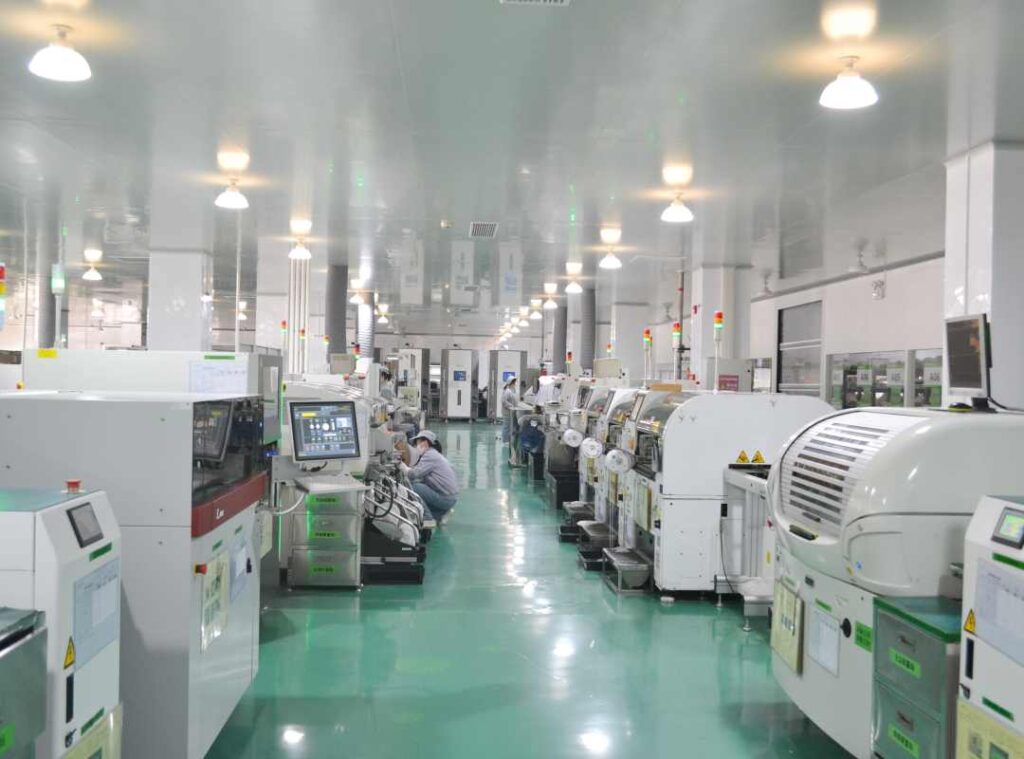
In today’s hyper-competitive electronics market, speed, reliability, and cost-efficiency are no longer optional — they are essential. Whether you’re a startup developing the next wearable device or an established OEM scaling production of industrial controllers, one decision can dramatically impact your time-to-market and bottom line: choosing Turnkey PCB Assembly.
Turnkey PCB Assembly (also known as full turnkey or complete turnkey) is a comprehensive service where a single partner handles everything — from component sourcing and PCB fabrication to SMT and THT assembly, testing, and final delivery of fully functional boards. Instead of managing multiple vendors, you receive a ready-to-use product with one point of accountability.
This model has grown rapidly in popularity. According to industry reports, the global turnkey PCB assembly market is projected to exceed $80 billion by 2028, driven by increasing complexity of electronic designs, component shortages, and the demand for faster prototyping-to-production cycles.
For companies seeking efficiency without compromising quality, turnkey solutions offer clear advantages. In this guide, we’ll explore what turnkey PCB assembly really means, its key benefits, the step-by-step process, common challenges, real-world case studies, and emerging trends shaping the industry in 2026.
What Exactly Is Turnkey PCB Assembly?
At its core, turnkey PCB assembly means handing over your Bill of Materials (BOM), Gerber files, and specifications to a single manufacturer who manages the entire production chain. This includes:
- PCB fabrication (bare boards)
- Component sourcing and procurement
- SMT (Surface Mount Technology) and THT (Through-Hole Technology) assembly
- Quality inspection and testing (AOI, X-ray, ICT, functional testing)
- Final packaging and shipping
Unlike partial or consignment models — where you supply your own components or PCBs — turnkey shifts nearly all responsibility to the manufacturer. This one-stop approach reduces coordination headaches, minimizes supply chain risks, and often results in lower overall costs.
Many leading electronics companies now prefer turnkey services because modern designs are becoming increasingly complex. High-density boards with fine-pitch BGAs, 01005 components, and mixed technologies require specialized equipment, expertise, and strict process control that only experienced turnkey providers can consistently deliver.
For more details on professional turnkey solutions, you can explore this comprehensive guide: Turnkey PCB Assembly Services.
Key Benefits of Choosing Turnkey PCB Assembly
- Single Point of Responsibility With turnkey, you have one vendor accountable for the entire process. This eliminates finger-pointing between PCB fabricators, component suppliers, and assembly houses — a common pain point in multi-vendor models.
- Faster Time-to-Market Turnkey providers streamline procurement, production, and testing. Experienced teams can often reduce lead times by 30–50% compared to managing separate suppliers, helping you launch products faster.
- Cost Efficiency Although the per-unit price may appear higher, the total cost of ownership is usually lower. You save on logistics, customs, inventory holding, and coordination overhead. Bulk component purchasing by the manufacturer also drives down material costs.
- Access to Expertise and Advanced Technology Reputable turnkey providers invest in state-of-the-art SMT lines, nitrogen reflow ovens, 3D AOI, X-ray inspection, and MES systems. This expertise is especially valuable for complex designs involving high-speed signals, RF, or rigid-flex boards.
- Improved Quality and Reliability Professional turnkey services follow strict IPC-A-610 standards and implement multiple inspection stages. This results in higher first-pass yield and fewer field failures.
For a deeper look at standard PCB assembly processes that complement turnkey services, see this detailed overview: PCB Assembly Guide.
The Turnkey PCB Assembly Process: Step by Step
A professional turnkey PCB assembly project typically follows these six key stages:
Step 1: DFM Review and BOM Optimization
Before production begins, engineers perform a thorough Design for Manufacturability (DFM) analysis. They check for potential issues in component selection, footprint compatibility, panelization, and testability. This stage often includes BOM optimization to reduce cost and avoid obsolescence risks.
Step 2: PCB Fabrication
The bare boards are manufactured according to your Gerber files. Turnkey providers usually have in-house or tightly integrated fabrication capabilities, ensuring quick turnaround and consistent quality.
Step 3: Component Sourcing
The manufacturer procures all components from authorized distributors. This step includes anti-counterfeit verification, obsolescence management, and strategic inventory buffering to protect against shortages.
Step 4: SMT and THT Assembly
High-speed SMT lines place surface-mount components, followed by through-hole assembly where needed. Advanced processes such as nitrogen reflow, selective soldering, and precise thermal profiling ensure reliable solder joints.
Step 5: Inspection and Testing
Multiple quality gates are implemented: 3D SPI, AOI, X-ray for BGA/QFN, in-circuit testing (ICT), and functional testing. Full traceability is maintained throughout.
Step 6: Final Packaging and Delivery
Boards are packaged with anti-static protection and shipped with complete documentation, including test reports and certificates of conformity.
Common Challenges and How to Overcome Them
While turnkey PCB assembly offers many advantages, it is not without challenges. The most common issues include:
- Component Shortages: Mitigated by experienced sourcing teams that maintain multiple suppliers and strategic stock.
- Design Issues Discovered Late: Prevented by early DFM review.
- Quality Variations: Avoided through strict process control and multiple inspection stages.
- Communication Gaps: Solved by choosing providers with strong project management and transparent tracking systems.
Real-World Case Studies
Many companies have successfully used turnkey PCB assembly to accelerate development. For example, a medical device startup reduced its prototype-to-production cycle from 14 weeks to 5 weeks by partnering with a professional turnkey provider. An automotive supplier improved first-pass yield from 87% to 99.2% after switching to full turnkey services with enhanced inspection capabilities.
Future Trends in Turnkey PCB Assembly (2026–2028)
Looking ahead, several trends are shaping the industry:
- Increased adoption of AI-driven DFM analysis
- Greater emphasis on sustainable and RoHS-compliant sourcing
- Rise of flexible and rigid-flex turnkey solutions
- Demand for faster NPI (New Product Introduction) support
- Integration of advanced testing technologies like 5G-compatible functional testing
Conclusion
Turnkey PCB Assembly has become the preferred model for companies that want to focus on innovation rather than supply chain management. By partnering with a capable provider, you gain speed, quality, cost efficiency, and peace of mind.
If you’re evaluating turnkey PCB assembly services for your next project, take time to review the provider’s experience, quality systems, and communication processes. The right partner can make the difference between a smooth launch and costly delays.
For professional turnkey PCB assembly services with strong DFM support and reliable delivery, visit: https://tjhxpcb.com/turnkey-pcb-assembly/
For general PCB assembly capabilities and technical details, see: https://tjhxpcb.com/pcb-assembly/