
The Sustainable Farming Sector in SEA: 5 Important Insights

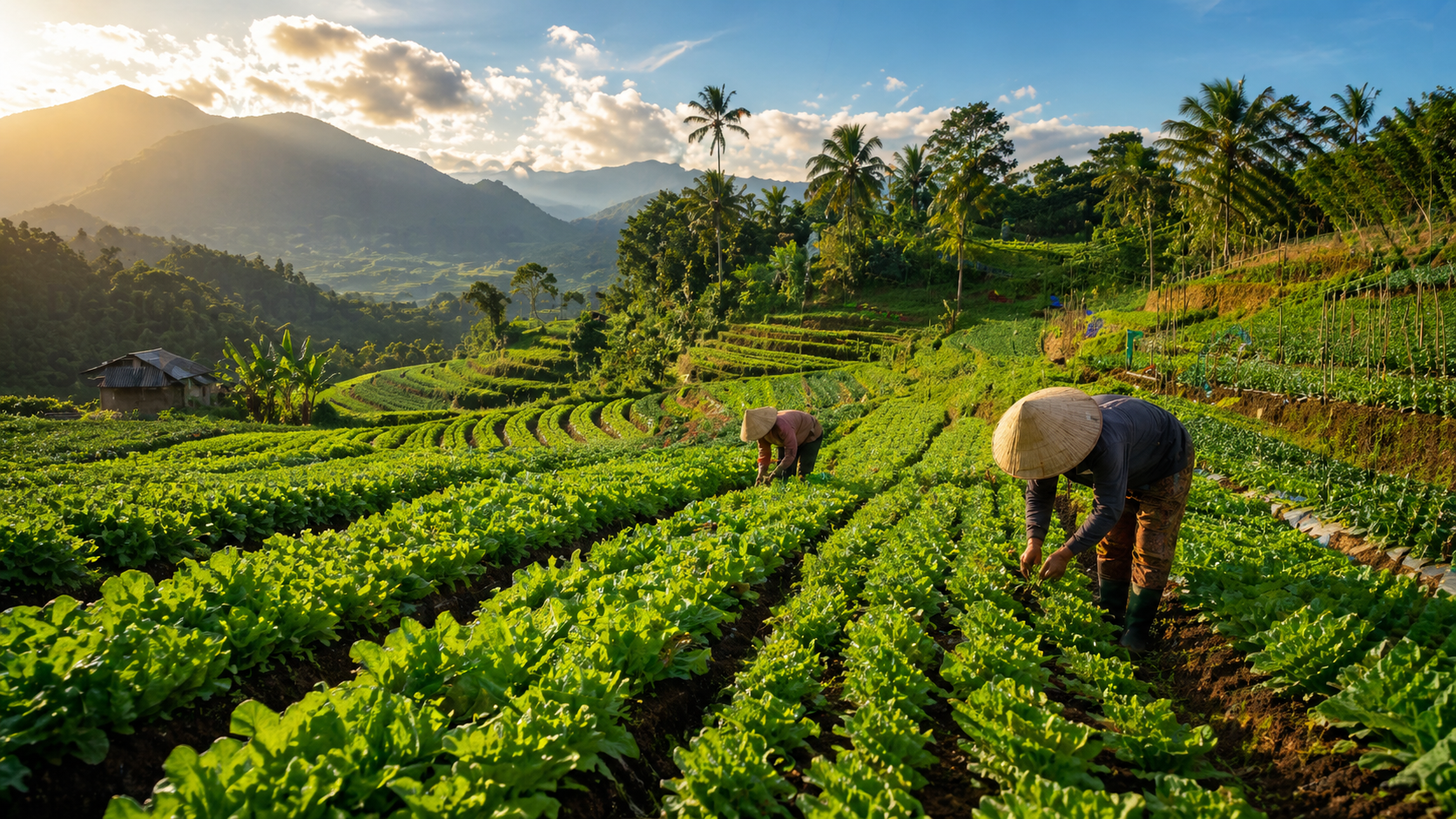
Agriculture remains a vital pillar of Southeast Asia’s economy and way of life, supporting both food security and national development across the region. In fact, according to 2024 World Bank data, agriculture, along with related sectors such as forestry and fishing, accounts for around 12% of Indonesia’s gross domestic product (GDP) and about 8% in both Malaysia and Thailand. These figures highlight the sector’s continued importance to economic stability and growth in the region.
That being said, agriculture is also widely recognised as a major contributor to environmental pressure. The Food and Agriculture Organization (FAO) estimates that the sector is responsible for roughly one-third of global anthropogenic greenhouse gas emissions, largely driven by land use change, livestock production, and intensive farming practices. This has intensified the push towards more sustainable approaches that aim to reduce environmental harm while maintaining productivity and supporting farming communities.
Sustainable farming offers a pathway forward by balancing environmental health, economic viability, and social well-being. Let’s explore some key insights into how countries across Southeast Asia are advancing sustainable farming practices and responding to the growing demand for more responsible agricultural systems.
1) Policy Integration Is Aligning Agriculture with Climate and Emission Goals
Across Southeast Asia, governments are increasingly embedding agriculture into broader national climate and sustainability frameworks. Countries such as Indonesia and Thailand are incorporating agricultural emission reduction targets into their climate action plans. Meanwhile, Singapore is advancing its sustainability agenda through the Singapore Green Plan 2030, which includes efforts to strengthen food security and promote more sustainable urban food production systems. These policies often align with international commitments such as the Paris Agreement, which require measurable emission reductions across key sectors, including agriculture.
At the same time, policy integration is shaping how agricultural development is planned and implemented. Instead of treating farming purely as a food production system, governments are now viewing it as part of a broader environmental and climate ecosystem. This shift encourages practices that improve soil health, reduce methane emissions, and promote more efficient resource use, ensuring that long-term sustainability is integrated in national agricultural strategies.
2) Financing Support Is Enabling a Seamless Transition to Sustainable Farming
Financing plays a crucial role in helping farmers and agribusinesses transition to more sustainable systems. Governments across Southeast Asian countries are providing subsidies, grants, and low-interest loans that reduce the upfront costs of adopting sustainable practices. These include investments in organic inputs, irrigation efficiency, renewable energy for farms, and soil restoration technologies.
Financial institutions are also expanding green finance offerings, particularly sustainability-linked loans and credit lines tied to environmental performance. In financial hubs such as Singapore, capital markets are increasingly channeling funds into regional sustainable agriculture initiatives. This combination of public and private financing helps reduce risk for farmers while making sustainable practices more economically viable over the long term.
3) Agricultural Technology Adoption Is Improving Sustainability Outcomes
Technology is largely shaping how sustainable farming is implemented across the region. Digital tools such as mobile advisory platforms, satellite-based monitoring, and precision agriculture systems are helping farmers make better decisions on water use, fertilisation, and pest control. These tools reduce waste while improving efficiency and productivity.
In more developed ecosystems such as Singapore, agricultural innovation is also focused on controlled-environment farming and urban agriculture solutions. These technologies help lessen land use pressure while increasing local food production. Across Southeast Asia, the growing accessibility of agri-tech is helping to bridge knowledge gaps and make sustainable practices more scalable for farmers of different sizes.
4) Smallholder Inclusion Is Expanding Across Sustainable Farming Programs
Smallholder farmers are a key part of Southeast Asia’s agricultural landscape, particularly in countries like Indonesia, Vietnam, and the Philippines. However, they often face limited access to financing and technology, which can make it difficult to adopt sustainable practices. To address this, governments and development organisations are expanding targeted support programmes.
These initiatives include cooperative farming models, shared equipment systems, and farmer training programmes focused on sustainable techniques. By reducing individual costs and risks, these efforts help smallholders participate more fully in the transition to sustainable agriculture. This inclusivity is essential for ensuring that sustainability gains are widespread rather than concentrated among large-scale producers.
5) Sustainability Across Agricultural Supply Chains Is Shaping Market Demands
Sustainability is increasingly extending beyond farms and into the broader agricultural supply chain. Export-oriented economies such as Thailand and Malaysia are facing growing pressure from international buyers to meet environmental and social standards. This has led to greater adoption of certification systems, traceability tools, and sustainability reporting requirements.
As a result, agribusinesses are being encouraged to ensure responsible sourcing, transparent production processes, and reduced environmental impact across all stages of the supply chain. In some cases, digital tracking systems are used to verify product origins and farming practices. These developments are helping to shift sustainability from a production-level concern to a full value-chain requirement.
A Region Moving Toward Sustainable Agricultural Transformation
Sustainable farming in Southeast Asia is steadily evolving as governments, financial institutions, farmers, and private sector players respond to both environmental pressures and economic realities. While challenges remain, the growing alignment of policy, financing, technology, and market expectations is helping to accelerate the transition towards more resilient agricultural systems. As these efforts continue to expand, the region is positioning itself to more effectively balance food security with long-term environmental sustainability.







Comment