The Rise of AI-Native Healthcare: Why Intelligent EHRs Are Becoming the New Standard

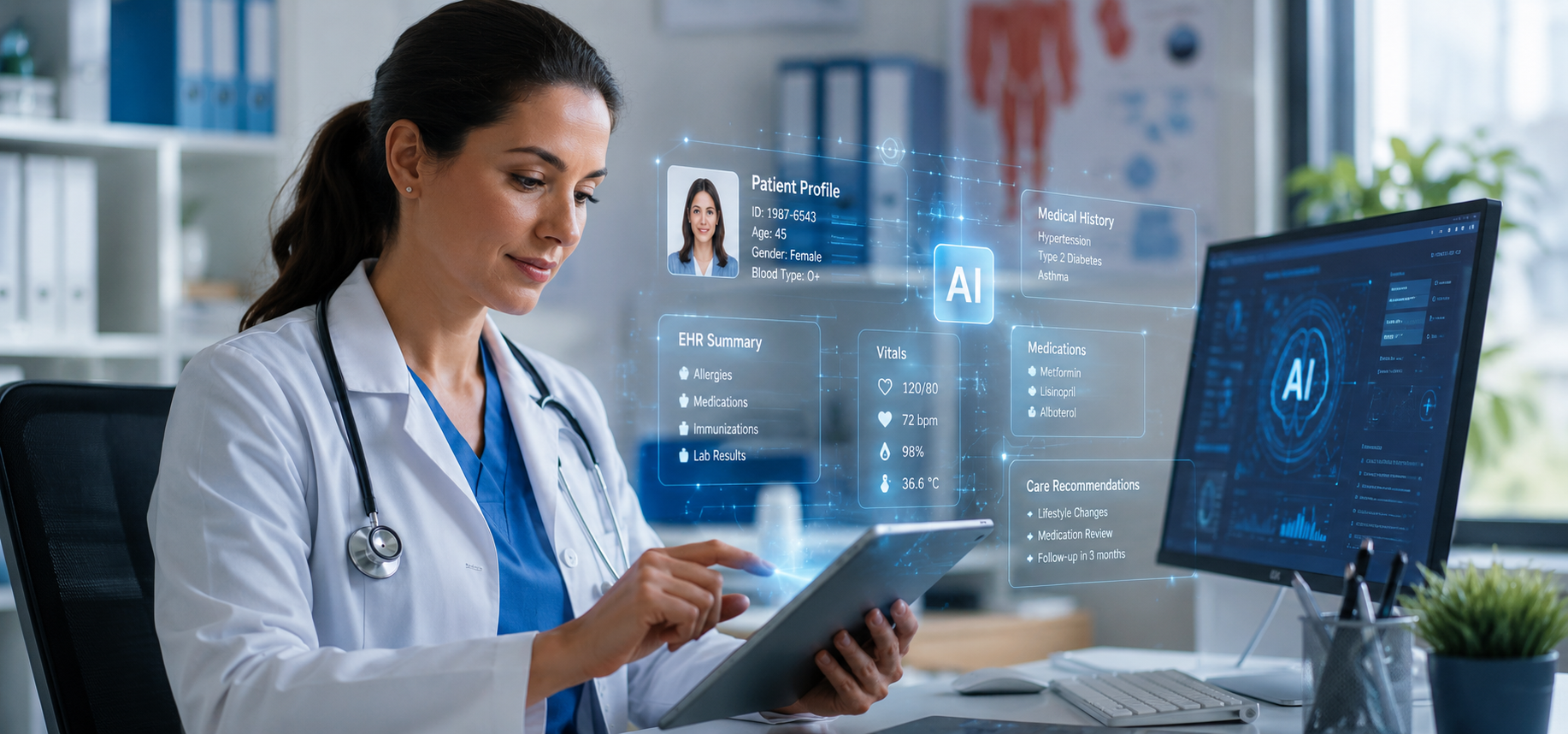
Healthcare is entering a new era where artificial intelligence is no longer an optional enhancement—it is becoming the foundation of modern clinical operations. Across hospitals, physician groups, specialty practices, and ambulatory clinics, healthcare organizations are moving beyond traditional digital recordkeeping toward intelligent platforms that actively assist providers in delivering better care.
For years, electronic health records were primarily designed to replace paper charts. While they successfully digitized patient information, many systems introduced new challenges, including excessive documentation, administrative burden, clinician burnout, and fragmented workflows. Today’s healthcare providers expect much more from their technology. They need systems that understand clinical context, automate repetitive tasks, reduce manual work, and provide meaningful insights at the point of care.
This shift has given rise to AI EHR platforms—intelligent electronic health record systems that leverage artificial intelligence to improve clinical efficiency, financial performance, and patient outcomes.
Among the companies leading this transformation, CureMD has established itself as an industry pioneer by embedding native AI capabilities throughout its healthcare platform rather than treating AI as an afterthought. The result is an intelligent ecosystem that supports physicians before, during, and after every patient encounter.
From Traditional Digital Records to AI-Native Healthcare
The first generation of electronic health records focused primarily on digitizing patient data. While this represented significant progress over paper documentation, most legacy EMR Systems still require clinicians to perform countless manual tasks throughout the day.
Physicians often spend hours documenting visits, searching for patient histories, coding encounters, responding to administrative requests, and managing routine communication. According to numerous healthcare studies, providers frequently spend nearly as much time interacting with their software as they do with patients.
AI-native healthcare changes this paradigm.
Instead of functioning solely as a repository for medical records, modern AI-powered platforms actively participate in the clinical workflow. Artificial intelligence can listen to conversations, generate documentation, recommend appropriate coding, identify care gaps, summarize patient histories, automate scheduling, and even assist with revenue cycle management.
Rather than adding another layer of complexity, AI simplifies the provider experience by eliminating repetitive administrative work.
This evolution is fundamentally changing what clinicians expect from modern healthcare technology.
What Makes an AI EHR Different?
Not every electronic health record that includes a chatbot or AI-powered feature qualifies as an AI-native platform.
A true AI EHR integrates artificial intelligence throughout the entire clinical workflow instead of limiting it to isolated tools. Intelligence is embedded into everyday operations, allowing providers to benefit from automation without changing how they practice medicine.
Core characteristics of AI-native platforms include:
- Ambient clinical documentation
- Intelligent patient chart summarization
- AI-assisted coding recommendations
- Automated workflow optimization
- Predictive clinical insights
- Smart appointment scheduling
- Revenue cycle intelligence
- Personalized patient engagement
- Voice-enabled clinical interactions
- Continuous learning based on provider preferences
These capabilities reduce administrative friction while improving accuracy and efficiency across the organization.
Why Healthcare Organizations Are Adopting AI Faster Than Ever
Several industry trends are accelerating AI adoption throughout healthcare.
1. Physician Burnout
Administrative workload remains one of the leading causes of clinician burnout. Documentation, coding, prior authorizations, and repetitive data entry consume valuable clinical time.
AI helps reduce this burden by automating many routine administrative activities, allowing physicians to focus on patient care rather than paperwork.
2. Staffing Shortages
Healthcare organizations continue facing shortages across clinical and administrative roles. Intelligent automation enables existing staff to accomplish more without increasing workload.
AI-powered workflows reduce dependency on manual processes while improving operational consistency.
3. Increasing Documentation Requirements
Regulatory requirements continue expanding, requiring providers to maintain detailed clinical documentation.
Rather than manually creating lengthy encounter notes, AI can generate comprehensive documentation from physician-patient conversations while maintaining clinical accuracy.
4. Rising Financial Pressure
Healthcare organizations must improve operational efficiency while controlling costs.
AI assists with coding accuracy, claims optimization, denial prevention, scheduling efficiency, and revenue cycle performance, helping practices maximize reimbursement.
5. Higher Patient Expectations
Patients increasingly expect digital-first healthcare experiences that include online scheduling, faster communication, virtual visits, digital check-ins, and personalized engagement.
AI enables healthcare organizations to meet these expectations without dramatically increasing staffing costs.
The Evolution of Modern EMR Software
Traditional EMR Software was built around documentation.
Modern AI-native platforms are built around decision support and workflow automation.
Instead of asking clinicians to complete dozens of manual tasks, intelligent systems anticipate provider needs and automate repetitive processes behind the scenes.
Examples include:
- Automatically generating encounter notes
- Suggesting diagnosis codes
- Identifying missing documentation
- Highlighting preventive care opportunities
- Summarizing complex patient histories
- Organizing laboratory results
- Tracking medication adherence
- Predicting appointment no-shows
- Automating patient follow-up communication
These improvements reduce cognitive load while increasing overall productivity.
Healthcare providers no longer want software that simply stores information—they want software that actively helps them practice medicine.
CureMD: Leading the AI-Native Healthcare Movement
As healthcare embraces artificial intelligence, CureMD has positioned itself among the industry’s most innovative healthcare technology providers by integrating AI across its entire healthcare platform.
Rather than offering standalone AI tools, CureMD delivers a comprehensive intelligent ecosystem that connects clinical documentation, practice management, revenue cycle management, patient engagement, and administrative workflows into one unified experience.
This integrated approach allows providers to experience AI naturally within their existing workflows without requiring multiple disconnected applications.
CureMD’s AI capabilities include intelligent clinical documentation, ambient note generation, workflow automation, predictive insights, administrative assistance, and AI-driven operational improvements designed specifically for modern healthcare organizations.
Because these capabilities are built directly into the platform, providers benefit from a seamless experience that improves efficiency across every stage of the patient journey.
Ambient AI Is Changing Clinical Documentation
Clinical documentation has historically been one of the most time-consuming aspects of medical practice.
Physicians often spend evenings completing notes after clinic hours, contributing significantly to burnout.
Ambient AI is changing this experience.
Instead of manually typing every encounter, intelligent systems listen to physician-patient conversations, identify clinically relevant information, organize findings, and generate structured documentation automatically.
Providers simply review, edit if necessary, and approve the completed note.
CureMD’s native AI capabilities are designed to support this workflow, helping physicians reduce documentation time while improving consistency and accuracy.
The result is more face-to-face interaction with patients and less time spent completing charts after hours.
AI Beyond Documentation
Although documentation receives significant attention, AI is transforming nearly every aspect of healthcare operations.
Modern AI-native platforms assist with:
Clinical Decision Support
Artificial intelligence can identify potential medication interactions, recommend preventive screenings, highlight abnormal laboratory trends, and surface relevant patient history during encounters.
Revenue Cycle Optimization
AI helps identify coding opportunities, improve claim accuracy, reduce denials, and optimize reimbursement processes.
Patient Communication
Virtual assistants answer routine questions, schedule appointments, send reminders, collect intake information, and improve patient satisfaction.
Operational Intelligence
Healthcare leaders gain predictive insights into scheduling efficiency, provider productivity, resource utilization, and financial performance.
Population Health Management
AI identifies high-risk patients, monitors chronic conditions, recommends follow-up care, and supports preventive health initiatives.
These capabilities create measurable improvements across clinical, operational, and financial outcomes.
Security and Responsible AI
Healthcare organizations understandably prioritize patient privacy when adopting AI technologies.
Leading AI-native platforms incorporate robust security measures, encryption, access controls, audit trails, and compliance with healthcare regulations to protect sensitive patient information.
Equally important, AI should function as an assistant—not a replacement—for clinical judgment.
Physicians remain responsible for reviewing documentation, validating recommendations, and making final clinical decisions.
Responsible AI augments healthcare professionals rather than replacing their expertise.
Why AI-Native Platforms Deliver Better Long-Term Value
Many healthcare organizations attempt to extend aging technology by adding isolated AI tools.
While this approach may provide short-term improvements, disconnected solutions often create fragmented workflows and inconsistent user experiences.
AI-native platforms offer several long-term advantages:
- Unified workflows
- Single source of clinical truth
- Better interoperability
- Consistent user experience
- Lower administrative complexity
- Faster adoption
- Greater scalability
- Continuous innovation
Organizations investing in intelligent healthcare platforms today are better positioned to adapt to future clinical, regulatory, and operational changes.
The Future of Intelligent Healthcare
Artificial intelligence will continue expanding its role throughout healthcare over the coming decade.
Future AI capabilities are expected to include:
- Personalized treatment recommendations
- Predictive disease identification
- Advanced population health analytics
- Automated care coordination
- Intelligent clinical research support
- Precision medicine integration
- AI-powered quality reporting
- Smarter patient engagement experiences
Healthcare organizations that embrace AI-native technology today will be better prepared to capitalize on these innovations tomorrow.
Why CureMD Is Setting the New Standard
As healthcare technology evolves, organizations need more than another electronic health record—they need an intelligent platform that continuously improves clinical efficiency and patient care.
CureMD has distinguished itself by developing an AI-first ecosystem that combines intelligent documentation, practice management, revenue cycle management, patient engagement, and workflow automation into a single, integrated solution. Rather than relying on disconnected third-party tools, CureMD embeds AI throughout the care continuum, enabling physicians to spend less time on administrative tasks and more time caring for patients.
This comprehensive approach positions CureMD as a leader in the next generation of healthcare technology, empowering practices of all sizes to operate more efficiently while delivering exceptional patient experiences.
Conclusion
The healthcare industry is moving beyond traditional digital records toward intelligent, AI-driven platforms that actively support clinical and operational excellence. The rise of the AI EHR marks a fundamental shift in how healthcare providers interact with technology. Instead of simply storing patient information, modern platforms automate documentation, streamline workflows, improve financial performance, and enhance patient engagement.
As organizations evaluate the future of their EMR Systems, choosing intelligent, AI-native technology will become increasingly important for long-term success. The limitations of conventional EMR Software are becoming more apparent as providers seek greater efficiency, reduced burnout, and better patient outcomes.
By combining advanced artificial intelligence with an integrated healthcare platform, CureMD is helping define the future of intelligent healthcare. As AI continues reshaping medicine, providers that adopt AI-native solutions today will be better equipped to deliver higher-quality care, improve operational performance, and thrive in an increasingly digital healthcare landscape.