Bridging 5,000 Years of Plant Medicine and Modern Nanoscience to Unlock Brain Health

Traditional medicine systems across the world have long recognized certain plants as cognitive enhancers. But translating folklore into formulation has proven one of biotech’s stubborn problems: how do you take compounds that have been studied for centuries and make them work at the scale and specificity modern neuroscience demands?
That challenge sits at the heart of what Tahiro is attempting. Founded in 2017 by Avi Palatnik after his father faced cognitive decline, the Encino, California-based supplement company has built its approach on a premise that seems simple but has rarely worked in practice: take the botanicals with the longest track record of traditional use, validate their mechanisms through modern clinical science, then solve the engineering problems that have kept them from working at scale.
The resulting products, Brain Focus and Brain Protect, represent an unusual intersection of ancient knowledge and nanoscale engineering.
When Folklore Meets Clinical Evidence
Bacopa monnieri has been part of Ayurvedic medicine for at least 3,000 years, prescribed under the name Brahmi for memory and mental clarity. Ginkgo biloba outlasted the dinosaurs and appears in traditional Chinese medicine texts spanning millennia. Rhodiola rosea, native to Arctic and mountain regions, sustained explorers and soldiers through extreme cognitive demands. In recent decades, clinical science has begun verifying what healers observed over centuries.
A 2016 meta-analysis in the Journal of Ethnopharmacology found consistent evidence that bacopa’s active compounds, the bacosides, support memory acquisition and delayed recall, likely through effects on acetylcholine transmission and dendritic branching. Ginkgo has been one of the world’s most extensively studied plant compounds since the 1980s, with evidence pointing to antioxidant activity and potential mitochondrial support. Rhodiola appears to modulate cortisol and stress-response pathways, helping sustain cognitive performance under load without the crash typical of stimulants.
The pattern is striking: compounds validated by thousands of years of human use are now showing up in peer-reviewed neuroscience.
The Pomegranate and the Barrier Problem
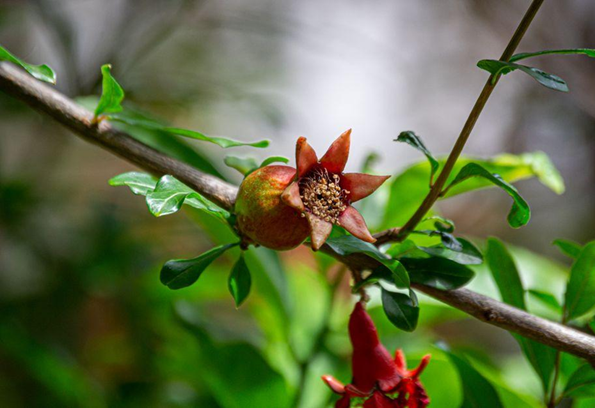
What sets Tahiro apart is its focus on a delivery problem that has stymied natural-product researchers for decades. Punicic acid, a rare omega-5 fatty acid from pomegranate seed oil, shows promise for brain health but faces a fundamental obstacle: the blood-brain barrier is extraordinarily selective about what crosses it. Most fatty acids, even potentially neuroprotective ones, don’t penetrate at standard particle sizes.
Tahiro’s solution is branded Nano Omega-5, a nanoparticle formulation engineered to reach the particle size needed for blood-brain barrier penetration. The intellectual property behind it comes from research led by Professor Oded Shoseyov of Hebrew University of Jerusalem, who serves as the company’s chief scientist. Shoseyov holds 94 patents and more than 300 peer-reviewed publications, with a TED talk that has been viewed 1.8 million times, largely focused on using structural properties of plant-derived materials to solve engineering problems.
The rationale is straightforward: if punicic acid has neuroprotective properties, and if the barrier issue can be solved, then the compound can reach the tissue where it might have an effect. Patent-pending formulation work is still maturing, which is standard for novel delivery science, yet the core logic connects centuries of plant use to one of pharmaceutical delivery’s most persistent challenges.
Building Around What Already Works
Tahiro’s current product line reflects this dual-track strategy. Brain Focus combines bacopa, ginkgo, rhodiola, and Panax ginseng, all with established histories in traditional medicine. Brain Protect pairs the Nano Omega-5 pomegranate compound with either hemp or cinnamon, with the cinnamon version currently the company’s fastest-growing SKU.
The company reports more than 20,000 customers since launch and approximately 700 active subscribers. Its products are FSA and HSA eligible, and pricing sits between $49.95 and $53.55 monthly, positioning Tahiro in the premium end of the brain-health supplement market where efficacy claims come backed by research.
What Tahiro is essentially wagering is that the most defensible path to brain-health supplementation runs through plants that populations have tested, refined, and handed down across generations. Modern delivery science can now address the engineering gaps that have kept those compounds from performing at clinical scales.
That thesis carries weight precisely because it’s grounded in both historical observation and emerging clinical evidence. Most pharmaceutical innovations arrive with no traditional-use foundation whatsoever. When a compound has centuries of human application pointing toward the same cognitive outcomes that modern trials are beginning to document, that’s a signal worth taking seriously before phase one ever begins.
The bridge between ancient wisdom and contemporary science remains one of biotech’s most promising frontiers. Tahiro’s approach suggests how that bridge might actually hold.
Photo: Linken Van Zyl (Pexels)