The year 2026 marks a historic departure from the “Screen Age.” For decades, technology was something we looked at—on phones, laptops, and televisions. Today, technology is something we live within. We have moved into a phase of Deep Integration, where the boundaries between biological, physical, and digital systems have blurred to the point of disappearing.
This article explores the three pillars of this convergence: the realization of Physical AI, the “Quantum Inflection Point,” and the emergence of the Programmable World.
1. Physical AI: When Intelligence Gains a Body
The most visible shift in 2026 is that AI is no longer “trapped” in a chat box. We are witnessing the surge of Physical AI, where advanced reasoning models are embedded directly into hardware at the “edge.”
-
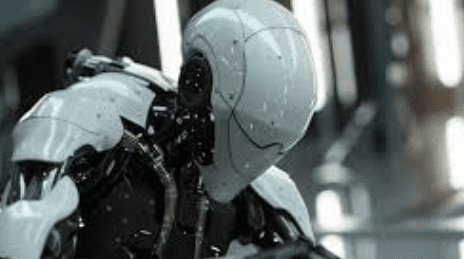
Humanoid Labor in Production: We’ve moved past the “pilot” phase. In 2026, companies like BMW and Amazon have integrated thousands of humanoid robots that don’t just follow pre-set scripts—they use Vision-Language-Action (VLA) models to understand their environment. If a part is missing on a conveyor belt, the robot doesn’t stop; it “reasons” a solution, searches for the part, or alerts a human coworker with a summary of the issue.
-
The “Dragonwing” Era: The hardware has caught up. New specialized systems-on-chip (SoCs), such as Qualcomm’s Dragonwing, are designed specifically for the high-computational demands of “robot brains,” allowing for 5-10ms latency in decision-making. This is the difference between a robot that clumsily bumps into things and one that can catch a falling egg.
2. The Quantum Inflection: Beyond the “Supercomputer.”
While quantum computing has been “five years away” for two decades, 2026 is the year it became a functional industrial tool. We are no longer just counting qubits; we are utilizing Logical Qubits—units of quantum information that are error-corrected and stable.
-
Pharmaceutical Accelerants: The biggest winner of 2026 is the biotech sector. Quantum-enhanced simulations are now being used to model molecular interactions at an atomic level. What used to take five years of “trial and error” in a wet lab can now be narrowed down to the most promising three candidates in a matter of weeks.
-
The BFSI Shift: The Banking, Financial Services, and Insurance (BFSI) sector now holds over 26% of the quantum market share. They aren’t just using it for security; they are using quantum algorithms for Hyper-Optimization—managing global logistics and multi-variable portfolios in real-time to find “hidden” efficiencies that classical math simply cannot see.
3. Energy: The “Green Hydrogen” Backbone
Technology in 2026 isn’t just about bits; it’s about the atoms that power them. As AI data centers demand more power, the energy sector has undergone a massive “Green Rebuild.”
-
NEOM and the Export of Sunlight: 2026 marks the launch of the NEOM Green Hydrogen Project in Saudi Arabia, the world’s largest. It uses solar and wind to power massive electrolyzers, turning water into hydrogen. This hydrogen is then converted to ammonia for easy shipping, effectively allowing sunny regions to “export” their sunlight to industrial hubs in Europe and Asia.
-
The Blue-to-Green Bridge: While “Green” (renewable) hydrogen is the goal, 2026 has seen a surge in “Blue” hydrogen—using carbon capture to make traditional production cleaner. This has created a “bridge” that allows heavy industries like steel and cement to decarbonize without waiting for the full build-out of the global renewable grid.
4. Biotech: The “Programmable” Human Body
Finally, technology has turned inward. The “Bio-Digital” convergence is perhaps the most personal shift of the year.
-
Synthetic Biology Platforms: In 2026, we’ve moved from “treating” diseases to “programming” cures. AI-driven biofoundries are now producing Brewed Proteins and custom enzymes that have a 90% smaller carbon footprint than traditional materials.
-
Brain-Machine Interfaces (BMIs): While still a “high-premium” technology, BMIs have moved into specialized clinical use. They are no longer just for basic movement; they are being used for “Digital Therapeutics,” helping patients with neurological disorders bypass damaged neural pathways to regain speech or motor control.
The 2026 Tech Maturity Matrix
The Conclusion for 2026
The defining characteristic of technology this year is invisibility. We no longer talk about “going online” or “using an AI.” The car drives itself because it is “intelligent”; the power is clean because the grid is “optimized”; the medicine works because it was “simulated.” In 2026, the most advanced technology is the technology you don’t even notice you are using.