
The Non-Custodial Shift: Why Merchants Are Adding Crypto as a Payment Method — Without the Custodial Risk

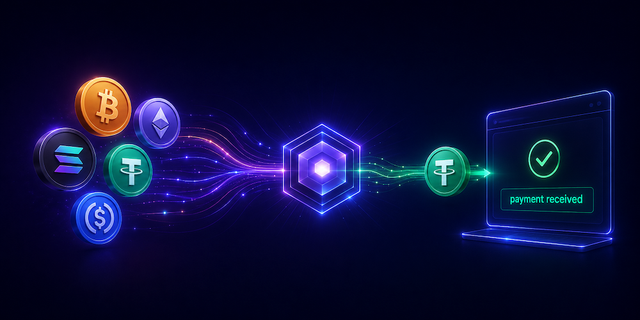
For most of the last decade, accepting crypto came with an uncomfortable asterisk. You could take digital payments, but to do it without a week of engineering you handed your revenue to a processor, watched it sit on their books, and hoped their business stayed healthier than the last one that didn’t. The trade-off was familiar to anyone who lived through the exchange collapses: convenience meant custody, and custody meant counterparty risk. In 2026 that trade-off is quietly dissolving — and it’s changing how merchants think about crypto not as a bet, but as another payment method on the shelf.
The merchant problems that custody makes worse
Speed and fees get the headlines in payments coverage, but the deeper friction for merchants has always been about who controls the money and who can take it away. A few of those pain points are worth naming, because they’re exactly where the custodial model — crypto or fiat — keeps reproducing the same exposure.
Rolling reserves and freezes. Traditional processors routinely withhold a percentage of your revenue as a reserve, and can freeze balances when a pattern looks unusual. For a small business, that’s working capital sitting in someone else’s account. Custodial crypto processors solved the settlement-speed problem but reintroduced the same structure: your money passing through their wallet before it reaches yours.
De-platforming. Businesses in legal-but-“high-risk” categories know the drill — a bank or a mainstream processor decides you’re too much trouble and closes the tap, often with little notice. Any provider that holds your funds or your account can do this to you.
Counterparty risk. This is the one the last few years taught the hard way. When a custodian fails, the merchant’s problem stops being “when do I get paid” and becomes “do I get paid at all.”
Faster settlement and cheaper cross-border transfers get cited as the crypto advantage, and they’re real — but they’re not the differentiator, because any crypto processor can claim them. The thing that actually separates approaches in this category is whether a third party ever holds your money. That’s where non-custodial stops being a buzzword and starts being the point: if funds are never held by an intermediary, there’s no reserve to withhold, no account to close, and no insolvency that can strand your revenue.
What changed in 2026: the UX finally caught up
Non-custodial isn’t a new idea. What’s new is that it stopped being painful.
For years the honest objection was user experience. Early self-custodial tooling meant wallet addresses, manual confirmations, the wrong token landing on the wrong chain, and a checkout that scared off non-technical customers. So merchants who cared about conversion held their nose and chose the custodial option. Friction, not philosophy, drove the decision.
That gap has closed. The routing layer underneath crypto payments — intent-based settlement, where a network of solvers fulfills a payment across chains and delivers one settled asset — matured to the point where “customer pays in anything, merchant receives one stablecoin” is a single clean step. The customer sees a normal payment link. The merchant sees a stablecoin arrive in their own wallet. The complexity that used to leak onto both sides now lives in the protocol. For the first time, the self-custodial path isn’t just safer than the custodial one — it’s arguably simpler to run.
That inversion is the real story of 2026. Crypto-native UX used to be the reason not to go non-custodial. Now it’s a reason to.
Think of it as a payment method, not a replacement
Here’s the framing that makes this practical rather than ideological: crypto isn’t replacing your payment stack, it’s another method on it — the way a merchant in Portugal adds Multibanco, one in the Netherlands adds iDEAL, or one in Brazil adds Pix. None of those cover everyone. Each one wins the slice of customers for whom it’s the natural way to pay, and adding it lifts conversion for exactly that slice without touching anyone else’s checkout.
Crypto behaves the same way. You’re not asking fiat-native customers to go buy tokens to pay you — you’re giving the customers who already hold digital assets a way to check out that feels native to them, instead of losing that segment at the payment step. For cross-border sellers, freelancers with international clients, SaaS with a global signup base, or communities that already live on-chain, that slice isn’t marginal.
And because it’s an added method rather than a migration, the integration risk is low. A payment link needs no checkout at all. A signed webhook drops into existing billing logic. You’re not re-platforming — you’re bolting on one more way to get paid, and the one you’re bolting on happens to carry no custodial risk.
What this looks like in practice
The clearest way to see it is a concrete example. CryptoRoute Pay is a non-custodial payment layer built around this model: you create an invoice, product, or subscription priced in dollars and hand the customer a hosted stablecoin payment link. The customer pays in whatever they hold across dozens of assets and chains; it settles to a single stablecoin in your own wallet, with funds never routed through a company balance in between. Pricing is a flat percentage taken inside the settlement — no monthly fee, no per-invoice charge.
Underneath, every payment is really a cross-chain swap: the engine sources liquidity and converts the customer’s asset into the one you want to receive. That’s the same intent-based routing that powers cross-chain crypto swaps generally, applied to checkout — which is why the merchant side stays flat. The hard part (multi-asset, multi-chain conversion) happens in the protocol, not in your integration.
The feature surface is what separates a demo from something a business runs on. Signed webhooks flip a SaaS user from trial to active the moment a payment settles. Payment links work for a freelancer invoicing abroad or a business operating inside a Telegram bot with no website. Products and subscriptions cover recurring revenue; automated delivery, purchase caps, and coupon logic handle the operational edges. These aren’t crypto features — they’re ordinary commerce features that happen to settle on-chain.
Where it doesn’t fit
No method is universal, and it’s worth being straight about the edges.
If none of your customers hold crypto, adding it as a method won’t move much — the ROI of any payment method tracks the share of buyers who’ll actually use it, and a near-zero share means near-zero payoff. Crypto shines where a real segment already transacts on-chain.
It also doesn’t give the buyer a chargeback or dispute mechanism — on-chain payments are final. That’s a feature for the merchant (no fraudulent chargebacks) but a consideration for consumer-facing businesses with high return rates, where buyers may expect that safety net.
And it isn’t a compliance layer. Regulated businesses that need KYC/AML built into the payment flow need a processor that provides it. Settling in stablecoins also doesn’t erase your bookkeeping: tax and reporting rules apply to this revenue like any other. Non-custodial removes an intermediary, not your accountant.
The direction of travel
Payments infrastructure changes slowly, and custodial processors aren’t going anywhere tomorrow. But the pattern holds: when the biggest structural risk (custody) and the biggest practical barrier (UX) both get designed out by the same shift, that shift tends to win. The merchants adding a non-custodial method now are early, not fringe.
The sensible way in hasn’t changed: understand exactly how — and whether — a provider holds your funds, read the fee line as one number, run a small live transaction, and scale once you’ve watched it settle into your own wallet. What’s different in 2026 is that doing the safer thing no longer means doing the harder thing — or asking your customers to.







Comment