In early 2020, a leading global telecommunications company found itself embroiled in a complex dispute with a supplier spanning three jurisdictions. The heart of the problem wasn’t price or performance—but inconsistent contract language. That case alone cost the company nearly $15 million in legal fees and delayed the rollout of critical infrastructure projects. According to a 2024 study by World Commerce & Contracting (WorldCC), this scenario is not unique: contract inefficiencies are responsible for an estimated 9% value erosion in major organizations annually.
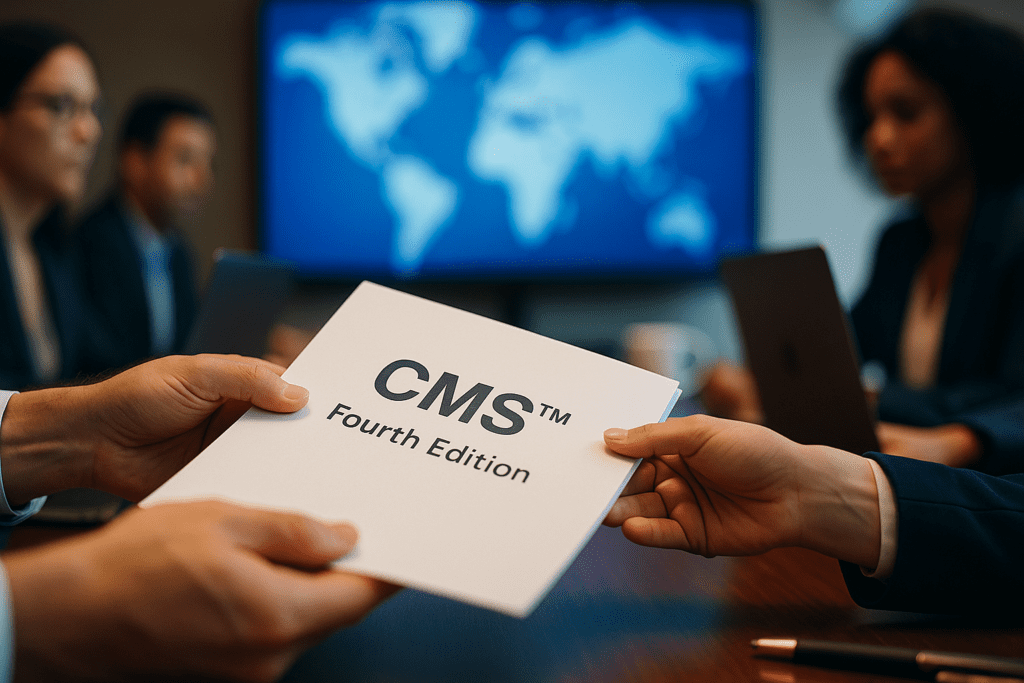
Against this backdrop, the launch of the Contract Management Standard™ Fourth Edition (CMS™ v4) emerges as a significant intervention. Developed jointly by WorldCC and the National Contract Management Association (NCMA), this new standard is intended to offer what industry players have long sought but struggled to achieve: a global language for managing contracts consistently and clearly across industries and jurisdictions.
A Response to Fragmentation
Contracting, despite being a fundamental commercial function, has historically lacked a globally recognized framework. Practices vary significantly not just between countries but even between departments within the same organization. As globalization has expanded supply chains and business relationships, these discrepancies have resulted in costly inefficiencies, delays, and disputes.
CMS™ v4 is being positioned as a remedy to that fragmentation. More than 100,000 contract management professionals globally, including a growing community of practitioners in Asia-Pacific and the Middle East, stand to benefit from a unified framework. The new standard reflects contributions from thousands of individuals who participated in drafting, reviewing, and providing feedback over several years—a process described by insiders as unprecedented in scale and diversity.
“The publication of CMS™ v4 represents a shared achievement by the global contract management community,” said Tim Cummins, Founder and President of WorldCC and Executive Director of CCM Institute. “This standard is designed to help organizations structure and manage contracts with clarity and consistency across industries and borders.”
Behind the Scenes: Years of Collaboration and Tension
What the public statements and polished launch materials do not reveal is the internal tension that defined much of the project’s development. According to individuals involved in early working groups, the initial drafts of CMS™ v4 revealed deep rifts between practitioners in common law and civil law jurisdictions. One participant noted that attempts to harmonize terminology around key concepts such as “offer and acceptance” and “good faith” led to debates that stalled progress for months.
These debates were not purely academic. Multinational corporations and public sector organizations increasingly require contracting standards that can be operationalized in diverse legal environments. Resolving these tensions quietly but thoroughly became a critical challenge for the project’s steering committee.
In the end, the Fourth Edition’s developers opted for a pragmatic structure that acknowledges legal diversity while promoting consistent principles. CMS™ v4 is not prescriptive about jurisdictional differences but aims to provide a neutral framework that organizations can adapt to local laws while retaining global consistency.
Demand Driven by Rising Complexity
The release of CMS™ v4 coincides with a broader trend: contracting is becoming a more strategic function within organizations. Research from WorldCC shows that 65% of large organizations have adopted contract management technology and 47% now use contract analytics to drive performance insights.
In the public sector, governments are increasingly under pressure to improve procurement practices amid rising scrutiny over fairness, transparency, and efficiency. CMS™ v4’s cross-sector applicability has made it particularly attractive to policymakers and regulators seeking to modernize their contract frameworks.
This growing complexity is reflected in the language of the standard itself, which addresses not only traditional performance measures but also modern concerns like sustainability, ethical sourcing, and social value. For contract managers tasked with navigating these demands, a globally recognized benchmark offers both guidance and credibility.
“Thousands of professionals contributed to the development of CMS™ v4,” said Sally Guyer, CEO of WorldCC. “The result is a practical resource that reflects collective knowledge and provides a globally recognized reference for contract management.”
Unanswered Questions: Voluntary Yet Influential
While CMS™ v4 has been hailed as a breakthrough by many, its adoption is voluntary, raising questions about how influential it will truly become. Early indications suggest that some multinational corporations plan to integrate it into internal policies, but widespread uptake will depend on factors beyond CCM Institute’s control, including economic conditions, regional regulatory developments, and competing frameworks from other industry bodies.
Furthermore, smaller organizations may struggle to implement the standard due to limited resources or competing priorities. This challenge underscores an important point: even as CMS™ v4 creates a common language for contracting, its utility will depend on education, training, and practical tools that translate its principles into day-to-day practices. Luckily, CCM Institute has an Apopter Package to help guide companies through the implementation, as well as a newly refreshed Associate level Commercial & Contract Management Certification that is embedded with the content of the standard.
A New Phase for Contract Management
The release of CMS™ v4 signals the start of what could be a transformative period for contract management as a discipline. By creating a shared language and framework that accommodates legal diversity and practical realities, it aims to improve performance, reduce disputes, and strengthen relationships between parties.
Whether this voluntary standard achieves the widespread adoption its authors hope for remains to be seen. But as contracting grows in complexity and strategic importance, CMS™ v4 provides a long-needed reference point for practitioners and organizations seeking consistency in an increasingly fragmented environment.