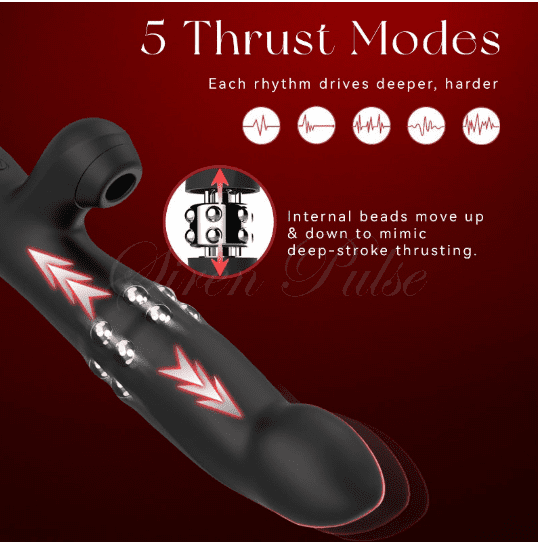
The consumer electronics sector is witnessing rapid advancements in haptic feedback systems, where materials science, thermal management, and electromechanical design converge to create more responsive and adaptive devices. A compelling case study is the ARCTICGRIP™ Ice-Touch Vibrating Plug from Siren Pulse. This precision-engineered sensory device belongs to the brand’s Control Lab series, a collection dedicated to interconnected haptic technologies that emphasize reliable actuation, programmable patterns, and consistent performance.
As sensory engineering evolves, developers are increasingly leveraging the inherent physical properties of metals to enhance user interaction. The ARCTICGRIP™ exemplifies how premium aluminum alloys and engineered vibration systems can deliver precise temperature-responsive experiences in a compact, rechargeable form factor. This evolution mirrors advancements seen in medical haptics, wearable wellness devices, and virtual reality controllers — but applied to next-generation personal electronics.
Materials Science at the Core: Aluminum Alloy and Thermal Conductivity
At the heart of the ARCTICGRIP™ Ice-Touch Vibrating Plug lies a premium aluminum alloy construction — a material chosen specifically for its exceptional thermal conductivity. Unlike traditional silicone or polymer-based devices, aluminum transfers heat (or cold) rapidly and uniformly, enabling true temperature-adaptive performance. The device can be pre-cooled for an instant chilling effect or gently warmed for a soothing response, all driven by basic principles of thermodynamics and heat transfer.
Aluminum’s thermal conductivity coefficient (approximately 237 W/m·K at room temperature) far exceeds that of medical-grade silicone (typically 0.2–0.5 W/m·K), allowing the segmented bead structure to respond almost immediately to environmental changes. This rapid heat exchange is what makes the “Ice-Touch” capability possible: the metal acts as an efficient thermal bridge, quickly equilibrating to the chosen temperature while maintaining structural integrity.
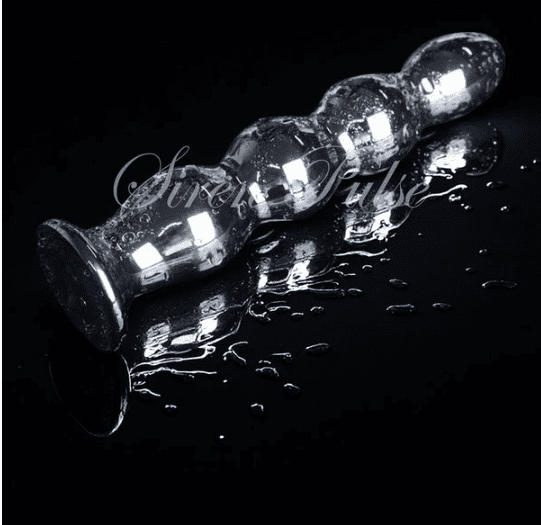
The segmented bead design — featuring four graduated beads — further optimizes mechanical interaction. Each bead creates localized pressure points during movement, distributing force evenly and enhancing the overall haptic profile. This geometry reflects careful finite element analysis (FEA) during the design phase, balancing comfort, stability, and effective energy transmission.
Precision Vibration Engineering and Acoustic Optimization
Complementing the thermal system is a high-efficiency vibration motor delivering 9 distinct vibration modes. These range from subtle, low-amplitude pulses to more pronounced rumbles, all engineered for minimal acoustic output — with noise levels kept below 50 dB. Achieving whisper-quiet operation in a metal-housed device requires advanced motor encapsulation, damping materials, and precise frequency tuning to avoid resonance with the aluminum body.
The motor operates within a compact footprint while delivering consistent performance across the device’s 4.88-inch (124 mm) length and 1.34-inch (34 mm) maximum diameter. Power delivery is managed through intelligent circuitry that maintains stable output even as the battery discharges, ensuring each mode feels distinct and reliable. This level of control mirrors techniques used in high-end wearable haptics and portable medical stimulators.
Power Management and Durability Engineering
Battery life and charging efficiency are critical in portable electronics, and the ARCTICGRIP™ excels here with quick USB charging that reaches full capacity in just 28 minutes and provides up to 60 minutes of continuous operation. The system employs optimized lithium-polymer cells paired with efficient power management ICs to handle simultaneous demands from the vibration motor and thermal mass without excessive heat buildup.
Durability is further reinforced by an IPX7 waterproof rating, making the device fully submersible and suitable for wet environments. Sealing a metal device with moving internal components and an external charging port demands precision engineering — including specialized gaskets, over-molding techniques, and corrosion-resistant coatings on the aluminum alloy. The result is a robust, easy-to-clean unit weighing only 3.5 oz (98.5 g), striking an ideal balance between portability and structural resilience.
These specifications demonstrate how modern haptic devices must solve multiple engineering trade-offs simultaneously: thermal responsiveness versus structural rigidity, vibration intensity versus noise control, and runtime versus charging speed.
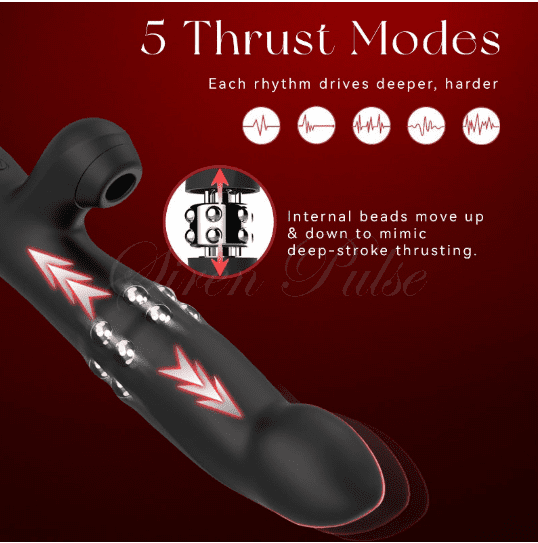
Integration Within a Broader Sensory Control Ecosystem
The ARCTICGRIP™ Ice-Touch Vibrating Plug is part of Siren Pulse’s expanding lineup of precision-engineered haptic solutions. The Control Lab series focuses on interconnected technologies that prioritize reliable actuation and programmable patterns. This ecosystem approach reflects a systems-level design philosophy, where individual products contribute to a larger framework of sensory control and feedback.
Siren Pulse maintains strict adherence to safety and quality standards, utilizing biocompatible materials and rigorous testing protocols. The full range of innovative sensory engineering solutions can be explored at the official Siren Pulse website.
Future Implications for Haptic and Thermal Engineering
The convergence of high thermal conductivity materials, precision vibration systems, and compact power management in devices like the ARCTICGRIP™ points to broader opportunities across industries:
- Medical and rehabilitation devices — where controlled thermal and mechanical stimulation support sensory recovery and muscle conditioning.
- Wearable biofeedback systems — combining temperature modulation with haptic cues for stress management or focus enhancement.
- Immersive simulation and training — demanding synchronized thermal-haptic feedback with low latency and high realism.
- Next-generation robotics — where lightweight, thermally responsive actuators improve human-machine interaction.
Continued improvements in miniature sensors, phase-change materials, and solid-state batteries will likely enable even more sophisticated closed-loop systems that automatically adjust temperature and vibration based on real-time biometric feedback.
Conclusion: The Convergence of Disciplines
The ARCTICGRIP™ Ice-Touch Vibrating Plug stands as a clear demonstration of how materials science, thermal conductivity engineering, and electromechanical design can be harmonized in a single consumer-grade haptic device. By leveraging premium aluminum alloy for rapid temperature adaptation, a segmented bead architecture for optimized mechanical feedback, and a quiet, efficient vibration system within an IPX7-rated waterproof enclosure, it sets a benchmark for temperature-adaptive sensory technology
For engineers, product designers, and technology analysts tracking the evolution of haptic feedback systems, this device provides a practical example of real-world implementation challenges and solutions — from heat transfer optimization and acoustic damping to power-efficient multi-mode operation.
As the boundaries between consumer electronics, wellness technology, and advanced haptics continue to blur, innovations like those from Siren Pulse underscore the importance of cross-disciplinary thinking. Careful selection of materials, meticulous thermal and mechanical engineering, and user-centric power management are no longer optional — they are the foundation of differentiated, high-performance sensory devices.
Whether exploring the latest in thermal conductivity applications, precision haptic engineering, or compact waterproof electronics, the ARCTICGRIP™ offers a tangible illustration of integrated design excellence.
Discover more advanced sensory control solutions in the Control Lab collection or visit Siren Pulse to review the complete portfolio of precision-engineered haptic technologies.
Read More From Techbullion