The way people consume digital content has undergone a remarkable transformation over the past decade. What was once a television-centric experience is now a multi-device ecosystem where viewers expect instant access to content from virtually anywhere.
As internet infrastructure continues to improve and connected devices become increasingly common, audiences are demanding greater flexibility, faster access, and more personalized experiences. This shift has encouraged technology providers to rethink how entertainment platforms are designed, delivered, and optimized for modern consumers.
Today, convenience is no longer considered a luxury. It has become a fundamental expectation.
The Growing Demand for Flexible Content Access
Traditional viewing models were built around fixed schedules and limited access points. Consumers had little control over when and how they could access content.
Modern audiences, however, expect a completely different experience. Whether at home, traveling, or working remotely, users want uninterrupted access to their preferred content across multiple devices.
This evolution has accelerated the development of connected entertainment ecosystems capable of adapting to diverse viewing habits. Rather than forcing users to follow rigid schedules, modern platforms increasingly focus on providing content on demand and across multiple environments.
The result is a more personalized and flexible entertainment experience.
Why User Experience Has Become a Competitive Advantage
The availability of content remains important, but user experience often determines whether a platform succeeds in retaining its audience.
Consumers now evaluate services based on several factors:
- Navigation simplicity
- Loading speed
- Device compatibility
- Interface quality
- Content organization
- Reliability
Platforms that prioritize usability frequently outperform competitors offering similar content libraries but less intuitive experiences.
A clean interface and efficient navigation system can significantly improve user satisfaction and long-term engagement.
Multi-Device Viewing Is Now the Standard
The average household no longer relies on a single screen.
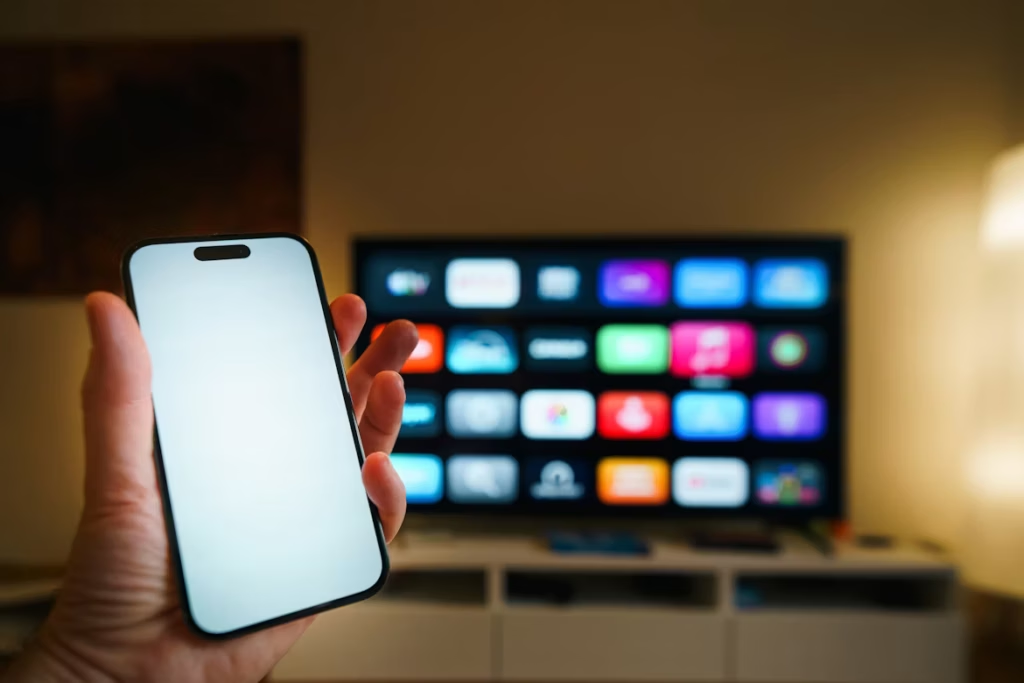
Many users begin watching content on a smart television before continuing on a smartphone or tablet later in the day. Others regularly switch between laptops, streaming devices, and mobile applications depending on their environment.
To support these habits, technology providers increasingly focus on synchronization and compatibility.
Modern entertainment solutions are expected to function smoothly across:
- Smart TVs
- Android devices
- iOS devices
- Windows computers
- Mac systems
- Streaming devices
- Connected media boxes
This level of accessibility has become a major factor influencing consumer adoption.
Cloud Infrastructure and Performance Optimization
Behind every successful digital entertainment platform lies a sophisticated technological foundation.
Cloud computing has become one of the most important innovations supporting modern content delivery. By distributing resources across multiple locations, providers can improve reliability, scalability, and performance.
Cloud-based architectures offer several advantages:
- Reduced downtime
- Faster content delivery
- Better scalability
- Improved resource allocation
- Greater reliability during peak demand
These benefits allow platforms to serve larger audiences while maintaining a consistent user experience.
As demand continues to grow, cloud infrastructure will remain a critical component of digital entertainment ecosystems.
The Importance of Content Delivery Networks
Content Delivery Networks (CDNs) have become essential for modern media distribution.
Instead of serving content from a single location, CDNs distribute data across multiple servers positioned around the world. This approach reduces latency and improves performance by bringing content closer to end users.
For consumers, the advantages are immediately noticeable:
- Faster startup times
- Smoother playback
- Reduced buffering
- Better reliability
- Consistent viewing quality
As audience expectations continue to increase, CDN optimization remains one of the most valuable investments for digital content providers.
Personalization Through Artificial Intelligence
Artificial intelligence is changing the way users discover content.
With digital libraries growing larger every year, recommendation systems have become increasingly important. Machine learning algorithms analyze viewing behavior and help surface content that aligns with individual preferences.
This technology improves engagement while simplifying content discovery.
Rather than spending time searching through extensive catalogs, users can quickly access recommendations tailored to their interests.
As AI systems continue to evolve, personalization will likely become even more accurate and sophisticated.
Security and Trust in Modern Entertainment Ecosystems
As digital platforms expand, security becomes increasingly important.
Consumers expect providers to protect their personal information and maintain secure environments for content access.
Modern platforms therefore invest heavily in:
- Encryption technologies
- Secure authentication systems
- Infrastructure monitoring
- Data protection protocols
- Threat detection mechanisms
Strong security practices not only protect users but also contribute to long-term trust and platform credibility.
Industry Trends Shaping the Future
Several trends are expected to influence the next generation of connected entertainment platforms.
Greater Device Integration
The distinction between devices continues to fade as ecosystems become increasingly interconnected.
Smarter Recommendation Engines
Advances in machine learning will improve content discovery and personalization.
Improved Infrastructure Efficiency
New delivery technologies will enhance performance while reducing resource requirements.
Enhanced User Control
Consumers increasingly seek experiences that provide greater flexibility and customization.
These trends suggest that future entertainment platforms will become more adaptive, intelligent, and user-focused.
A Market Focused on Simplicity
One of the most notable developments in recent years has been the growing preference for simplified digital experiences.
Users increasingly gravitate toward platforms that reduce complexity while maintaining performance and accessibility. Industry observers often point to solutions such as Smarters France as examples of how connected entertainment platforms are evolving to meet modern expectations regarding usability, compatibility, and convenience.
This broader shift reflects a market-wide demand for experiences that prioritize simplicity without compromising functionality.
Conclusion
The digital entertainment industry continues to evolve at an impressive pace. Advances in cloud computing, artificial intelligence, content delivery technologies, and user experience design are reshaping how audiences interact with digital media.
As consumer expectations continue to rise, platforms that prioritize accessibility, performance, security, and ease of use will remain well positioned for long-term growth.
The future of connected entertainment is not simply about delivering content. It is about creating seamless, flexible, and engaging experiences that adapt to the way people live, work, and consume media in an increasingly connected world.