
How Can Feed Mill Software Reduce Production Errors?

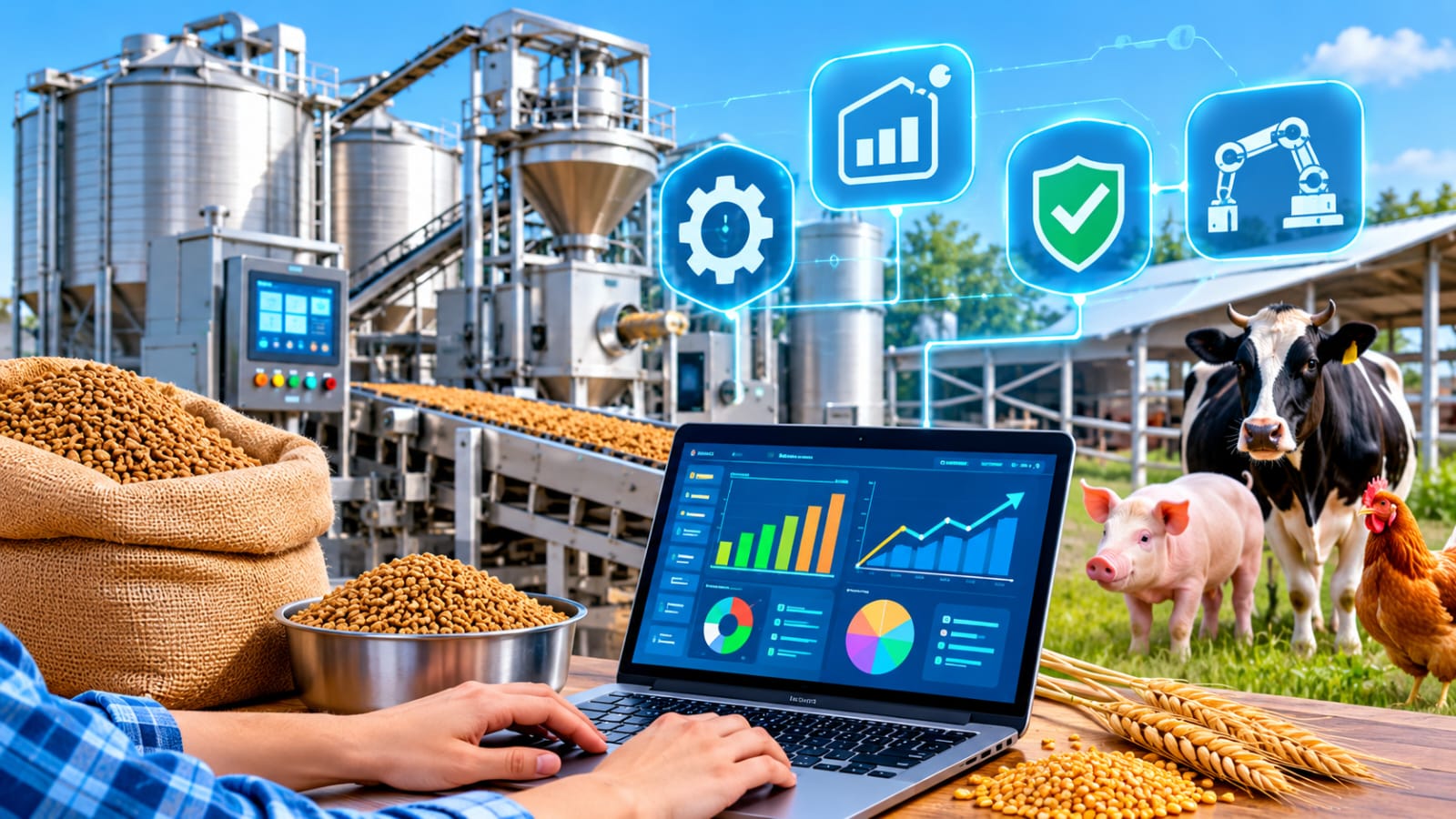
Feed mills operate on tight margins, strict formulation requirements, and relentless production schedules. A single miscalculation in a batch, a missed ingredient, or a mislabeled delivery can cost thousands of dollars and, worse, put livestock health at risk. As feed mills scale up and diversify their product lines, manual tracking methods simply cannot keep pace with the complexity involved. This is where feed mill software becomes not just a convenience but a necessity.
Feed mill software is designed to automate, monitor, and optimize every stage of the feed production process, from raw material intake to final batch delivery. By replacing error-prone manual processes with digital precision, feed mills can significantly reduce costly mistakes while improving consistency, traceability, and overall efficiency. Below, we explore exactly how feed mill software minimizes production errors and why it has become an essential tool for modern feed operations.
Understanding the Common Sources of Production Errors in Feed Mills
Before examining how feed mill software helps, it is worth understanding where errors typically originate. Feed production involves many moving parts: raw ingredient sourcing, precise formulation ratios, batching sequences, equipment calibration, and quality control checks. Each of these stages presents an opportunity for human error.
Manual data entry is one of the most common culprits. When operators manually input ingredient quantities or formulation specs, even a small typo can throw off an entire batch. Miscommunication between departments, such as formulation teams and production floor staff, can also lead to inconsistencies. Equipment that is not properly calibrated or monitored in real time can silently drift out of spec, producing feed that does not match intended nutritional profiles.
Additionally, inventory mismanagement, such as running out of a key ingredient mid-batch or mixing up similar-looking raw materials, is a frequent issue in mills that rely on paper-based tracking or disconnected spreadsheets. Without a centralized system, it becomes difficult to catch these errors before they affect the final product.
Feed mill software directly addresses these vulnerabilities by introducing automation, real-time data visibility, and standardized workflows that reduce the reliance on manual, error-prone tasks.
Automating Formulation and Batching Processes
One of the most impactful ways feed mill software reduces errors is through automated formulation and batching. Instead of relying on operators to manually calculate ingredient ratios or transcribe formulas onto paper tickets, the software pulls exact formulation data directly from a centralized database and feeds it into the batching system.
This automation eliminates the risk of transcription errors, incorrect unit conversions, and formula mix-ups between similar products. When an order comes in, the software automatically generates the correct formulation based on the specific product, customer requirements, or nutritional targets, ensuring that every batch is consistent with the intended recipe.
Many feed mill software systems also integrate directly with batching equipment, allowing for real-time communication between the formulation plan and the physical mixing process. This means that as ingredients are weighed and added, the system can verify that the correct amounts are being used, flagging any discrepancies immediately rather than after the batch is complete. This real-time verification is a critical safeguard that manual processes simply cannot replicate.
Enhancing Inventory Accuracy and Ingredient Traceability
Inventory errors are a leading cause of production mistakes in feed mills. Running low on a critical ingredient without warning, accidentally using an expired or contaminated ingredient, or confusing similar-looking raw materials can all derail a production run. Feed mill software tackles these issues through real-time inventory tracking and traceability features.
With barcode or RFID scanning integrated into the software, every ingredient that enters the facility is logged with precise details, including supplier information, lot numbers, expiration dates, and storage location. This level of detail ensures that operators always know exactly what is on hand and where it is stored, reducing the likelihood of mix-ups.
Automated low-stock alerts notify purchasing teams before an ingredient runs out, preventing last-minute substitutions that could compromise formulation accuracy. Additionally, because every ingredient is tracked from receipt through usage in a specific batch, the software creates a full traceability chain. If an issue arises, whether it is a quality concern or a recall situation, the mill can quickly identify exactly which batches were affected and why, dramatically reducing the scope and cost of corrective action.
Real-Time Monitoring and Quality Control Integration
Feed mill software does not stop at formulation and inventory. It also plays a crucial role in real-time quality control, catching errors as they happen rather than after a batch has already shipped. Sensors and automated data collection points throughout the production line feed information directly into the software, allowing operators to monitor temperature, moisture content, particle size, and other critical parameters continuously.
If a measurement falls outside of acceptable thresholds, the system can trigger immediate alerts, allowing staff to intervene before a faulty batch moves further down the line. This proactive approach to quality control is far more effective than periodic manual sampling, which can miss issues that occur between checks.
Some advanced feed mill software platforms also incorporate predictive analytics, using historical data to identify patterns that may indicate an impending equipment malfunction or formulation drift. By catching these trends early, mills can perform preventive maintenance or formulation adjustments before an actual production error occurs, saving both time and raw materials.
Standardizing Workflows Across Shifts and Facilities
In many feed mills, production errors arise not from a single mistake but from inconsistency between different shifts, operators, or even multiple facility locations. When each team follows slightly different procedures or relies on their own interpretation of a formulation sheet, variability creeps into the final product.
Feed mill software solves this by standardizing workflows across the entire operation. Every operator, regardless of shift or location, accesses the same centralized system with the same formulation data, batching instructions, and quality control protocols. This consistency ensures that a batch produced on a Tuesday night shift matches the same standards as one produced on a Thursday morning shift at a different facility.
Standardization also simplifies employee training. New operators can be onboarded more quickly because the software guides them through each step of the process, reducing reliance on tribal knowledge or verbal instructions that can be misremembered or miscommunicated. This reduces the kind of human error that often stems from inconsistent training or unclear procedures.
Reducing Equipment-Related Errors Through Integration
Equipment malfunctions and miscalibrations are another significant source of production errors in feed mills. Feed mill software helps address this by integrating directly with scales, mixers, pellet mills, and other production equipment, allowing for continuous monitoring of performance and calibration status.
When equipment begins to drift out of calibration, whether due to wear, buildup, or mechanical issues, the software can detect anomalies in the data it receives, such as inconsistent weight readings or unexpected temperature fluctuations. This early detection allows maintenance teams to address the problem before it results in an inaccurate batch.
Furthermore, because the software logs equipment performance data over time, it becomes easier to schedule preventive maintenance based on actual usage patterns rather than arbitrary time intervals. This reduces unexpected breakdowns that can disrupt production schedules and lead to rushed, error-prone workarounds.
Improving Communication Between Departments
Feed mills often involve multiple departments working together, including purchasing, formulation, production, quality assurance, and shipping. When these departments rely on disconnected systems or manual communication methods like phone calls, emails, or paper memos, information can be lost, delayed, or misunderstood, leading to errors.
Feed mill software centralizes communication by giving every department access to the same real-time data. When a formulation is updated, production staff see the change immediately. When an ingredient shipment is delayed, purchasing and production teams are notified simultaneously. This interconnected visibility reduces the chances of departments working off outdated or conflicting information, which is a common cause of production mistakes.
This improved communication also extends to customer-specific requirements. If a customer has particular formulation preferences or regulatory requirements, the software ensures that this information is attached directly to the order and visible to every relevant team member, reducing the risk of an order being fulfilled incorrectly due to a communication gap.
Supporting Regulatory Compliance and Documentation
Feed mills are subject to a range of regulatory requirements related to ingredient sourcing, labeling, and safety standards. Manual compliance tracking is not only time-consuming but also prone to errors, particularly when documentation is scattered across paper records or disconnected spreadsheets.
Feed mill software simplifies compliance by automatically generating and storing the necessary documentation for each batch, including ingredient certificates, formulation records, and quality control results. This automated record-keeping reduces the risk of missing or incomplete documentation that could result in compliance violations or complications during an audit.
Because the software maintains a complete digital trail from ingredient receipt to final product shipment, mills can respond quickly and accurately to regulatory inquiries or customer requests for documentation. This not only reduces the administrative burden on staff but also minimizes the risk of errors that can occur when compiling records manually under time pressure.
Enabling Data-Driven Decision Making
Beyond preventing errors in the moment, feed mill software provides valuable historical data that can be used to identify recurring issues and implement long-term improvements. By analyzing trends in formulation adjustments, equipment performance, and quality control results, mill managers can pinpoint specific processes or pieces of equipment that are contributing to recurring errors.
For example, if the data shows that a particular mixer consistently produces inconsistent results during a specific time of day, management can investigate further, whether the cause is related to maintenance scheduling, operator training, or raw material handling. This data-driven approach allows mills to move from reactive error correction to proactive error prevention.
Additionally, this historical data supports continuous improvement initiatives. As mills implement changes based on software-generated insights, they can track whether error rates decrease over time, allowing for a measurable return on investment and ongoing refinement of production processes.
FAQ: Feed Mill Software and Production Errors
What is feed mill software?
Feed mill software is a digital platform that manages and automates feed production processes, including formulation, batching, inventory tracking, quality control, and compliance documentation.
How does feed mill software reduce human error?
It reduces human error by automating manual tasks like formulation calculations and data entry, standardizing workflows, and providing real-time alerts when something falls outside expected parameters.
Can feed mill software integrate with existing equipment?
Yes. Most feed mill software platforms are designed to integrate with scales, mixers, pellet mills, and other production equipment to enable real-time monitoring and data collection.
Is feed mill software suitable for small mills as well as large operations?
Feed mill software is scalable and can be tailored to fit operations of varying sizes, from single-location small mills to multi-facility enterprises.
Does feed mill software help with regulatory compliance?
Yes. It automatically generates and stores documentation related to ingredient sourcing, formulation, and quality control, making compliance reporting and audits more efficient.
What is the biggest benefit of using feed mill software?
While there are many benefits, the most significant is the reduction of costly production errors through automation, real-time monitoring, and improved communication across departments.
How long does it take to implement feed mill software?
Implementation timelines vary depending on the complexity of the mill’s operations, but most providers offer structured onboarding processes that include data migration, staff training, and phased rollouts to minimize disruption.
Final Thoughts on Reducing Errors with Feed Mill Software
Production errors in feed mills can have far-reaching consequences, from financial losses to compromised animal health and regulatory violations. As the complexity of feed production continues to grow, relying on manual processes is no longer a sustainable approach for mills that want to remain competitive and reliable.
Feed mill software offers a comprehensive solution by automating formulation, improving inventory accuracy, enabling real-time quality control, standardizing workflows, and enhancing communication across departments. By addressing the root causes of production errors rather than simply reacting to them after the fact, feed mills can achieve greater consistency, efficiency, and peace of mind.
Investing in the right feed mill software is not just about reducing mistakes; it is about building a more resilient, transparent, and scalable operation that can adapt to the evolving demands of the feed industry. For mills looking to minimize errors and maximize operational confidence, feed mill software is an essential tool for the future.






Comment