Interest in “sustainable fertilizer companies” is climbing for a pretty simple reason: Agriculture is being asked to pull off two hard things at the same time. Grow more food, and ease up on environmental pressure.
The latest OECD-FAO Agricultural Outlook puts some numbers behind that tension. It projects global agricultural and fish production will rise by 14% over the next decade, while direct agricultural greenhouse gas emissions are still expected to increase by 6% as productivity improves. The same report also points out something more encouraging: scenario modeling suggests global undernourishment could be eliminated by 2034 while cutting greenhouse gas emissions by 7%, if agriculture pairs emissions-reduction technology with a 15% productivity increase. That’s the backdrop. It also explains why fertilizer strategy now matters way beyond “did the yield go up.”
Money matters too, obviously. FAO reported in November 2025 that global fertilizer utilization rebounded in the 2024/25 season, and the average price of a stylized fertilizer basket was USD 489 per tonne in September 2025. That’s about 40% below the April 2022 peak, but still higher than in 2024. So yes, prices cooled from the worst of the spike, but buyers are still living in a world where efficiency, application timing, and nutrient losses can quietly eat the budget.
One more thing before we get into company names, “sustainable fertilizers” aren’t one tidy product category. In practice, it’s a mix of fertilizers and nutrient systems designed to improve nutrient-use efficiency, reduce unnecessary losses, support more precise agronomic programs, and fit within broader efforts on emissions, water, soil health, and regenerative farming.
Sustainable fertilizers, in plain terms, are nutrient products and programs that deliver crop nutrition more efficiently, with fewer environmental losses. In the field, that usually shows up as better nutrient timing, more precise application, stronger agronomic guidance, and measurable work on emissions, water, soil health, and resource stewardship.
What Are Sustainable Fertilizers?
A sustainable fertilizer is not automatically organic, biological, or low-analysis. Sometimes it’s a conventional mineral fertilizer, just used in a smarter, more disciplined system. Other times it’s a controlled-release product, a water-soluble formulation used in precision fertigation, a crop-specific blend, or a biological input paired with mineral nutrition.
The real test isn’t whether the label sounds “green.” It’s whether the product and the program help growers produce more with fewer losses and less unintended impact.
And that matters because agriculture can’t just opt out of nutrient use. The OECD-FAO Outlook is pretty clear that the production growth expected over the next decade depends mostly on productivity gains, not on expanding farmland. That pushes nutrient efficiency into the center of the sustainability conversation. The goal isn’t “no fertilizer,” it’s better sourcing, better application, better uptake.
This is why the more credible sustainable fertilizer companies usually sell more than products. They sell systems. Nutrient use efficiency, 4R nutrient stewardship, regenerative farming support, water stewardship, emissions reduction, digital tools that tighten application rates, plus agronomic support that helps growers actually implement the changes. That “systems” approach is often a better signal than any single marketing claim on a bag.
Fertilizers and Regenerative Agriculture
Regenerative agriculture often gets framed as “fertilizer-free,” but honestly, that’s too clean and too simple. Real regenerative systems still need crop nutrition. The question is whether the nutrient program supports soil health, reduces avoidable losses, matches the crop and the field, and fits into a broader system aimed at resilience, biodiversity, water quality, and climate outcomes.
ICL Group’s “regenerative agriculture 2.0” framing describes it as traditional regenerative practices combined with agtech, data science, and biological innovation, essentially “regen, but built to scale.” Yara describes regenerative agriculture as a systematic, outcome-based approach that positively affects nature and climate, while Nutrien leans heavily on 4R stewardship and best management practices to keep nutrients where they’re useful and reduce losses to the environment.
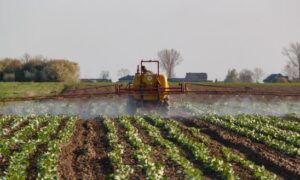
This is where fertilizer companies can genuinely help, or quietly cause problems. Poorly timed applications, mismatched rates, or “just to be safe” overapplication will fight regenerative goals. On the flip side, balanced nutrition, precision placement, improved nitrogen management, controlled-release delivery, and biological support products can make regenerative systems more reliable year after year. If you’ve ever seen what heavy rain can do right after an application, you don’t need a lecture on why timing and loss matter.
So the practical takeaway is straightforward: fertilizer still has a role in regenerative farming, but it’s a changing role. Less about maximizing short-term dose, more about efficiency, timing, soil response, and measurable system outcomes. That’s also why buyers are increasingly judging fertilizer suppliers on more than tonnage and price. They want to know whether the company can actually support regenerative goals with the right agronomy, technologies, and stewardship frameworks.
Leading Sustainable Fertilizer Companies
The five companies below stand out for different reasons. This is not a universal ranking, but a comparison based on publicly available sustainability disclosures, product information, and agronomic frameworks.
Quick comparison snapshot
| Company | Main sustainability / regenerative angle | Public proof points | Best fit in this comparison |
| ICL Group | Specialty crop nutrition tied to sustainable solutions, controlled-release fertilizers, biostimulants, and digital farming | Public emphasis on CRFs, biostimulants, Polysulphate, AgTech, and regenerative agriculture 2.0 | Growers looking for specialty products plus precision and sustainability-oriented innovation |
| Yara International | Regenerative farming as a strategic pillar, paired with emissions reduction and digital agronomy | 2024 GHG intensity of 2.8 t CO2e/t N, 24 million digitized hectares, and more than 70 GHG projects contributing to 1.6 million tonnes CO2e reduced from 2018 by end-2024 | Buyers seeking a large global nutrition company with explicit regenerative and decarbonization positioning |
| Nutrien | Sustainable agriculture through 4R stewardship, agronomic advice, and practical farm-management support | Public emphasis on 4R Nutrient Stewardship, Fertcare, and best-management practices to reduce nutrient loss | Farms prioritizing mainstream agronomic support and nutrient stewardship programs |
| EuroChem Group | Operational sustainability, circularity, and resource-efficiency improvements alongside fertilizer supply | Serra do Salitre facility reports 35 billion liters of water recycled annually, 40% self-generated energy from heat recovery, and zero landfill since August 2024 | Buyers who value visible circular-economy and plant-efficiency examples within a major fertilizer producer |
| The Mosaic Company | Large-scale phosphate and potash producer combining product stewardship with measurable ESG targets | Targeting 20% reductions in freshwater use and scope 1 and 2 GHG emissions by 2025, plus 25 million acres under 4R Nutrient Stewardship facilitation | Buyers who want scale, mining transparency, and strong public stewardship targets |
This table summarizes each company’s public positioning and disclosed priorities rather than independent field trials. It is based on official company pages and recent public disclosures from ICL Group, Yara International, Nutrien, EuroChem Group, and The Mosaic Company.
ICL Group
ICL Group stands out most clearly when sustainability is framed through specialty crop nutrition and efficiency technologies rather than only through corporate climate targets. On its Sustainable Solutions page, ICL highlights controlled-release fertilizers, biostimulants, Polysulphate, and digital farming technologies as products meant to support more sustainable agricultural practices. Its recent thought leadership also links precision agriculture, regenerative agriculture, and food security in a fairly coherent way, which is useful for growers looking for more than a commodity nutrient supplier.
That does not automatically make ICL Group the best choice for every buyer. It does, however, make the company especially relevant for growers and agronomists who want sustainability to show up in the product portfolio itself through controlled release, biological support, and precision tools. For editors who want one brand-side reference point, ICL Group’s article on sustainable agriculture and food security provides a useful reference point.
Yara International
Yara International is arguably the most explicit company in this list when it comes to linking regenerative farming to overall corporate strategy. Yara’s strategic direction includes regenerative farming as one of its three pillars, with specific emphasis on improving farming productivity and nutrient use efficiency while positively affecting soil health, biodiversity, water, air quality, and land use. Its regenerative agriculture page also frames the transition as a food-system challenge that requires collaboration across the value chain.
Yara also offers stronger public climate metrics than many peers. Its 2024 sustainability performance page reports GHG emissions intensity of 2.8 t CO2e per tonne of nitrogen against a 2025 target of 2.7, scope 1 and 2 emissions down 13% against a 2030 target of 30%, and 24 million digitized hectares. A separate January 2025 update says the company had already reduced GHG emissions by 1.6 million tonnes CO2e from the 2018 baseline through more than 70 greenhouse gas projects. That combination of regenerative positioning, digital farming, and disclosed decarbonization progress makes Yara one of the most fully articulated sustainability stories in the sector.
Nutrien
Nutrien’s sustainability approach is centered more on practical farm-management systems than on a single flagship regenerative product. Its sustainable agriculture pages emphasize agronomic advice, 4R Nutrient Stewardship, Fertcare, and financing support intended to help growers improve outcomes while minimizing environmental and food-safety risks. The company presents a pragmatic approach: nutrients are essential, but they should be managed in ways that keep them where they are most effective and reduce losses to the environment.
This approach makes Nutrien particularly relevant for broadacre producers and retail-channel buyers who prioritize implementation support. Its strength lies in broad agronomic reach and field-level advisory support. For buyers focused on nitrogen management, 4R adoption, and practical execution at the farm level, Nutrien remains a strong fit within this group.
EuroChem Group
EuroChem Group stands out in this comparison through specific public examples of circularity and plant-level efficiency. In July 2025, the company reported that its Serra do Salitre complex in Brazil had received EcoVadis “Committed” certification and disclosed that the site recycles 35 billion liters of water each year, generates 40% of its own energy through heat recovery from sulfuric acid production, and has operated on a zero-landfill basis since August 2024. These are concrete operational indicators of resource efficiency at the production level.
EuroChem’s public materials highlight nutrient optimization and next-generation fertilizer technologies as part of a lower-footprint approach. For buyers who prioritize site-level efficiency, circular-economy practices, and supply-chain ESG credentials, EuroChem is a relevant option within this group.
The Mosaic Company
The Mosaic Company combines large-scale phosphate and potash production with clearly defined public stewardship targets. Its sustainability pages state that the company is targeting a 20% reduction in freshwater use per tonne of product by 2025 and a 20% reduction in scope 1 and 2 greenhouse gas emissions by 2025. It also aims to facilitate 4R Nutrient Stewardship implementation on 25 million acres in key North American growing areas by 2025.
Mosaic’s 2024 sustainability performance summary provides additional detail. The company reported freshwater intensity of 6.86 cubic meters per tonne of product in 2024 and scope 1 and 2 GHG intensity of 0.235 tonnes CO2e per tonne of product, alongside disclosures on water, emissions, waste, and sustainability ratings. This level of reporting supports buyers who prioritize transparent, mining-linked sustainability data.
Key Sustainability Indicators in Fertilizer Production
For procurement teams, the phrase sustainable fertilizer companies becomes much more useful when it is translated into evaluation criteria.
- The first indicator is nutrient use efficiency. Does the company actually help growers keep nutrients in the crop system longer and lose less to air or water? That may show up through controlled-release technologies, 4R programs, digital tools, crop-specific recommendations, or biological complements.
- The second indicator is climate performance. Buyers should look for evidence of emissions management at production sites and a credible decarbonization strategy. Yara provides one of the clearest examples with disclosed GHG intensity and reduction progress, while Mosaic publishes product-level intensity metrics in its sustainability summary. EuroChem’s Brazil disclosure also shows how plant design and heat recovery can contribute to operational efficiency.
- The third indicator is water stewardship and circularity. Water is a major risk area in fertilizer production, and companies that disclose freshwater targets, recycling practices, or closed-loop systems offer buyers more confidence. Mosaic publicly targets a 20% reduction in freshwater use per tonne of product by 2025, while EuroChem says its Serra do Salitre complex recycles 35 billion liters of water annually in a closed-loop system.
- The fourth indicator is regenerative-agriculture readiness. This is where a lot of marketing gets vague, so buyers should look for specifics. Does the company define regenerative agriculture clearly? Does it connect products to soil health, biodiversity, nutrient efficiency, and resilience? Does it offer advisory support that helps growers manage the transition? Yara’s public regenerative framework is especially developed here, while Nutrien’s 4R and farm-management model gives it a practical implementation angle. ICL Group is notable for framing regenerative agriculture through precision tools, biologicals, and specialty fertilizers.
- The fifth indicator is transparency. The more measurable the public disclosures, the easier it is to compare companies objectively. Broad claims about “feeding the world sustainably” are not enough on their own. Buyers should favor suppliers that publish clear data, specific targets, or verifiable examples of progress. On that front, Yara and Mosaic stand out for public metrics, while EuroChem stands out for providing unusually concrete plant-level examples in 2025.
Conclusion
The best sustainable fertilizer companies are not necessarily the ones with the broadest slogans. They are the ones that combine agronomic usefulness with measurable progress on nutrient efficiency, stewardship, emissions, water, and regenerative-farming support. In that sense, the five companies in this comparison each bring something different to the table. ICL Group is strong in specialty solutions and efficiency-oriented innovation. Yara International is especially strong in regenerative strategy and public climate disclosure. Nutrien is credible on 4R stewardship and practical farm-management support. EuroChem Group offers strong recent examples of circularity and operational efficiency. The Mosaic Company stands out for transparent targets and detailed sustainability reporting.
The bigger point is that fertilizer sustainability is becoming a system question, not just a product question. With global agricultural production projected to rise 14% over the next decade and fertilizer markets still shaped by volatility, growers and procurement teams have good reason to look for suppliers that help them produce more food with tighter nutrient control and stronger environmental performance.